


June marks ALS Awareness Month in Canada, a time when advocates are reminding the public that amyotrophic lateral sclerosis remains an incurable, fatal neurodegenerative disease, 87 years after baseball legend Lou Gehrig’s diagnosis brought it global attention.
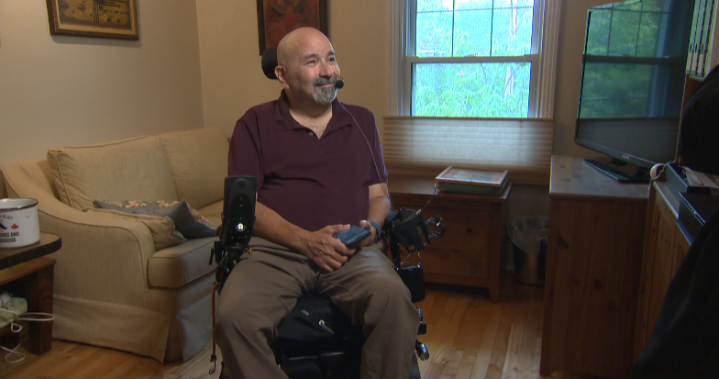
For one Montreal man living with ALS for more than a decade, the month is also an opportunity to share his story and offer hope to other patients and families. Normand MacIsaac says he refuses to let the disease define him, describing himself as the “luckiest of the unlucky.”
A positive mindset, strong family support and a focus on gratitude have helped MacIsaac navigate the progressive illness, which still has no cure.
“For me it’s important to share openly,” he said.
After the shock and denial that followed his 2014 diagnosis at age 51, MacIsaac says he quickly decided he wanted to become an advocate for others living with ALS.
“Not avoid the topic, not hide behind false optimism, to accept. But then to focus on the positives without denying the negative,” he said.
Prior to his diagnosis, MacIsaac worked with marginalized communities around the world. He says adjusting to being the one who depends on others for support, has been one of the most difficult changes.


Get weekly health news
Receive the latest medical news and health information delivered to you every Sunday.
“Technology makes a huge difference, but I can’t just spontaneously participate in discussions,” he said. “When I try to use my voice, I am frequently misunderstood, and when I use my cloned voice it takes time to type everything down.”
He added that the disease requires a major psychological and social adjustment, including reordering daily priorities.
His wife, Christine, who has been his primary caregiver since his diagnosis, says the role has brought significant changes for her as well, including taking on tasks MacIsaac once handled.
ALS affects the nerve cells that control voluntary muscle movement, gradually robbing patients of the ability to walk, speak and breathe. While the disease remains incurable, researchers say advances in recent years have been significant.
McGill Clinical Research director Dr. Angela Genre says much of today’s progress stems from funding linked to the viral Ice Bucket Challenge campaign.
“Biomark development, our identification of new targets, our identification of drugs that target the disease. All of that was tremendously aided by the Ice Bucket Target,” said Genre.
The 2014 fundraiser raised $17.2 million from more than 260,000 Canadian donors, with more than half of the funds invested in research.
“With some of the results we have right now, we are seeing a fast-forward toward being able to treat everybody, so I am very hopeful,” she said.
The clinical researcher adds the most important way to make advancements in treatment is to identify it early. “The disease is not common in numbers because people die,” adds Genre.
“As soon as treatments get good enough to allow people to live with the disease, we’re going to see a big increase in numbers of patients because of success.”
MacIsaac and his wife say they share that sense of optimism. He has since written a book about his experience, continues to travel when possible, and says he remains grateful for his family and the ALS community.
© 2026 Global News, a division of Corus Entertainment Inc.