Ottawa and Ontario are set to sign a deal Thursday that will reduce the regulatory burden on large projects, including the road to the Ring of Fire, The Canadian Press has learned.
Provincial and federal government sources who are not allowed to speak publicly say Ottawa has agreed to eliminate any duplicative work on its impact assessments on large projects.
A draft agreement posted on the Impact Assessment Agency of Canada’s website says the goal is to work together to implement the “One Project, One Review and One Decision” approach.
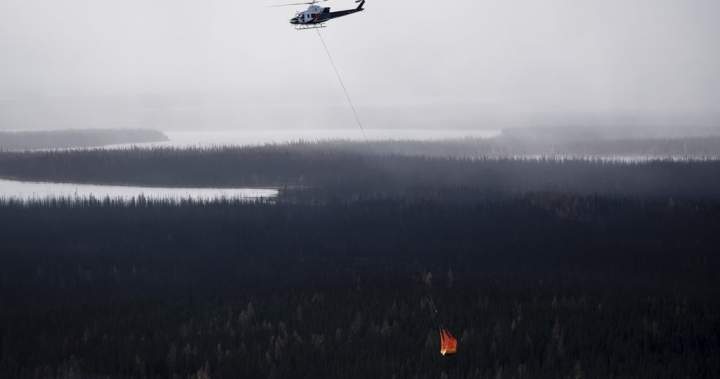
Webequie First Nation and Marten Falls First Nation are leading environmental assessments on three roads that would connect the provincial highway system to their communities and mining activities in the mineral-rich Ring of Fire region in northern Ontario.
In a side deal on the Ring of Fire roads, the federal government has committed to completing its impact assessment on the same timeline as the province’s environmental assessment, as both First Nations say they are set to begin building the roads in 2026.
Neither the province nor Ottawa responded to a request for comment.
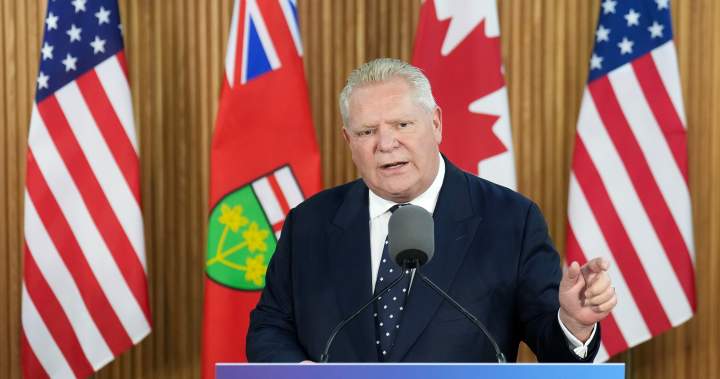
Prime Minister Mark Carney and Ontario Premier Doug Ford will sign the deal at a ceremony in Ottawa on Thursday.
The Canadian Press learned about the details during a recent trip to the Ring of Fire region as part of a reporting project supported by the Pulitzer Centre.


Get daily National news
Get the day’s top news, political, economic, and current affairs headlines, delivered to your inbox once a day.
Both Webequie and Marten Falls say the roads will help lift the fly-in communities out of poverty, though other nearby First Nations are not on board with the plan.
A source in Ford’s office who is not allowed to speak publicly about the yet-to-be-announced deal says the changes will dramatically speed up big projects across the province, including roads, highways and mines.
“This is huge, not just for the Ring of Fire, but for mining in general, and building roads and highways,” the premier’s office source says. “It will be 10 times more transformational than any major project.”
A senior federal government source, who likewise was not authorized to speak publicly about the deal, says it is all about eliminating duplication. The standards will remain stringent and rights and protections will be upheld, the source promises, including for the roads to the Ring of Fire.
The federal government has launched a regional assessment working group to better understand the impacts of development, but the province and Webequie and Marten Falls say it will not affect the road.
The two governments aim to work together on assessments of navigable waters, species at risk and migratory birds, all long in the federal purview.
With these deals in place, the province is no longer expected to use controversial new powers to designate the road to the Ring of Fire a special economic zone. That provision would have allowed the province to suspend provincial and municipal laws with the goal of speeding up construction of a proposed mine in the Ring of Fire.
The area is said to be replete with critical minerals, but many other First Nations are against development in the region — including the roads and the mine they would lead to.
Wyloo, the Australian mining giant, is nearing completion of its feasibility study on two proposed, connected underground mines at its Eagle’s Nest site.
Wyloo and Juno Corp., a Canadian junior mining company formed in 2019, own the vast majority of the more than 40,000 claims staked in the Ring of Fire. Two other companies, Teck Resources (which recently merged with Anglo American) and Canada Chrome Corporation, also hold a significant number of claims.
The companies say they’ve found a wide variety of critical mineral and base metal deposits, including nickel, copper, chromite, titanium, platinum, vanadium, iron and gold. They are used to make all types of batteries, cellphones, stainless steel, semi-conductors, drones, satellites, data centres and computers.
© 2025 The Canadian Press