



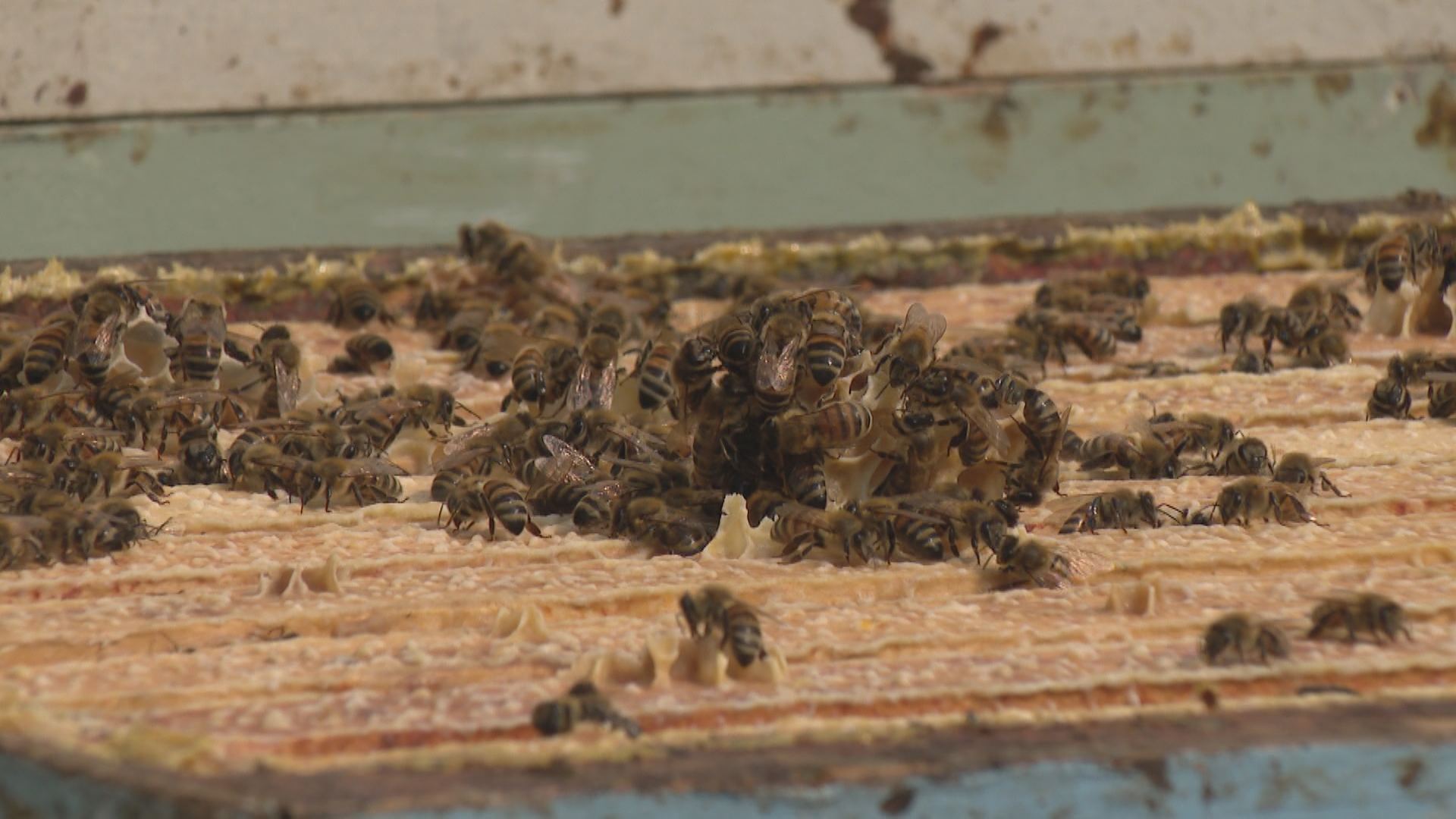
It’s been a rough start to the season for beekeepers in the Prairie provinces, with the late spring affecting their business.
He says most beekeepers will be looking at an average crop at best this year, but there is still a lot of summer left.
“The weather can play a role either way, and we don’t really know until … early September when all the honey is in the barrels where the season ends up.”
Saskatchewan weather isn’t the only challenge bee farmers are facing; they may soon feel the sting of U.S. tariffs.


Get breaking National news
Get breaking Canada news delivered to your inbox as it happens so you won’t miss a trending story.
Honey is one of the products threatened by the proposed 50 per cent U.S. levies announced for Aug. 19.
“Our biggest concern is, we really only have three markets for our Canadian honey. It either stays domestic within Canada, it goes to the U.S., or Japan. So losing the U.S. market basically means an extra 20 per cent of Canadian honey either staying in Japan or trying to find those new markets,” Lalonde said.
Honey, as well as other products under threat of tariffs, was previously exempt under the Canada-U.S.-Mexico trade agreement (CUSMA).
Honey being included alongside auto parts gives Lalonde the suspicion this is more than likely a negotiating tactic.
Lalonde says Canada sends about 15 to 20 per cent of its honey crop to the U.S, most of which is produced in the Prairies, where the biggest impact will be felt.
“Conversely, the U.S. imports about 450 million pounds,” he said.
“We’re only sending maybe two per cent of what the U.S. actually consumes. This isn’t a major concern for U.S. beekeepers; it’s not as if Canadian honey is flooding the U.S. market and resulting in lower prices to them. That two per cent is just, it’s literally a drop in the bucket for what’s heading south.”
While Lalonde has full confidence in Canadian negotiators and is hopeful something will change in the next few weeks, he says it’s a great time to buy local.
“It doesn’t take very much extra honey to show support to those local beekeepers, buying it from where you know the source is coming from.”
Watch the video above for more on the challenges beekeepers are facing.
© 2026 Global News, a division of Corus Entertainment Inc.