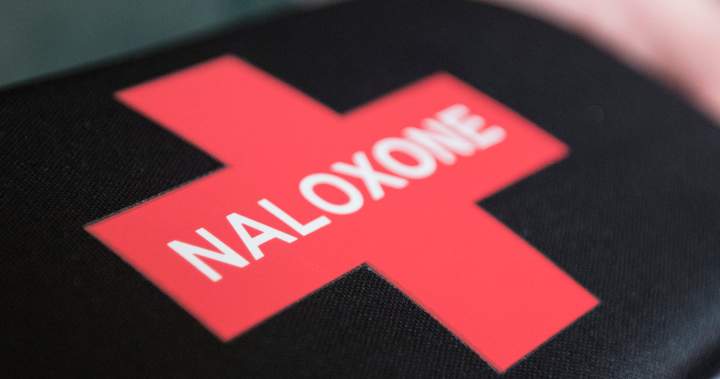
Amanda Walker moved to Saskatoon a year ago. Already, she has twice used take-home naloxone kits to stop overdoses in her apartment building.
“I had just come home from shopping, and I was just about to go to my house, and I saw the woman on the stairs here,” Walker said of the most recent incident.
“She was laying flat on her back. When I saw her face, I thought she was dead, because her face and lips were completely blue and then I managed to see that her heart was going crazy, beating fast.”
It was not the first time Walker had administered naloxone to someone who was having an overdose, but it still scared her.
“My hands were shaking as I was trying to fill the vial because of the adrenaline and the scariness. It was scary. That one was scary; the first time I had to naloxone someone, it wasn’t scary, but this one was. Because if I didn’t find her when I did, she wouldn’t have had much longer. She would have been gone,” Walker said.
Since the incident, she has connected with the woman she helped. Walker says that although the woman is doing better, it was not her first overdose and likely will not be her last.


Get daily National news
Get the day’s top news, political, economic, and current affairs headlines, delivered to your inbox once a day.
Although the number of overdoses in Saskatchewan is rising dramatically, the most recent data from the coroner’s report shows toxic drug deaths are going down. Some Saskatchewan experts say the kits are partially responsible for the falling fatality rates in overdose cases.
“The number of overdoses is astronomical this year and it’s not really going down,” Prairie Harm Reduction’s Miranda Deck said.
With drug supplies across Saskatchewan becoming more unpredictable, Walker’s story is becoming more common. Deck says they have handed out more kits this year than ever before.
“With all of the overdoses happening, there are quite a few more people that are interested in learning how to use naloxone just to have it on them,” Deck said.
“With all the kits that get distributed, there is for sure a number of people who are reversing overdoses on their own and they’re not getting reported.”
Saskatoon Fire Department Deputy Chief Rob Hogan says that although these kits are saving lives, he worries about the drug supply’s potency and contaminants that are resistant to naloxone.
“The drugs we’re seeing now, they’re very naloxone-resistant, so it’s taking multiple doses. So even the one or two doses those people give are just a small amount compared to the two, three or four doses now that are being given by our crews on scene,” Hogan said.
Already this year, his station has responded to twice as many calls for overdoses compared to last year.
Hogan, Deck and Walker agree that they have all seen drug abuse levels rise in every neighbourhood in Saskatoon.
Walker says she will continue doing her part.
“Maybe you see somebody sleeping on the street; they might not be sleeping,” Walker said.
Naloxone kits are available for free across the province at pharmacies, emergency rooms and safe injection sites, and by order online.
© 2025 Global News, a division of Corus Entertainment Inc.