







Opportunities include AI-enabled adherence platforms, connected inhalers, injectors and smart packaging, telehealth and home-care integration, chronic disease support, and pharmacy-led services in underserved and Asia-Pacific markets.
Medication Adherence Market
Dublin, Aug. 26, 2026 (GLOBE NEWSWIRE) — The “Medication Adherence Market by Type of Solution, Type of Product, Route of Administration, Therapeutic Area, End-user, and Key Geographical Regions- Trends and Forecast Till 2035” has been added to ResearchAndMarkets.com’s offering.
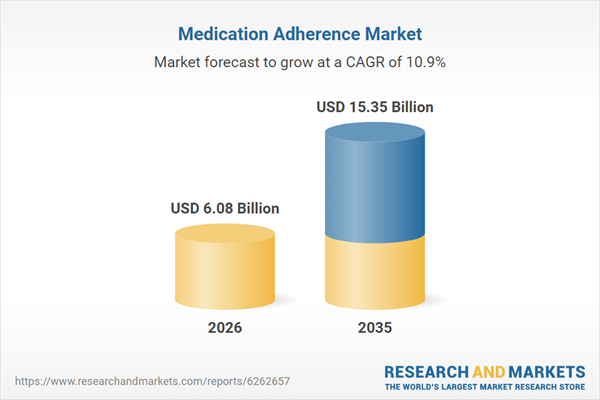
The global medication adherence market is projected to grow from USD 6.08 billion in 2026 to USD 15.35 billion by 2035, representing a compound annual growth rate (CAGR) of 10.92% during the forecast period. Market expansion is being supported by the rising prevalence of chronic diseases, an aging global population, wider adoption of digital health technologies, and increasing demand for connected solutions that improve treatment continuity and patient outcomes.

Medication Adherence Market Growth and Trends
Medication non-adherence remains a significant challenge in chronic disease management. According to the World Health Organization, adherence to long-term therapies for chronic conditions averages approximately 50% in developed countries. In the US alone, non-adherence is estimated to generate more than USD 100 billion in avoidable annual healthcare costs through preventable hospitalizations, emergency department visits, and disease progression.
Pharmaceutical companies, medical device manufacturers, healthcare providers, and digital health companies are increasing investments in patient-centric medication adherence solutions. Smart pill bottles, connected inhalers, blister packs, wearable injectors, medication dispensers, mobile applications, and remote monitoring platforms can capture dosing activity and provide timely notifications to patients, caregivers, and clinical teams.
Artificial intelligence is also strengthening the capabilities of medication adherence platforms. AI-enabled risk scoring, predictive analytics, automated reminders, remote monitoring dashboards, and personalized patient engagement tools are enabling healthcare organizations to identify adherence risks earlier. Companies such as BrightInsight are expanding AI-enabled adherence and persistence platforms, reflecting increased commercial interest in connected patient-support programs.
Key Medication Adherence Market Drivers
Growth is primarily driven by the increasing incidence of diabetes, cardiovascular disease, respiratory disorders, cancer, and neurological conditions. These diseases often require prolonged treatment, creating sustained demand for technologies that support consistent therapy management. Greater smartphone penetration, wearable connectivity, electronic health record integration, telehealth adoption, and AI-enabled analytics are further improving the commercial viability of medication adherence solutions.
The transition toward home-based care and self-administered therapies is another important market driver. Direct-to-patient delivery models integrated with telehealth and electronic prescribing are expanding the role of distributors and specialty pharmacies to include patient onboarding, device training, refill synchronization, adherence monitoring, and ongoing treatment support.
Market Challenges
Despite favorable growth prospects, adoption may be constrained by the cost of connected hardware and AI-enabled software, particularly in markets with limited reimbursement. Data privacy requirements, cybersecurity standards, health-system procurement procedures, and lengthy security reviews can also extend commercialization timelines. Behavioral factors-including forgetfulness, complex dosing schedules, and limited health literacy-continue to affect treatment persistence, especially among older patients and underserved populations.
Key Segment Insights
Software-centric solutions currently account for approximately 65% of the medication adherence market. The segment is expected to maintain its leading position through 2035 because of its scalability, lower marginal deployment costs, and compatibility with electronic health records and telehealth systems. Growing payer interest in outcomes-linked digital health tools is also supporting segment growth.
Hardware-centric solutions are anticipated to record a higher CAGR during the forecast period. Demand is increasing for objective, sensor-verified dosing information generated through connected inhalers, smart injectors, wearable injectors, pill dispensers, smart pill bottles, blister packs, and related devices. Product miniaturization and patient-friendly designs are expected to support further adoption in home-care environments.
Cardiovascular disorders represent the largest therapeutic segment and are expected to retain their market leadership. The high prevalence of hypertension and heart failure, combined with the serious consequences of missed doses, creates substantial demand for early identification of non-adherent patients. Other major therapeutic areas include metabolic, neurological, central nervous system, and respiratory disorders.
Regional Market Outlook
North America is projected to remain the largest medication adherence market through 2035. Its leadership is supported by established digital health infrastructure, high chronic disease prevalence, significant healthcare expenditure, value-based reimbursement programs, and early adoption of AI-enabled monitoring technologies. The concentration of major technology and healthcare companies further reinforces the region’s position.
Asia-Pacific is expected to register the fastest growth during the forecast period. Healthcare digitization, increasing disposable incomes, expanding insurance coverage, and rising chronic disease prevalence in China, India, Japan, and other regional markets are creating new opportunities. Government programs focused on healthcare access and digital infrastructure are also accelerating market development.
Competitive and Distribution Trends
- Solution providers primarily sell to hospitals, pharmaceutical sponsors, and health plans through direct commercial teams.
- Pharmacy chains are combining medication synchronization and compliance packaging with digital reminders and patient outreach.
- Specialty pharmacies and distributors are expanding into onboarding, device training, adherence coaching, and home delivery.
- Demand for self-administered injectable therapies is encouraging manufacturing partners to bundle device assembly, packaging, and adherence-support services.
- Regulatory accreditation, reimbursement access, cybersecurity compliance, and data privacy capabilities are becoming increasingly important competitive differentiators.
Companies active in the medication adherence market include Bigfoot Biomedical, BIOCORP, Eitan Medical, E3D Elcam Drug Delivery Devices, EoFlow, Gerresheimer, Insulet, Medtronic, Medtrum, Nemera, Phillips-Medisize, Roche, Sonceboz, SOOIL Development, Tandem Diabetes Care, West Pharmaceutical Services, and Ypsomed.
Medication Adherence Market Report Coverage
The market report evaluates opportunities by solution type, product, route of administration, therapeutic area, end user, and geography. Covered products include smart inhalers, smart injectors, wearable injectors, smart pills, medication dispensers, connected pill bottles, caps, boxes, and blister packs. Routes of administration include oral, injectable, inhalable, and other delivery formats, while major end users include hospitals and home-care settings.
The research also examines hardware and software landscapes, company profiles, clinical trials, partnerships, funding activity, value-chain costs, regulatory requirements, cybersecurity considerations, and competitive strategy. It provides revenue projections, regional analysis, market drivers, adoption barriers, emerging opportunities, and strategic insights for established companies, investors, healthcare organizations, and new market entrants.
Key Attributes:
| Report Attribute | Details |
| No. of Pages | 400 |
| Forecast Period | 2026-2035 |
| Estimated Market Value (USD) in 2026 | $6.08 Billion |
| Forecasted Market Value (USD) by 2035 | $15.35 Billion |
| Compound Annual Growth Rate | 10.9% |
| Regions Covered | Global |
A selection of companies mentioned in this report includes, but is not limited to:
- Bigfoot Biomedical
- BIOCORP
- Eitan Medical
- E3D Elcam Drug Delivery Device
- EoFlow
- Gerresheimer
- Insulet
- Medtronic
- Medtrum
- Nemera
- Phillips-Medisize
- Roche
- Sonceboz
- SOOIL Development
- Tandem Diabetes Care
- West Pharmaceutical Services
- Ypsomed
For more information about this report visit https://www.researchandmarkets.com/r/hpf5tw
About ResearchAndMarkets.com
ResearchAndMarkets.com is the world’s leading source for international market research reports and market data. We provide you with the latest data on international and regional markets, key industries, the top companies, new products and the latest trends.
Attachment
- Medication Adherence Market
CONTACT:
CONTACT: ResearchAndMarkets.com
         Laura Wood,Senior Press Manager
         press@researchandmarkets.com
         For E.S.T Office Hours Call 1-917-300-0470
         For U.S./ CAN Toll Free Call 1-800-526-8630
         For GMT Office Hours Call +353-1-416-8900


