



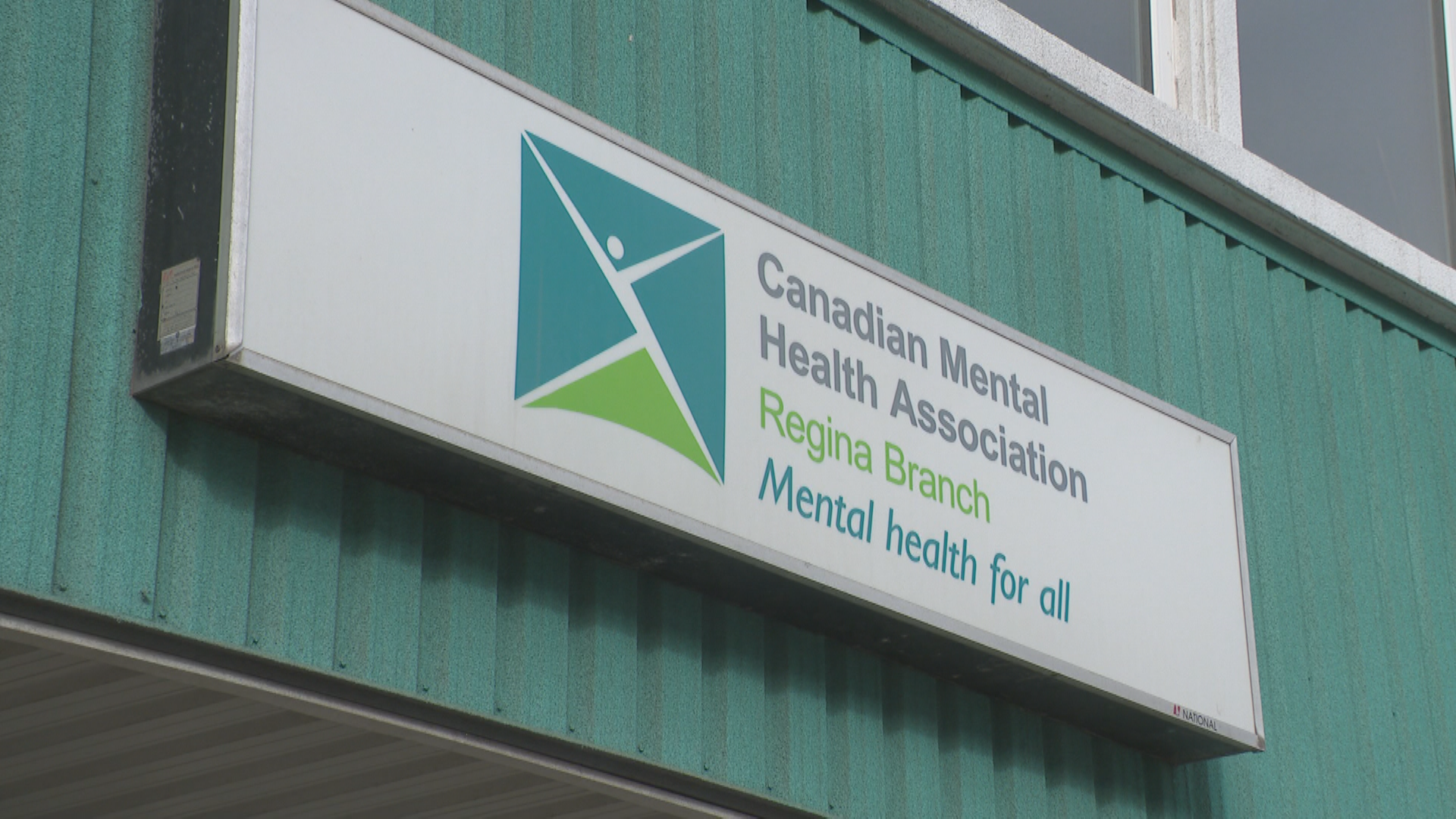
In recent years, stigma around mental health has lessened, but it remains prominent in some communities and spaces. This is why months like March are dedicated to opening up the discussion and shining a light on self-harm awareness.
Self-harm is known as a non-suicidal self-injury and is often paired with other mental health issues like anxiety and mood disorders. Examples of self-harm can be cutting, burning or even knowingly delving into an unhealthy lifestyle such as excess drinking.


Get daily National news
Get daily Canada news delivered to your inbox so you’ll never miss the day’s top stories.
Nicola Kimber, a Canadian Mental Health Association community engagement worker, says a common misconception people have towards those struggling is that it is done for attention, but that couldn’t be further from the truth – it is often a cry for help.
“We do see a concerning amount of youth who engage in self-harm behaviors and it’s something that sometimes can cause a lot of shame and people want to hide it,” she says.
Kimber says the first step towards breaking down the stigma around self-harm is simply talking about it.
Anyone who is struggling with self-harm is encouraged to reach out to a trusted individual, therapist or call the Kids Help line.
Sania Ali has more details in the video above.
© 2026 Global News, a division of Corus Entertainment Inc.


