



HONG KONG, April 10, 2026 (GLOBE NEWSWIRE) — March was a month in which crypto traded firmly within the global macro narrative. Bitcoin remained range-bound and volatile as the market absorbed the inflationary shock from the disruption of Strait of Hormuz, a more restrictive Fed backdrop, and elevated geopolitical risk, yet the asset continued to show resilience and closed the month with a healthier demand profile than in prior months. Spot ETF inflows returned, dip-buying from institutional allocators and digital-asset treasuries re-emerged, and the mining of the 20 millionth bitcoin reinforced the long-term digital-gold thesis. At the same time, U.S. regulatory clarity improved meaningfully through the SEC and CFTC’s joint digital-commodity framework, while stablecoin inflows, growth in agentic payments, and Hyperliquid’s expanding macro-linked activity all pointed to a market that remains structurally constructive despite a difficult macro environment.
Macro Pressure Meets Structural Demand
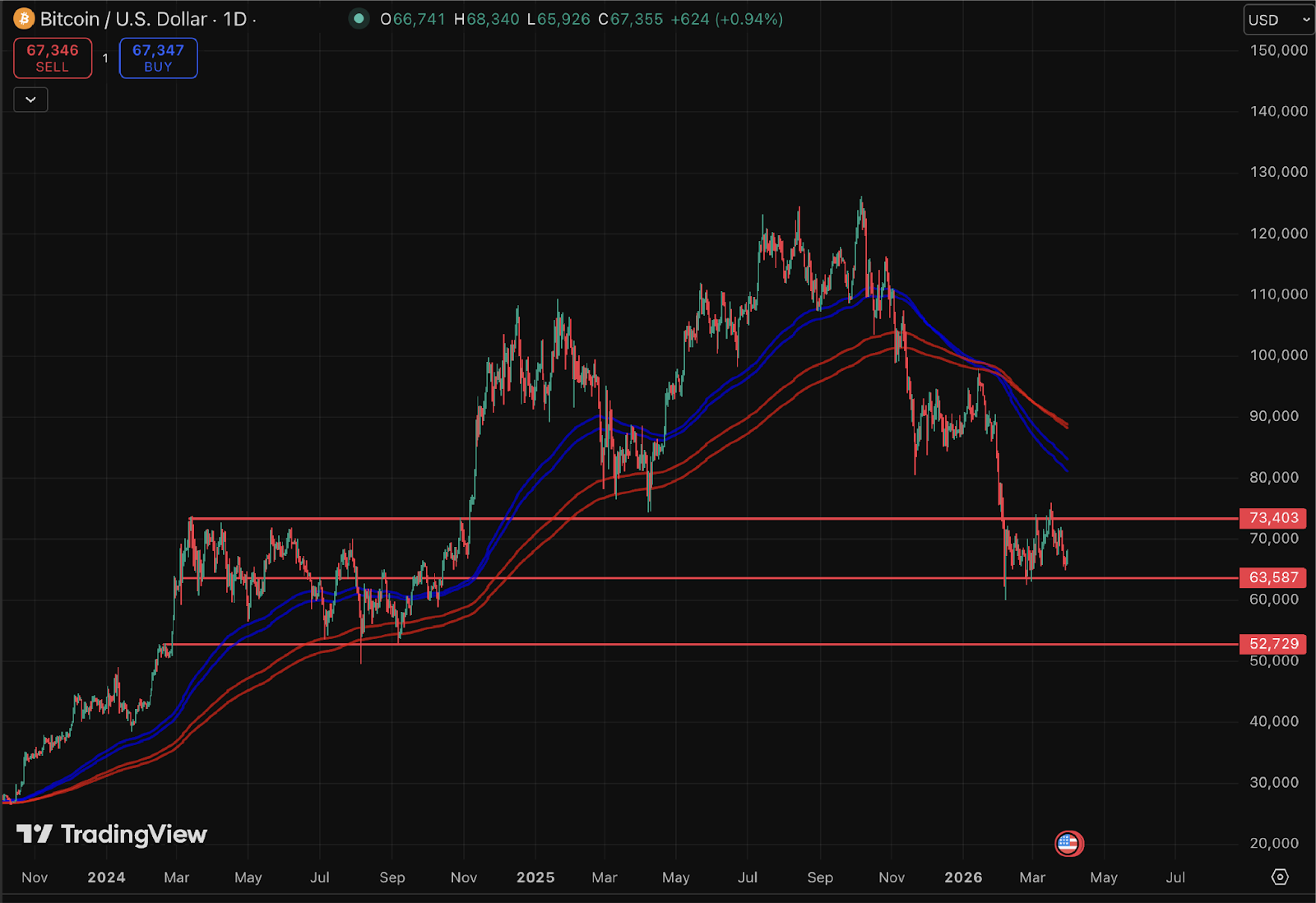
Throughout March, Bitcoin’s price action was largely dictated by macroeconomic developments. The asset rallied early in the month, trading near $74,000 by mid-March, before retreating and ultimately closing around $68,200 as rising oil prices, interest rate concerns, and geopolitical uncertainty weighed on risk assets.
A symbolic and important milestone occurred on March 10 with the mining of the 20 millionth Bitcoin. With only 1 million BTC left to be mined over the coming century, scarcity dynamics have become increasingly prominent. In combination with an inflationary macro backdrop and ongoing institutional accumulation, this milestone reinforces Bitcoin’s positioning as a long-term store of value.
Demand trends in March were particularly encouraging. Spot Bitcoin ETFs recorded approximately $1.3 billion in net inflows, breaking a four-month streak of outflows. Importantly, the nature of these flows suggests genuine accumulation rather than short-term positioning. Institutional investors and corporate treasuries were observed consistently buying dips around the $70,000 level, signaling a shift toward a more stable and conviction-driven demand base compared to late 2024.
On the regulatory front, U.S. authorities delivered a significant development. The SEC and CFTC jointly introduced a digital commodity framework that formally classified 16 major digital assets—including Bitcoin, Ethereum, Solana, XRP, and others—under a clearer regulatory structure. While market reaction was muted due to overlapping macro events such as the Federal Open Market Committee (FOMC) meeting, this move represents one of the most meaningful steps toward regulatory clarity in recent years and could act as a tailwind in the months ahead.
The Dot Plot Holds but the Pressure Builds
The March FOMC meeting reflected an increasingly complex policy environment. The Federal Reserve maintained interest rates at 3.50%–3.75%, acknowledging softer labor market momentum while emphasizing that inflation remains elevated. Additionally, policymakers highlighted that geopolitical developments in the Middle East have introduced further uncertainty into the economic outlook.
The Fed’s stance can best be described as cautious and constrained. On one hand, economic growth remains relatively stable; on the other, persistent inflation—exacerbated by rising energy prices—limits the scope for near-term rate cuts. Although long-term projections such as the “dot plot” did not show a more aggressive tightening path, underlying signals suggest that monetary policy will remain restrictive for longer than markets had previously anticipated.
Our view remains that the Fed’s broader path still points toward cuts rather than hikes. We do not think policymakers want to tighten into what is essentially an externally driven oil shock unless the conflict worsens sharply and the inflation impulse begins to seep more persistently into expectations. But the bar for cuts has clearly risen. March reminded the market that the Fed may still cut later, while forcing risk assets to endure a longer pause first.
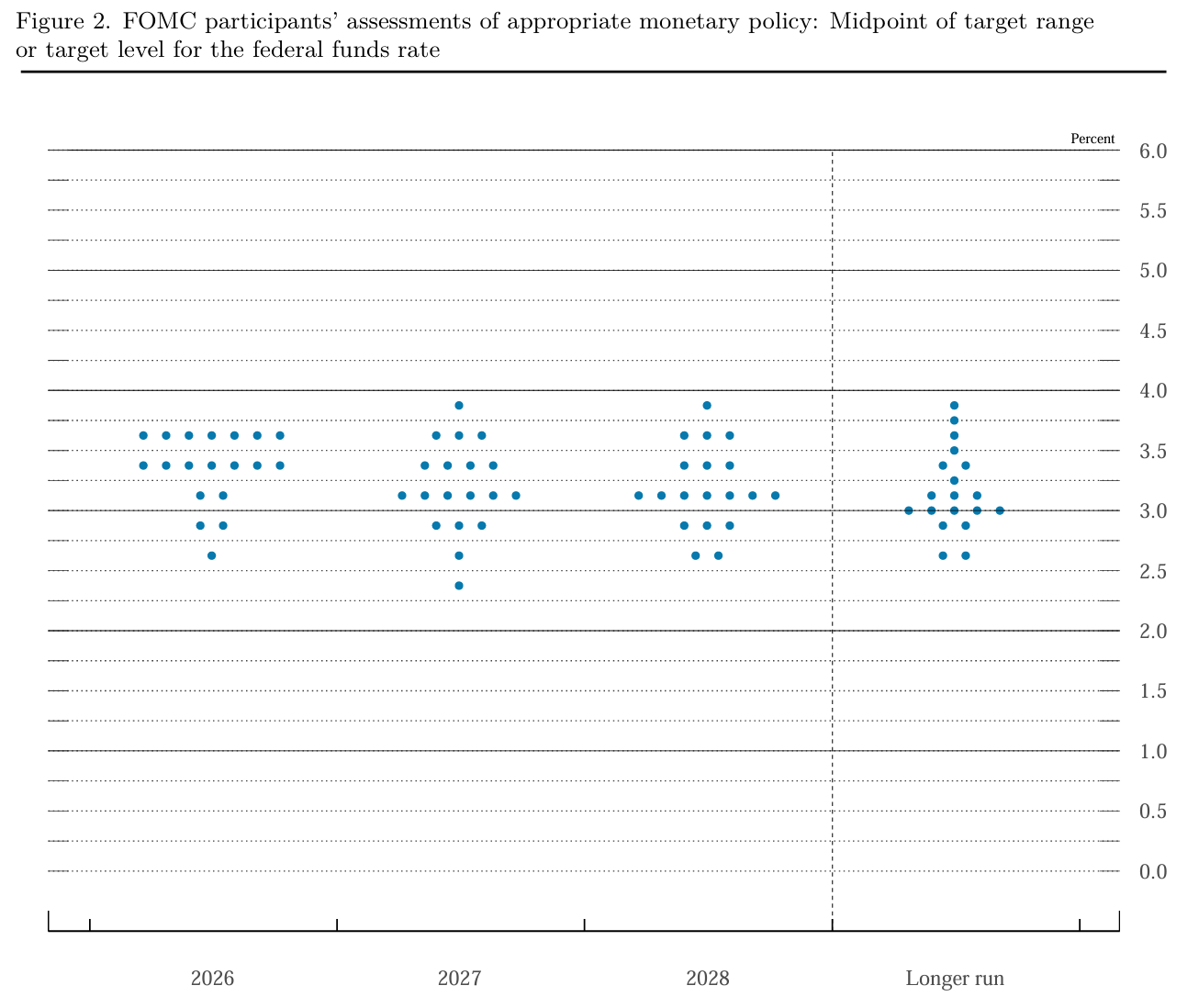

Source: Federal Reserve Board
Data as of 18 March 2026
Energy Shock Drives Market Repricing
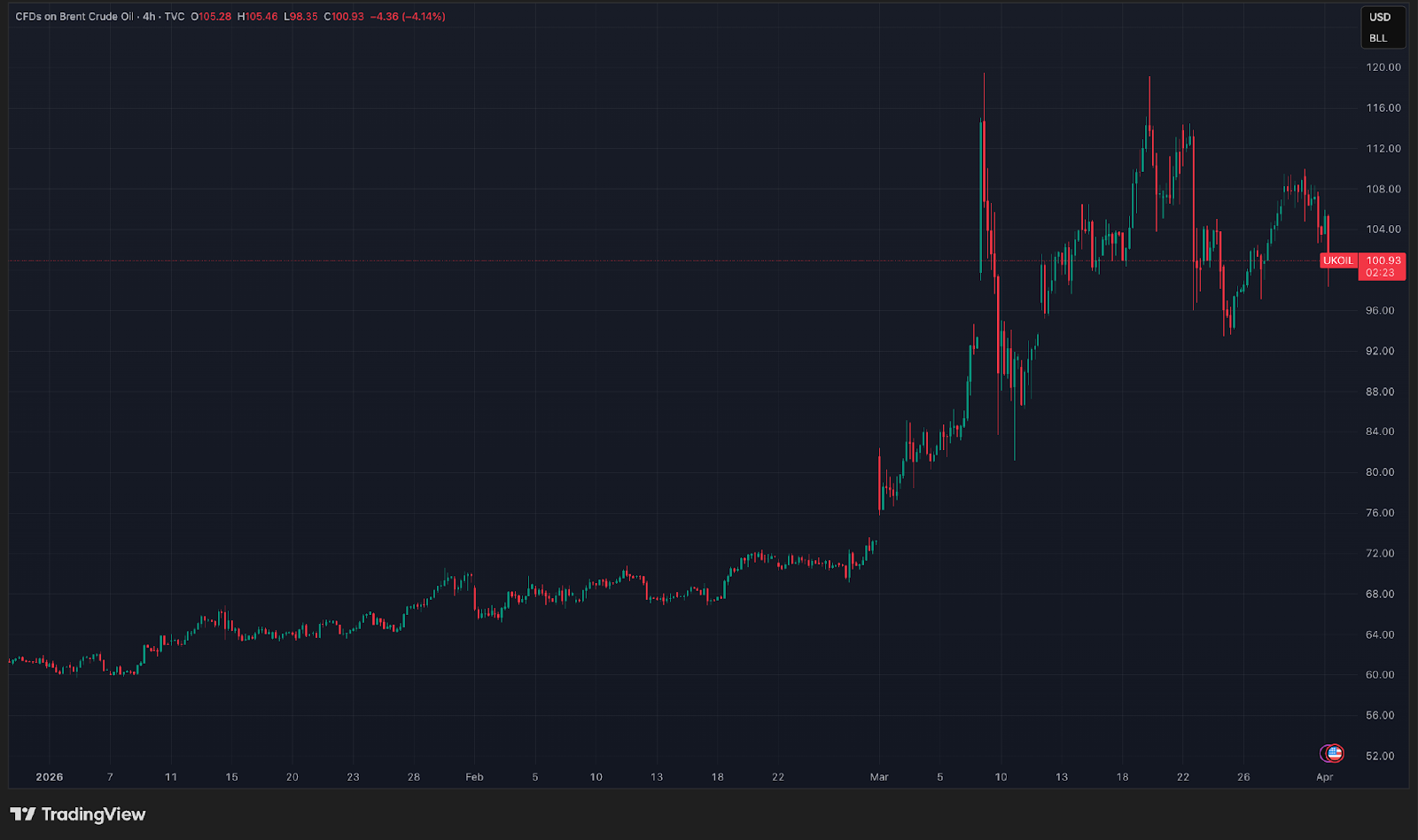
Energy markets were at the center of March’s macro narrative. Escalating conflict involving Iran led to the effective disruption of the Strait of Hormuz, a critical chokepoint through which approximately 20% of global oil and liquefied natural gas flows pass.
Oil prices reacted sharply, with Brent crude surpassing $100 per barrel and briefly peaking near $120 before stabilizing slightly lower later in the month. Even without a sustained upward trajectory, the shock was sufficient to force markets to reprice inflation expectations, interest rate paths, and growth outlooks.
This repricing had direct implications for crypto markets. As energy prices rose and uncertainty increased, high-beta assets—including Bitcoin—came under pressure. The persistence of the disruption ensured that energy remained a dominant factor shaping investor sentiment throughout the month.
Looking ahead, it is unlikely that oil prices will remain at extreme “war premium” levels indefinitely. Structural supply conditions entering 2026 suggest relative abundance rather than scarcity. Furthermore, political incentives—particularly from the United States—favor a resolution to the disruption. However, in the near term, as long as the Strait remains impaired, energy will continue to anchor the inflation narrative and, by extension, influence crypto market dynamics.
Market Structure and Key Trends
Bitcoin traded within a relatively tight range of $63,000 to $74,000 during March, with price movements largely driven by macro headlines rather than crypto-specific catalysts. The asset’s ability to hold this range despite significant external shocks highlights its growing resilience. Near-term direction may depend on geopolitical developments, particularly potential U.S. actions related to Iran in early April.

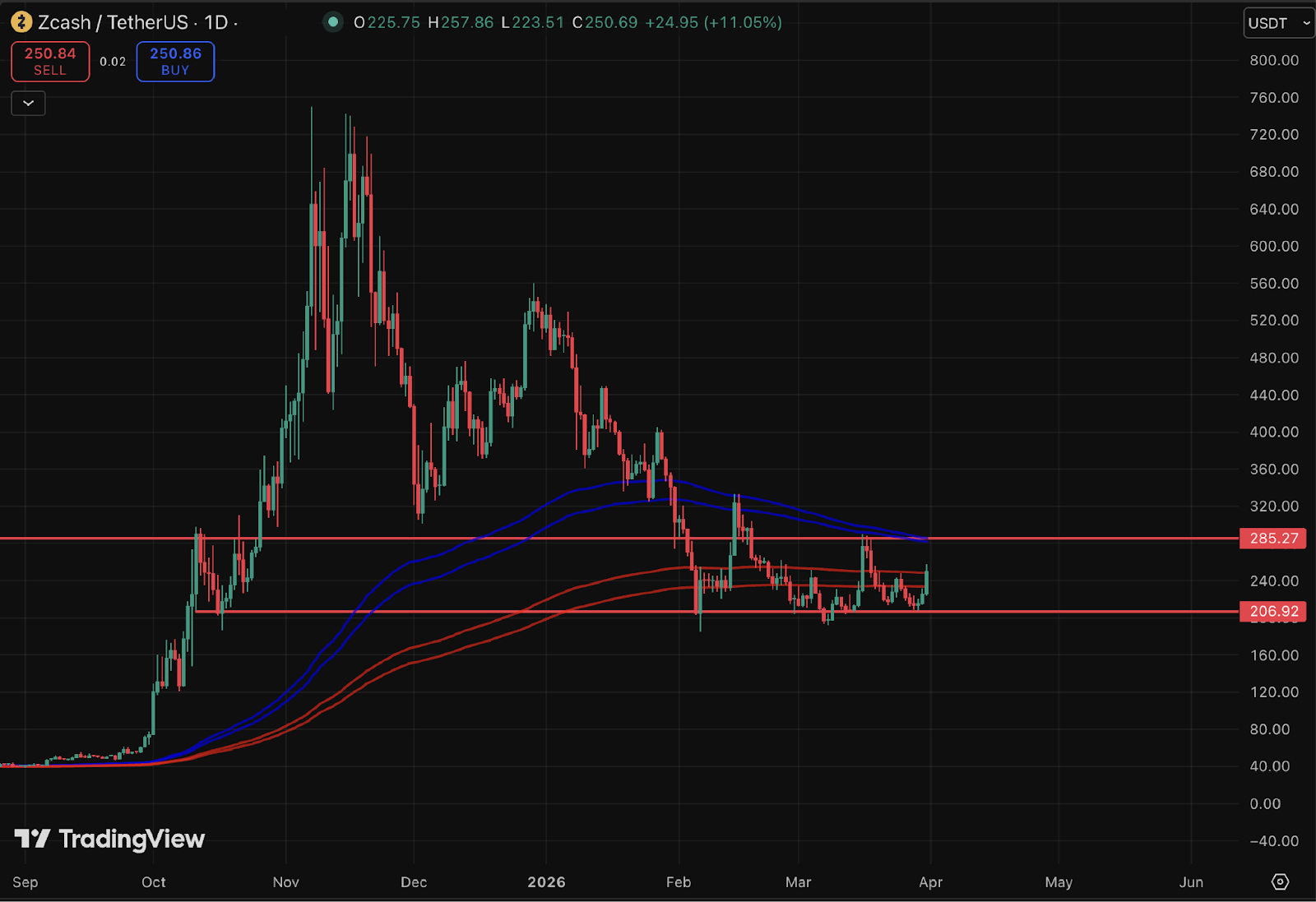
Beyond Bitcoin, select altcoins are beginning to show early signs of bottom formation after extended consolidation phases, suggesting the potential for a broader market recovery if macro conditions stabilize.
Meanwhile, innovation within the crypto ecosystem continues to accelerate. Hyperliquid, for example, recorded record trading volumes in traditional finance-linked perpetual contracts, driven largely by crude oil markets. This reflects a broader trend in which platforms offering diverse market exposure and rapid product deployment gain a competitive edge in a macro-driven trading environment.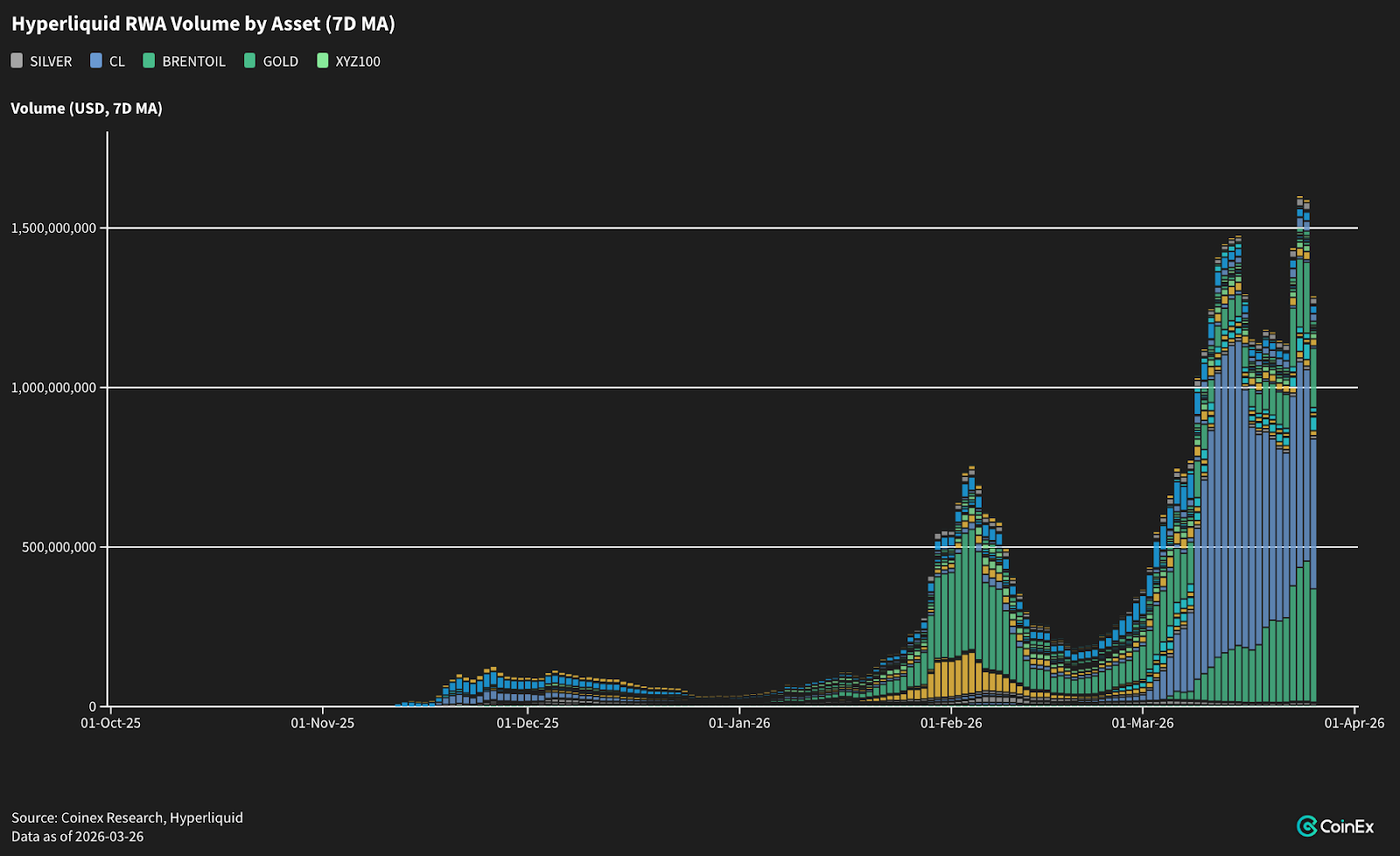
The Rise of Agentic Payments
Another notable development in March was the rapid advancement of “agentic payments”—transactions executed autonomously by AI systems. Major payment networks such as Mastercard and Visa expanded real-world implementations across multiple regions, while new tools designed for AI-driven commerce began to emerge.


At the same time, crypto-native infrastructure is playing a crucial role in enabling this shift. Companies like Stripe and Coinbase are developing systems that facilitate machine-to-machine payments using blockchain-based rails, particularly stablecoins. These developments suggest a dual-track evolution: traditional financial networks are building trust and compliance frameworks, while crypto infrastructure provides programmability and efficiency.
Stablecoin Inflows Signal Underlying Strength
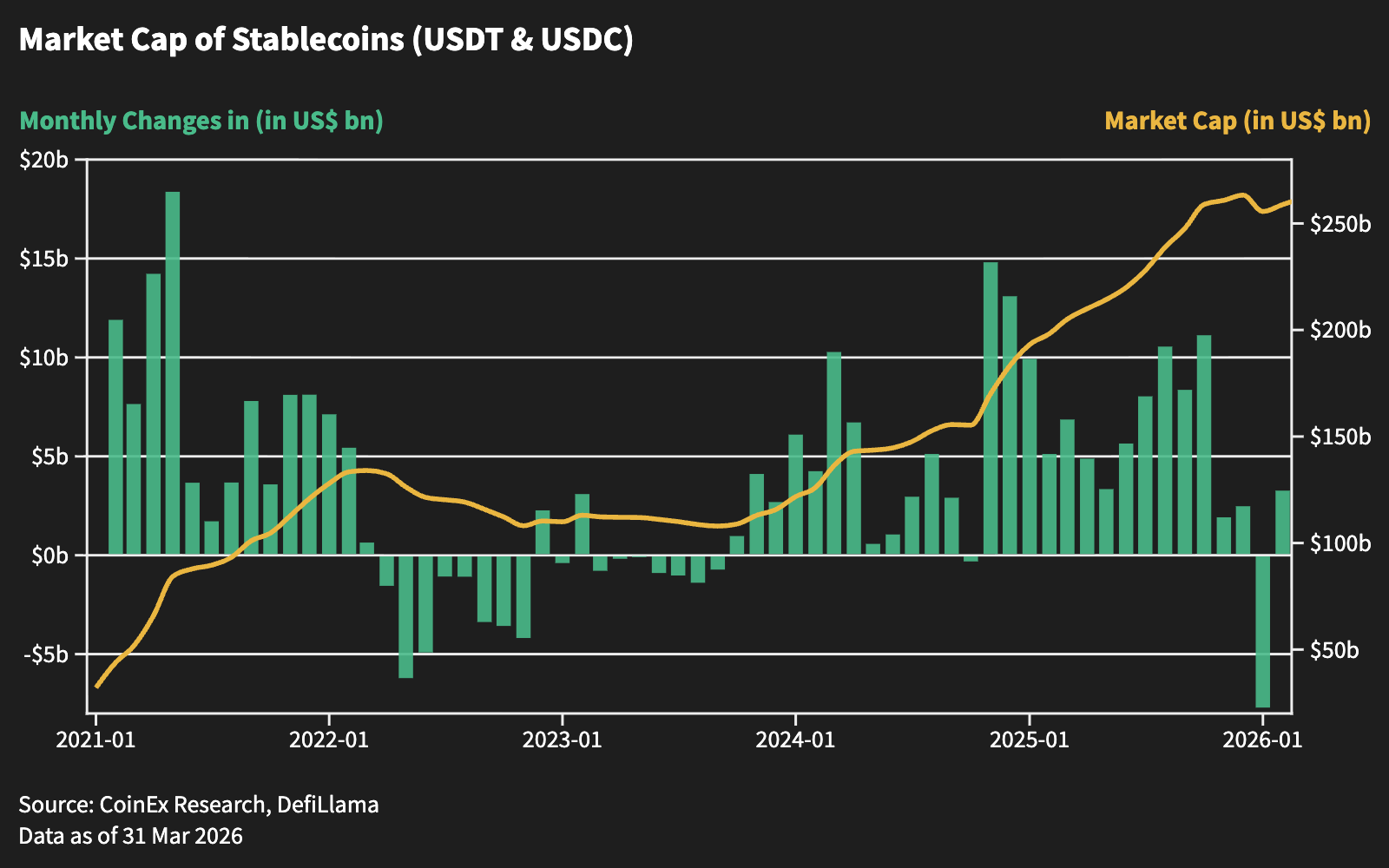
Despite challenging macro conditions, liquidity within the digital asset ecosystem remained robust. Stablecoins recorded approximately $2.7 billion in net inflows during March, signaling continued capital allocation into the space.
This trend is particularly significant as it suggests that market participants are positioning for future opportunities rather than exiting the ecosystem. In this context, Bitcoin may already be in the process of forming a durable bottom. The timing of the next major upward move will likely depend on improvements in macro conditions—especially a reduction in geopolitical tensions.

Conclusion
March 2026 underscored the growing maturity of the crypto market. While macroeconomic forces continue to exert a strong influence, structural demand, institutional participation, and technological innovation remain firmly intact. Bitcoin’s resilience in the face of significant external shocks highlights its evolving role within the global financial system.
Looking forward, the path of geopolitical developments and monetary policy will remain key drivers. However, with improving demand fundamentals and sustained liquidity, the broader outlook for crypto markets remains cautiously optimistic.
About CoinEx
Founded in 2017, CoinEx is a global cryptocurrency exchange committed to making trading easier. The platform provides a range of services, including spot and margin trading, futures, swaps, AMM, and financial management services for over 5 million users across 200+ countries and regions.
Since its establishment, CoinEx has steadfastly adhered to a “user-first” service principle. With the sincere intention of nurturing an equitable, respectful and secure crypto trading environment, CoinEx enables individuals with varying levels of experience to effortlessly access the world of cryptocurrency by offering easy-to-use products.
About CoinEx Research
CoinEx Research is the research arm of the CoinEx Exchange, dedicated to providing in-depth analysis and research reports on the blockchain and cryptocurrency industry.
The team provide users with professional market insights by tracking market trends, analyzing project white papers and technical documents, evaluating project teams and development prospects, etc. Our reports cover macro markets, blockchain technology, digital assets, DeFi, NFTs, and other fields in the various forms of research publication.
To see more of CoinEx Research’s reports and insights, visit our CoinEx Insight.
Contact:
CoinEx
pr@coinex.com
Disclaimer: This sponsored content is provided by the content provider and does not necessarily reflect the views of this media platform or its publisher. The information is shared for general informational purposes only and should not be considered financial, investment, or trading advice. Cryptocurrency and mining-related activities carry risks, including the potential loss of capital, and readers are encouraged to conduct their own research and seek professional advice where appropriate. Speculate only with funds that you can afford to lose.The media platform and publisher assume no responsibility for any losses or claims arising from reliance on this content. GlobeNewswire does not endorse any content on this page.
Legal Disclaimer: This article is provided on an “as-is” basis, without warranties or representations of any kind, express or implied. The media platform assumes no responsibility or liability for the accuracy, content, completeness, legality, or reliability of the information presented. Any complaints, claims, or copyright concerns related to this article should be directed to the content provider mentioned above.
Photos accompanying this announcement are available at
https://www.globenewswire.com/NewsRoom/AttachmentNg/f465fc20-77f7-4db5-adcb-e0e02e25c0ec
https://www.globenewswire.com/NewsRoom/AttachmentNg/a78f69b3-ffc7-4062-bad8-99302120a077
https://www.globenewswire.com/NewsRoom/AttachmentNg/2010d7b7-9cae-4907-9031-a2c2b89f2891
https://www.globenewswire.com/NewsRoom/AttachmentNg/38477ad9-88da-4a7b-bb23-9d9288fa9284
https://www.globenewswire.com/NewsRoom/AttachmentNg/7aac7dfc-0342-4b50-ba75-493d6a5a1b79
https://www.globenewswire.com/NewsRoom/AttachmentNg/a2f518a3-8c8f-4462-bbad-ffd1f0e08690
https://www.globenewswire.com/NewsRoom/AttachmentNg/68760ad7-72ce-4073-8eac-39ce2f851cfb


