



In Brief
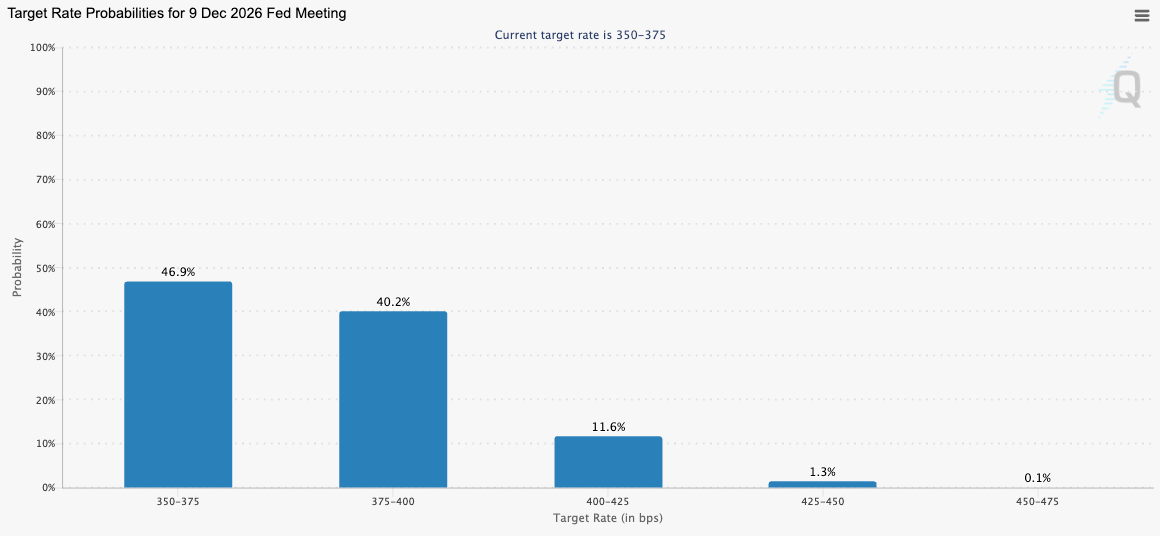
HONG KONG, June 04, 2026 (GLOBE NEWSWIRE) — May was another month dominated by macro-driven risk reduction across crypto markets. Bitcoin declined 3.6% to close near $73,500, while U.S. spot Bitcoin ETFs recorded $2.4 billion in net outflows, reversing April’s record inflows as investors reacted to rising oil prices and surging Treasury yields. With the 30-year U.S. Treasury yield climbing above 5%, markets increasingly embraced the view that the Federal Reserve, now led by Kevin Warsh, is unlikely to cut rates in 2026.
Yet beneath the weaker price action, structural progress continued. A key U.S. crypto market-structure bill advanced in the Senate, Hyperliquid became the first onchain exchange to secure U.S. spot ETF products, and tokenized stock trading reached record levels. While sentiment weakened, infrastructure development and regulatory progress remained firmly intact.
Our view is that May represented a macro-driven derisking event rather than a breakdown in crypto fundamentals. Institutional positioning adjusted to a tougher rates environment, but adoption, regulation, and market innovation continued moving forward.
Risk-Off Tape, Regulation-On Rails
Bitcoin opened May near $76,300 and ended the month at roughly $73,500. Although BTC briefly rallied above $82,000, deteriorating macro conditions pushed prices lower into month-end.
The most notable shift came from institutional demand. U.S. spot Bitcoin ETFs experienced approximately $2.4 billion in net outflows, a sharp reversal from April’s nearly $2 billion of inflows. The move reflected changing expectations around interest rates rather than weakening confidence in Bitcoin itself.
Persistent inflation and higher long-term yields tightened financial conditions and reduced expectations for future liquidity support. As a result, institutional investors became more defensive, leading to a temporary pullback in ETF demand.
Despite weaker market performance, regulatory progress continued. A U.S. Senate committee moved forward with a crypto market-structure bill, while discussions around stablecoin regulation remained active. The primary debate centers on whether stablecoin issuers should be allowed to pass yield directly to holders.
Meanwhile, the SEC signaled support for innovation by introducing a framework that would allow tokenized U.S. equity trading under certain exemptions, even as broader tokenized-stock initiatives remain under review.
The broader trend remains clear: U.S. crypto regulation continues to mature regardless of short-term market volatility.
Warsh Inherits an Oil-Shock Fed
Kevin Warsh officially assumed leadership of the Federal Reserve this month, inheriting a policy environment shaped less by economic weakness and more by energy-driven inflation.
Inflation data remained stubbornly elevated throughout May, leaving policymakers with limited room to discuss rate cuts. The shift had already begun under Jerome Powell, whose final FOMC meeting in April saw the most divided vote since 1992. Markets subsequently moved to price out rate cuts for 2026 altogether.
The Iran-related oil shock accelerated this process. Rising crude prices fed directly into inflation expectations, complicating the Fed’s path and raising the possibility that restrictive policy could remain in place well into 2027.
However, Warsh should not be viewed as a traditional monetary hawk. While he has long criticized quantitative easing and supports shrinking the Fed’s balance sheet, he is also a strong believer in productivity-driven disinflation. His view is that advances in artificial intelligence could boost economic efficiency and reduce inflationary pressures over time, potentially creating room for future easing without weakening growth.
For now, though, inflation remains the dominant concern.

The Long End Breaks: Bonds Reprice Global Liquidity
The bond market was central to May’s risk-off environment.
The U.S. 30-year Treasury yield rose above 5%, driven by concerns around inflation and growing fiscal deficits. Federal interest expenses are approaching $1 trillion annually, placing increasing pressure on government finances and drawing greater investor scrutiny.
This trend was not limited to the United States. Long-term government bond yields climbed sharply across major economies, including the United Kingdom and Japan, highlighting a broader tightening in global liquidity conditions. U.K. 30-year gilt yields hit a 28-year high, the most since 1998, at roughly 5.78%, echoing January, when we flagged Japan’s 40-year JGB yield breaching 4% as a global liquidity headwind.
The impact of the oil shock was felt most clearly through inflation and foreign exchange markets. Central banks across emerging markets responded with tighter policy as local currencies weakened and imported inflation pressures increased.
Higher long-term yields typically weigh on liquidity-sensitive assets, including crypto. However, we continue to believe that a significant portion of the current inflation premium is linked to geopolitical tensions and energy markets. Should a lasting U.S.-Iran agreement emerge and shipping through Hormuz normalize, some of that pressure could ease. Fiscal concerns, however, are likely to remain a longer-term challenge.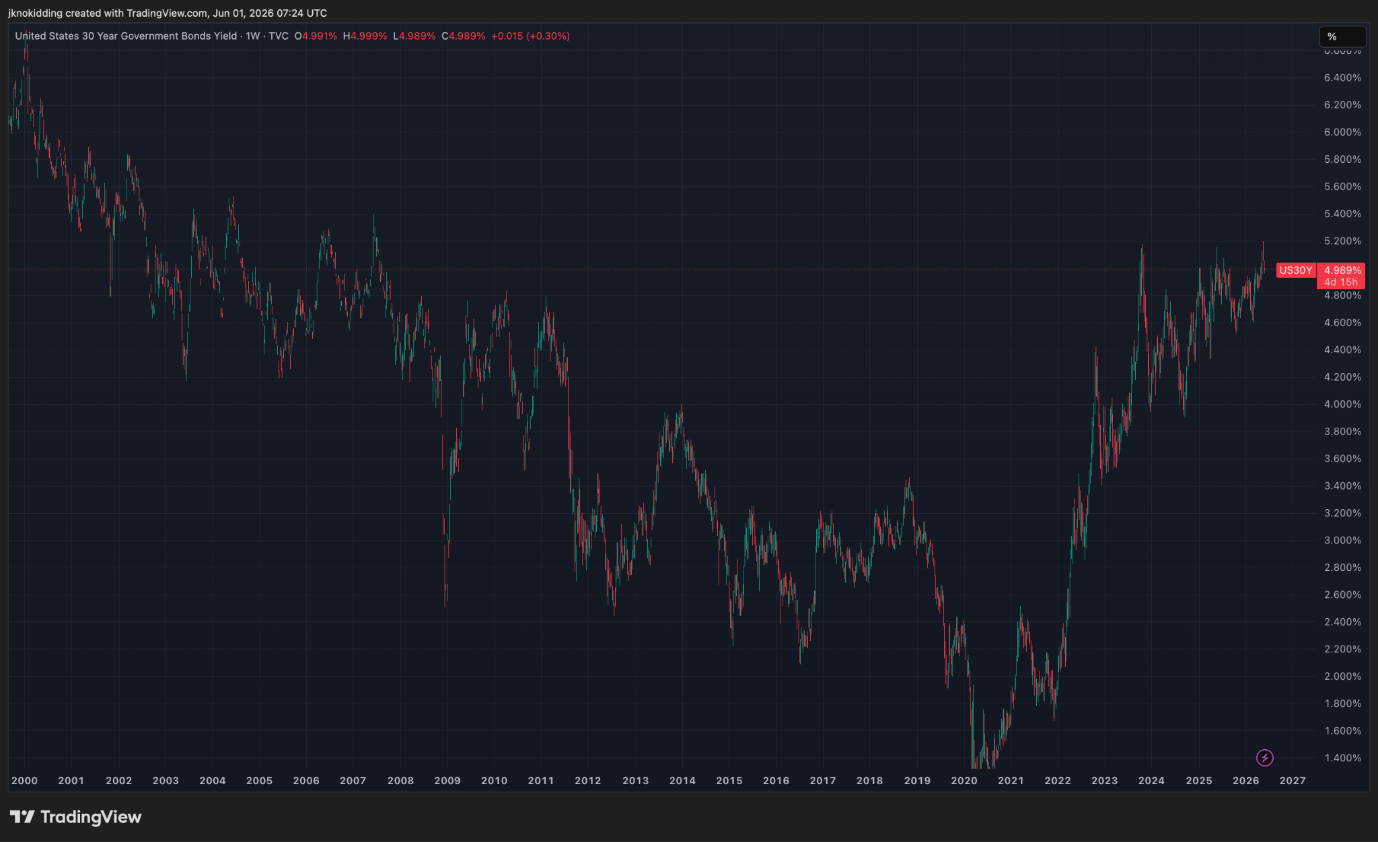

Hyperliquid’s ETF and the Equity-ification of Crypto
One of the month’s most important developments came from Hyperliquid.
The platform became the first onchain exchange to receive U.S. spot ETF wrappers, with products launched by both 21Shares and Bitwise. Together, these funds attracted approximately $72 million in inflows despite broader outflows from Bitcoin and Ethereum ETFs.
The significance extends beyond ETF approval. Investors are increasingly valuing Hyperliquid not as a crypto token, but as an exchange business generating real cash flow.
Unlike Bitcoin or Ethereum, Hyperliquid benefits from protocol revenue that is continuously directed toward token buybacks. This creates an earnings-like profile that allows investors to evaluate the asset using traditional valuation frameworks.
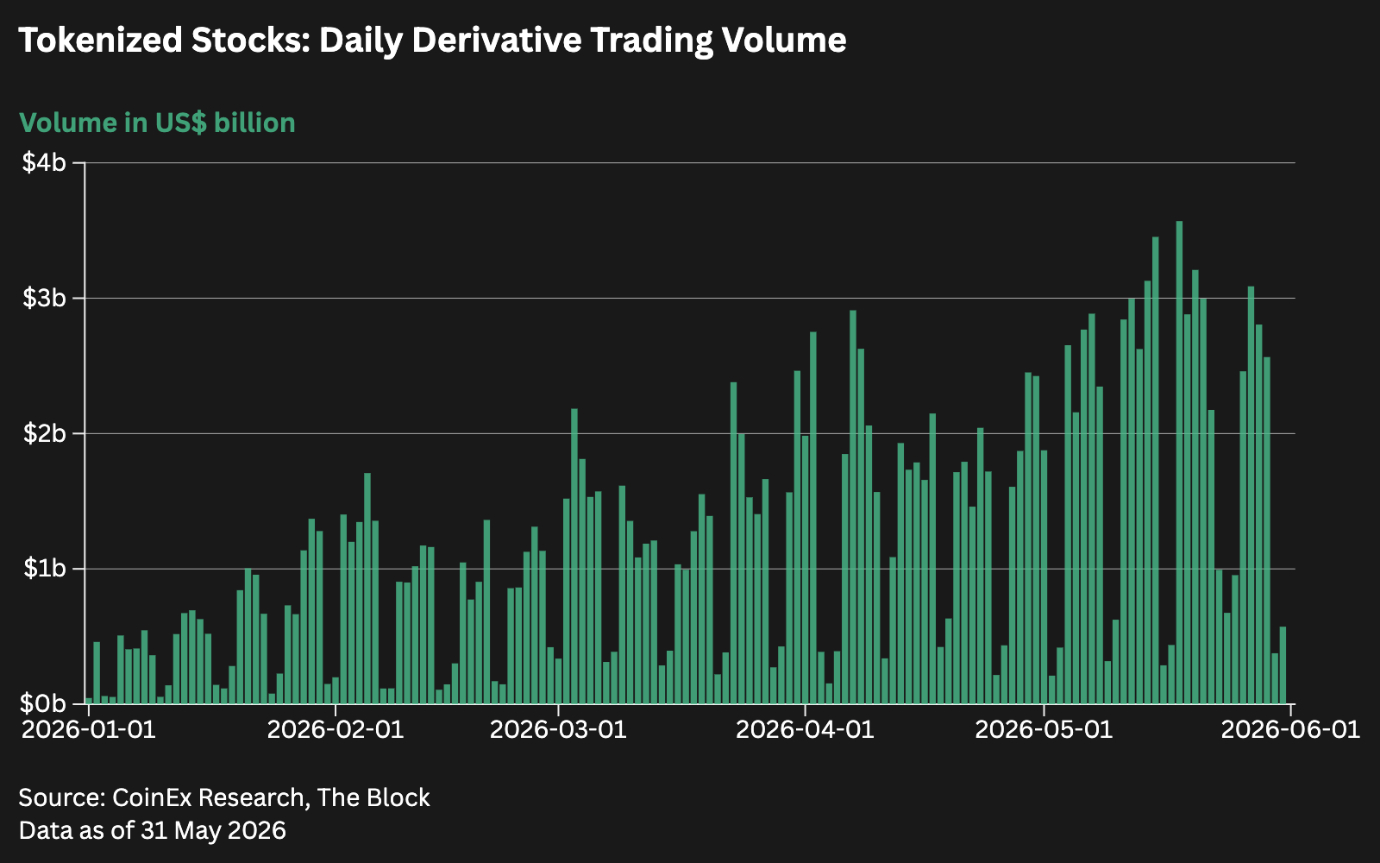
The same trend is visible across tokenized equities. Daily derivatives volume tied to tokenized stocks reached a record $3.57 billion in May, reflecting growing demand for onchain versions of traditional financial assets.
We believe this shift represents a major structural trend: onchain financial instruments are increasingly becoming a core part of the crypto ecosystem.

Echo’s Monad Incident Adds to DeFi Risk Premium
Security concerns remained a key challenge for DeFi in May.
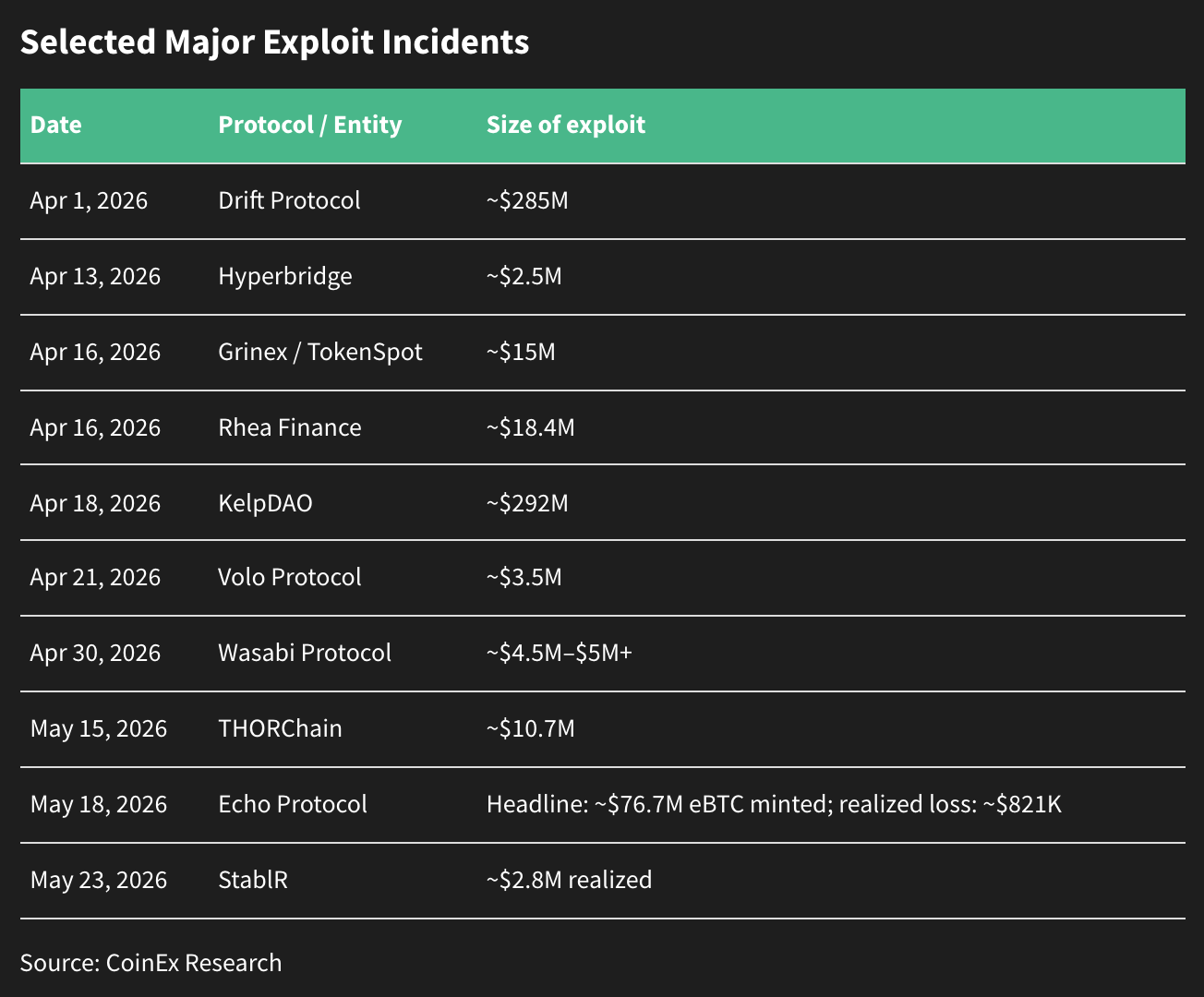
On May 19, an attacker used a compromised admin key to mint approximately 1,000 unauthorized eBTC on Monad. While the headline figure implied losses of roughly $76 million, actual realized losses, landed closer to $0.8 million than to the $76 million paper figure, were significantly smaller after most of the unauthorized tokens were recovered and destroyed.
Importantly, the incident was caused by operational key management failures rather than flaws in smart contracts or blockchain infrastructure.
Even so, the event reinforced growing concerns around protocol risk. Coming shortly after major exploits involving Drift and KelpDAO, it contributed to a broader reassessment of risk within DeFi markets.
Institutional investors continue to apply a discount to DeFi valuations due to operational and security concerns. As attack methods become increasingly sophisticated, particularly with AI-assisted techniques, risk management is likely to remain a major focus for the sector.

Key Charts to Watch
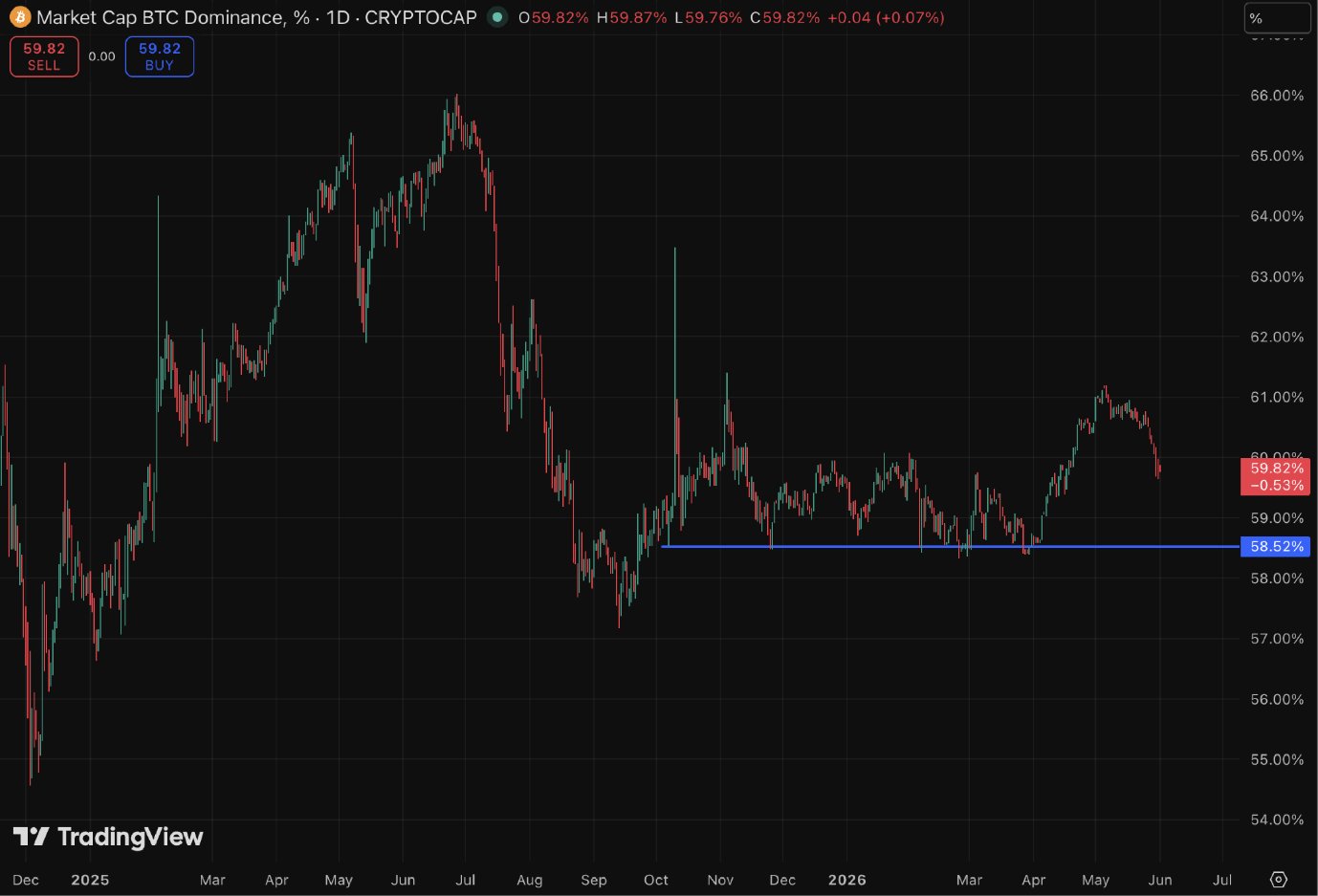
BTC.D Weakens as Altcoins Show Relative Strength
BTC dominance (BTC.D) has declined by roughly 2% this month, potentially suggesting a shift in market structure. While BTC has remained under pressure and continued to trade in a broadly choppy, downward-sloping range, the altcoin market has shown clear signs of relative strength. From a technical perspective, BTC.D may continue to trend lower in the near term, with the 58.2% support level emerging as the next key area to watch.

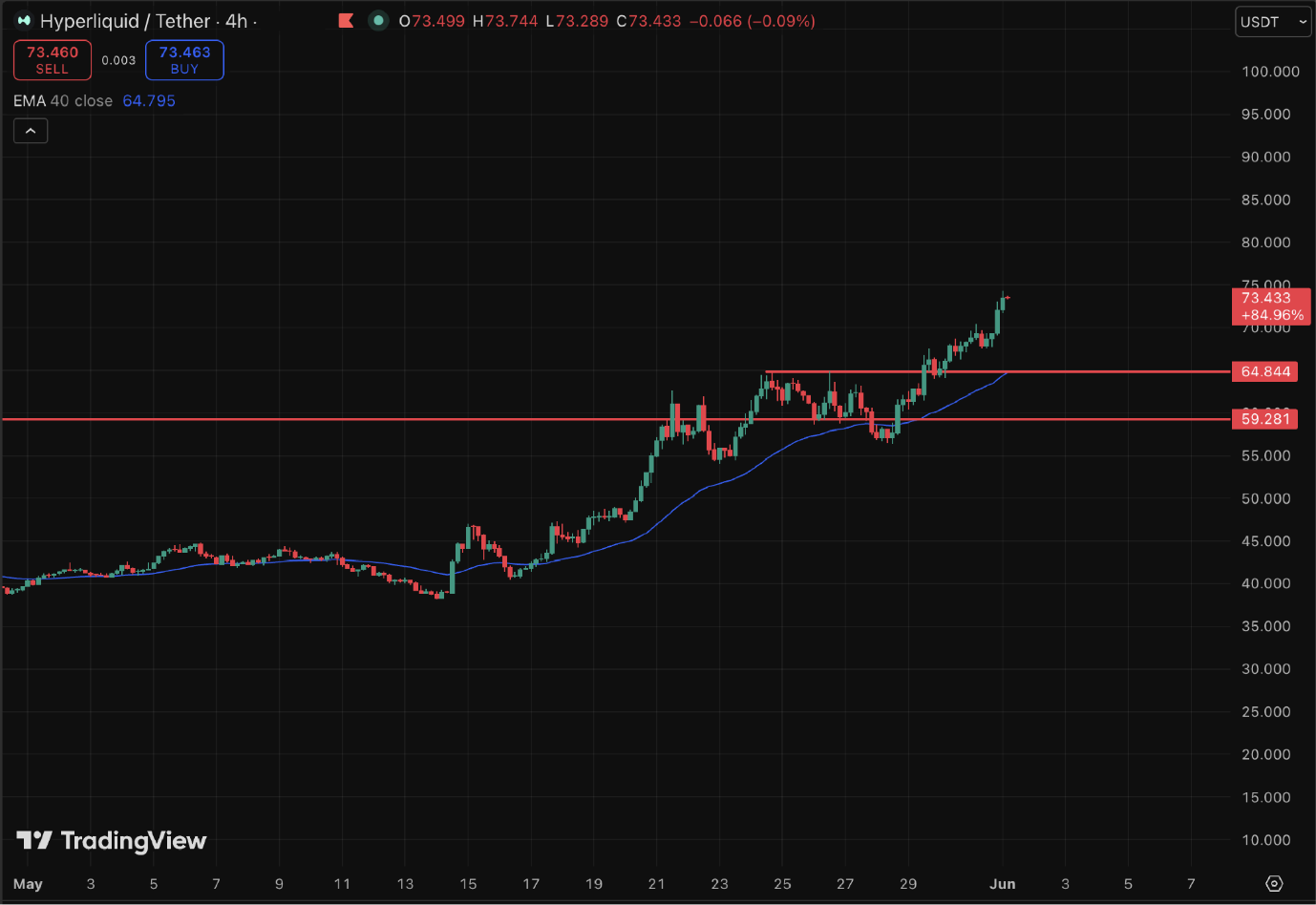
HYPE Enters Price Discovery Ahead of Major Unlock
HYPE is up roughly 84% this month, decisively breaking above its previous all-time high and entering price discovery. However, HYPE is set to unlock 534,000 tokens allocated to the core team on June 5, representing approximately $39 million in value. This could introduce short-term supply pressure and potentially push the token to retest the $65 support zone and the rising EMA trendline.

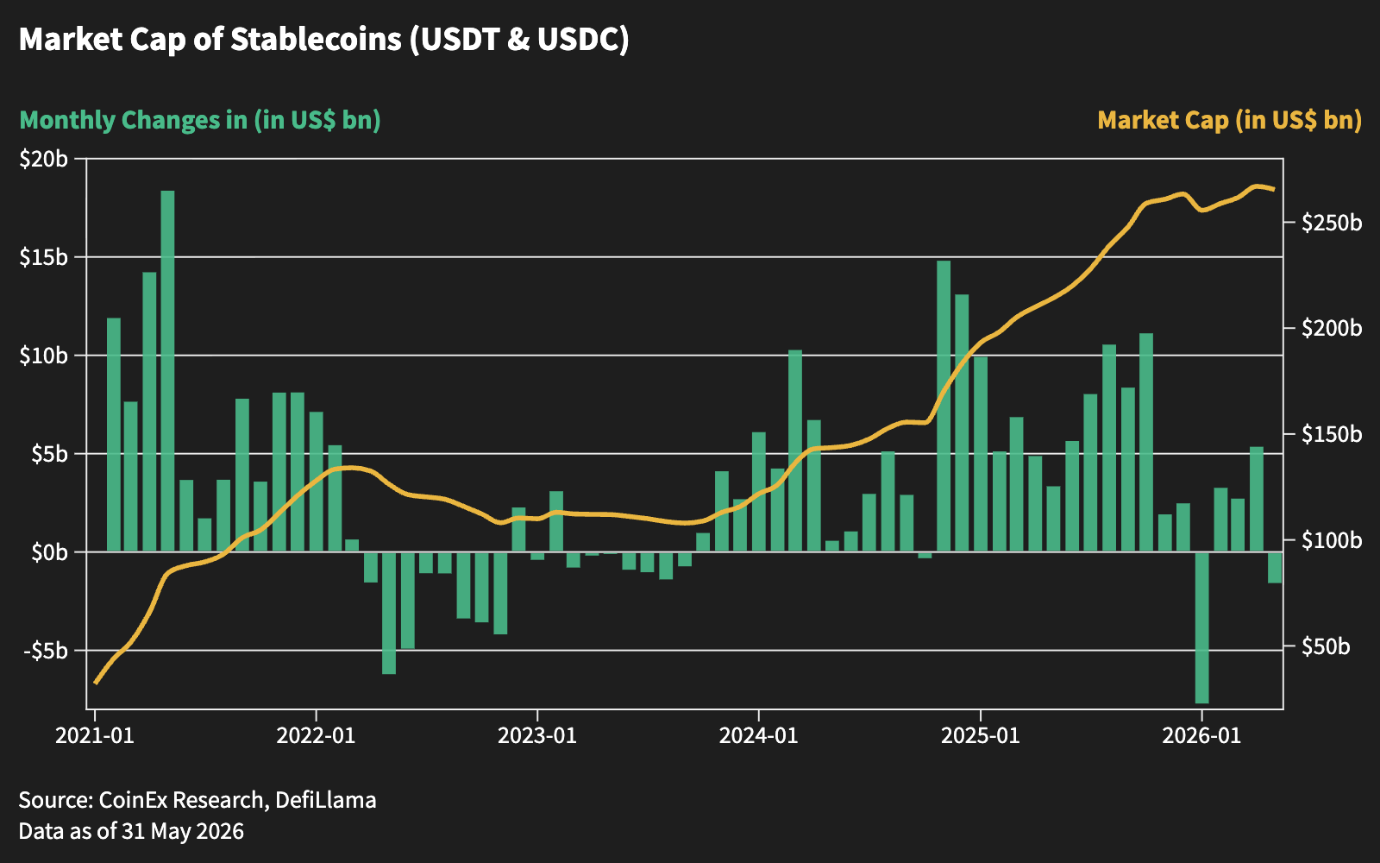
Stablecoin Flows Signal a Pause, Not a Reversal Yet
Stablecoin liquidity softened in May, with combined USDT and USDC supply declining by roughly $1.6 billion.
While this interrupted the recovery trend seen since early 2026, the scale of the outflow remains relatively modest. Against a backdrop of ETF outflows, rising yields, and cautious sentiment, the decline appears more consistent with a cooling period than a full reversal in liquidity conditions.
For now, we view stablecoin activity as signaling a pause rather than the beginning of a sustained contraction. The broader foundation of crypto liquidity remains intact, even as markets navigate a more challenging macro environment.
About CoinEx
Established in 2017, CoinEx is a user-centric cryptocurrency exchange backed by the industry-leading mining pool ViaBTC. Since its launch, CoinEx has been among the earliest exchanges to release proof-of-reserves and implement a 100% reserve policy, ensuring the security of user assets. Today, CoinEx serves over 10 million users across 200+ countries and regions and supports more than 1,100 cryptocurrencies with professional-grade features and services, establishing itself as a trusted crypto trading expert.
To learn more about CoinEx, visit: Website | Twitter | Telegram | LinkedIn | Facebook | Instagram | YouTube
Contact:
CoinEx
pr@coinex.com
Disclaimer: This sponsored content is provided by the content provider and does not necessarily reflect the views of this media platform or its publisher. The information is shared for general informational purposes only and should not be considered financial, investment, or trading advice. Cryptocurrency and mining-related activities carry risks, including the potential loss of capital, and readers are encouraged to conduct their own research and seek professional advice where appropriate. Speculate only with funds that you can afford to lose.The media platform and publisher assume no responsibility for any losses or claims arising from reliance on this content. GlobeNewswire does not endorse any content on this page.
Legal Disclaimer: This article is provided on an “as-is” basis, without warranties or representations of any kind, express or implied. The media platform assumes no responsibility or liability for the accuracy, content, completeness, legality, or reliability of the information presented. Any complaints, claims, or copyright concerns related to this article should be directed to the content provider mentioned above.
Photos accompanying this announcement are available at
https://www.globenewswire.com/NewsRoom/AttachmentNg/4821a3a4-7d2d-4416-bc39-475886a7b922
https://www.globenewswire.com/NewsRoom/AttachmentNg/f85a0ab3-072e-443a-9617-c394015a082b
https://www.globenewswire.com/NewsRoom/AttachmentNg/b728b683-e79b-4343-9487-f7ef304acc69
https://www.globenewswire.com/NewsRoom/AttachmentNg/16a87f0a-43c2-4020-a3c9-a2c9661f9c24
https://www.globenewswire.com/NewsRoom/AttachmentNg/8df22545-368d-4fdc-87c4-c262d97241d2
https://www.globenewswire.com/NewsRoom/AttachmentNg/4d535de7-ebcf-408d-8e2e-18b81a525510
https://www.globenewswire.com/NewsRoom/AttachmentNg/d837d3b9-ca03-4ef2-8a5d-565a73da6b3c
https://www.globenewswire.com/NewsRoom/AttachmentNg/965465be-490a-45f0-8c23-b615cba03d14


