Jeremy-Marie Joly says his family and friends were shocked when he told them he was abandoning engineering studies to become a priest.
Sports was more important than religion in his family when he was growing up in Gatineau, Que. He played hockey and college soccer, had a girlfriend, and worked a manual labour job in Alberta for a while before deciding to study electrical engineering.
His family, which includes six brothers, didn’t understand when he decided to head to Montreal to study at the seminary, he said. “They saw it as, I won’t have my brother beside me to live this life that we imagine, where you have your own kids,” said Joly, 40.
Joly’s choice to become a priest remains a highly unusual one in 2026. However, he’s completing his studies at a time when some churches say they’re seeing rising attendance and a renewed interest in Catholicism from an increasingly younger crowd, after many decades of decline.
Joly says the decision to become a priest came after he started to have philosophical and spiritual questions about the world and his role in it. “We live in a world where money is really important and we tend to ignore the dignity of many people just on the corner of the street,” he said in an interview at Montreal’s Grand Séminaire, where Catholic priests live and train.
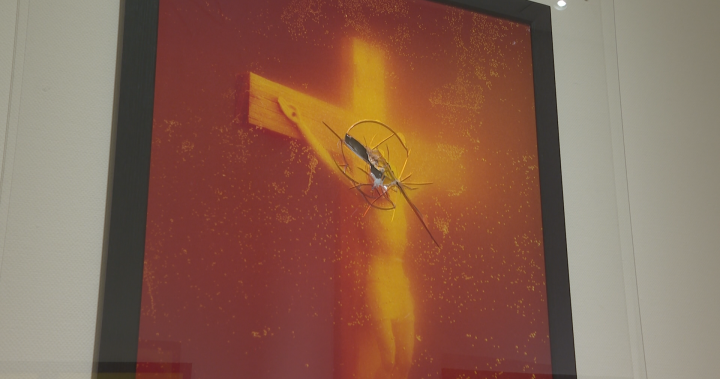
He said he was particularly consumed by questions of love — of what love is and why it’s important — and concluded that the best answer came from the image of Jesus on the cross. “It’s the gift of one’s life for another person, freely by choice, not by obligation, not by forced liberty, and so I wanted to follow that to impact the world in a better way than engineering can ever do,” he said.


Get breaking National news
Get breaking Canada news delivered to your inbox as it happens so you won’t miss a trending story.
It was that revelation that brought Joly to Montreal to pursue his vocation.
Rev. Robert Gauthier, a priest and head of the Grand Séminaire, says the institution usually has between 10 and 12 priests in training, and ordains about two per year. That’s down from hundreds of candidates in the 1960s and up to 60 a year in the late ’80s, when he started training.
Six years ago, the seminary moved from its spacious building on Sherbrooke Street to a functional but unfancy former nuns residence in the Rosemont-Petite-Patrie borough, where the aspiring priests live and study in modest dormitories.
Despite the changes, he sees reason for hope.
Across Quebec, some Catholic churches are seeing a rise in attendance, with hundreds of people in the pews each Sunday. The Montreal diocese reported that in March, more than 300 adults — many of them young — gathered at Mary Queen of the World Cathedral for a meeting to prepare for confirmation or full communion.
“There’s a movement, there’s something that’s happening,” Gauthier said.
That trend has been evident at Cathédrale Saint-Jean-l’Évangéliste in St-Jean-sur-Richelieu, Que., where officials report weekly mass attendance of between 450 and 500 people. Isabelle Brulotte, the head of the organization that manages the church, says the rise in attendance began three to five years ago, and is growing each year.
“I believe that it probably comes from everything that has been happening in the world,” she said. “People feel a need to believe, to gather, to get together.”
She also credits the church’s efforts to adapt to younger tastes. Those include music-heavy gospel or even country-style services and cultural events — including Montreal Canadiens watch parties — that have helped people feel comfortable walking through the door.
She also believes that a cohort of younger priests provide religious services that are more relatable to other young people.
Gauthier, too, believes there is a mix of reasons for the seeming rise in popularity of Catholicism. He sees God working in the hearts of people struggling with existential questions, but also in young people attracted by the quality of the music, the beauty of church architecture and the engaging preaching style of priests.
Gauthier says it’s unclear how many of the newly faithful will become priests. While he’s heard from more prospective candidates than usual, he says many don’t make it through the training, which lasts up to seven years and includes intense studies in philosophy and theology as well as stints in churches.
And not everyone can or should pursue a life that requires candidates to be “poor, chaste and obedient,” he said.
He says his goal as a rector isn’t to fill the seminary, but rather to find and guide candidates, or “the right man at the right place.” He says the average age of someone training to be a priest is 37 — meaning they likely had a previous career, which can be anything from truck driving to pharmacy.
As for Joly, he’s now completed his studies at the seminary and has been ordained as a transitional deacon. He says his next steps include “visiting a lot of sick people” as he works toward becoming an ordained priest.
His family’s worries, he says, have been assuaged. And he said he has a close relationship with his young nieces and nephews, adding that he was scheduled to baptize four of them.
© 2026 The Canadian Press