



PERTH, Australia, June 10, 2026 (GLOBE NEWSWIRE) — Alkane Resources Limited (ASX: ALK; TSX: ALK; OTCQX: ALKRY) (‘Alkane’ or ‘the Company’) is pleased to announce the latest exploration results and drilling around the Boda-Kaiser resources at its Northern Molong Porphyry Project (NMPP) in New South Wales.
Program Summary
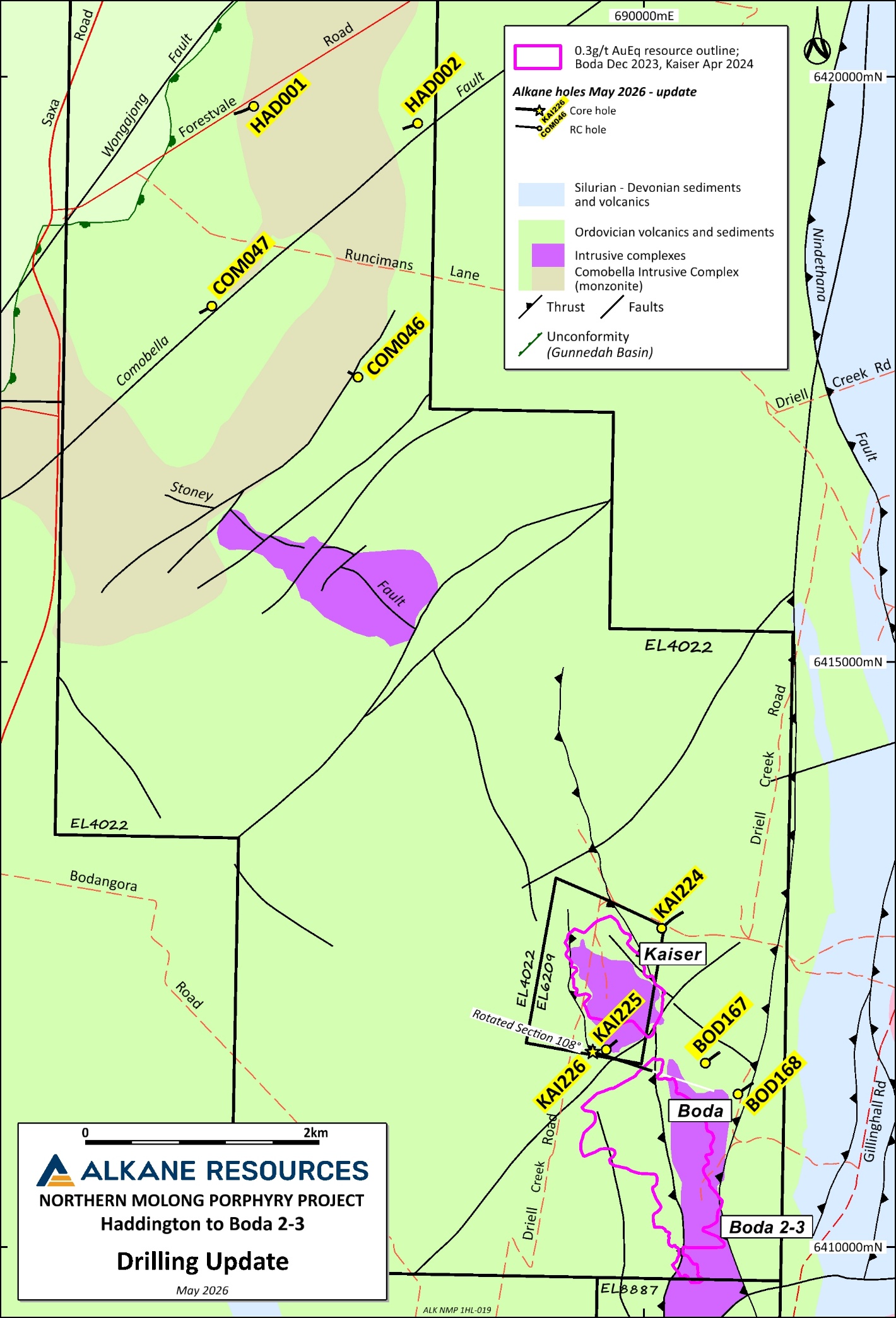
- Near Boda-Kaiser exploration continued with the drilling of various targets testing areas for new Au-Cu mineralised centres. One diamond core drill hole and one reverse circulation (RC) drill hole were completed testing the area between the Kaiser and Boda deposits. Three RC drill holes were completed to the northeast of Boda-Kaiser testing targets generated from IP and surface geochemical surveys. The diamond core drill hole intersected a magmatic root zone to an intrusive-hydrothermal breccia. Further drilling is planned to test along strike and up-dip of this breccia.
- District exploration included four RC drill holes testing IP chargeability targets hosted by the Comobella Intrusive Complex at the Haddington and Glen Hollow prospects. The program confirmed the chargeability anomalism intersecting monzonites with pyrite and lesser Cu-Au mineralisation in most of the drilling.
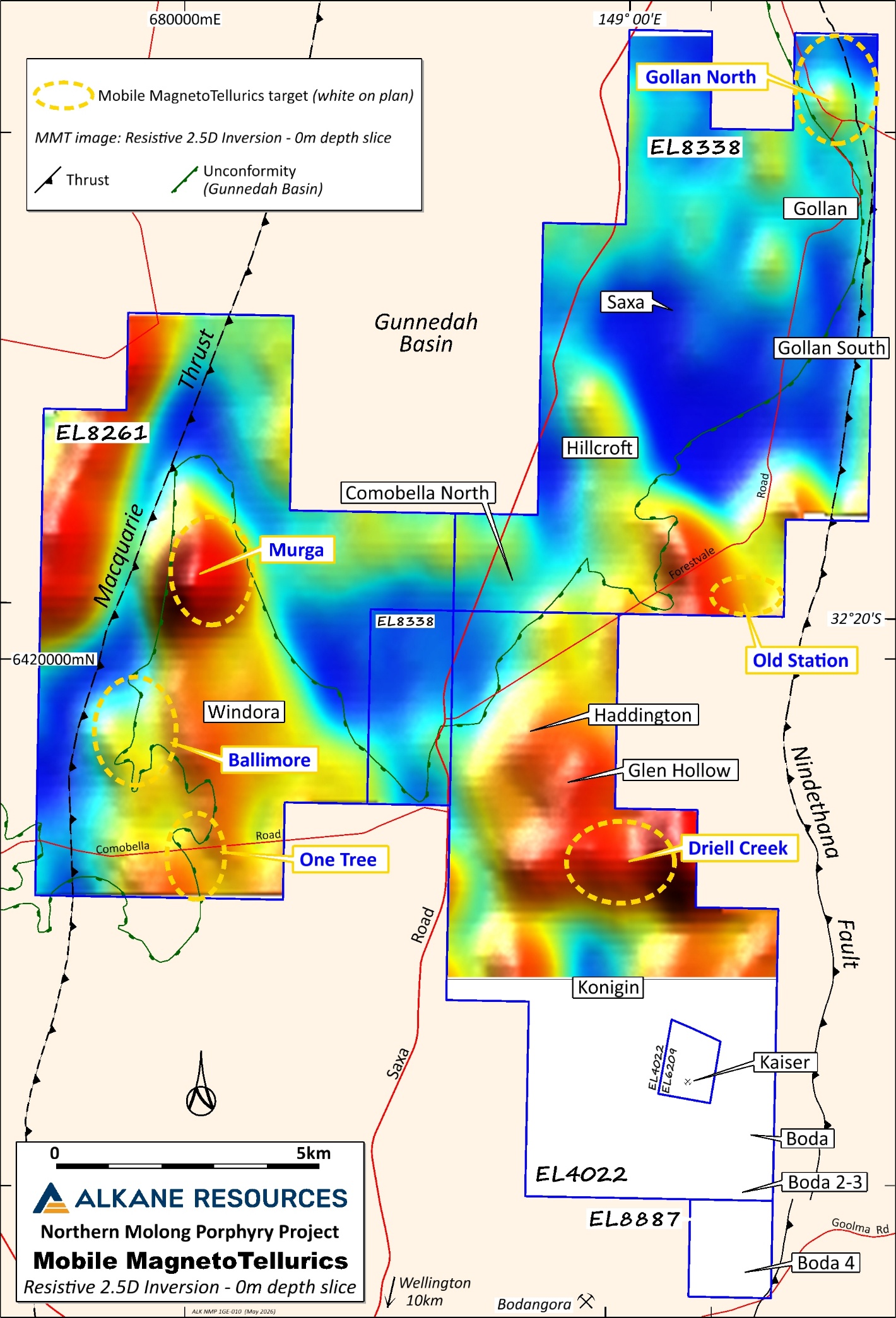
- Mobile Magnetotellurics (MMT) was flown over the project area north of the Boda-Kaiser deposits, defining six high priority targets for porphyry style systems at Driell Creek, Murga, Gollan North, and two new prospects named One Tree and Old Station. On ground validation of these targets has commenced.
Assay Highlights
- Boda-Kaiser corridor area (KAI226):
- 23.5 m grading 0.17g/t Au 0.14% Cu including 3.2 m grading 0.31g/t Au 0.23% Cu;
- 42.1 m grading 0.16g/t Au 0.14% Cu including 4.8 m grading 0.59g/t Au 0.29% Cu.
- Boda-Kaiser near deposit exploration (BOD168):
- 9 m grading 0.30g/t Au 0.01% Cu.
- NMPP district exploration drilling (HAD001):
- 3 m grading 1.74g/t Au 0.07% Cu;
- 9 m grading 0.13g/t Au 0.08% Cu including 3 m grading 0.36g/t Au 0.11% Cu.
Alkane Managing Director & CEO Nic Earner said: “These results continue to add to the understanding of the Boda–Kaiser project, showing the scale potential of the system and the possibility for further growth. We are progressing the studies and consultation required for project approval by the regulator, and we expect to add further value to the project as we continue to explore the wider Northern Molong Porphyry system.”
Northern Molong Porphyry Project (NMPP)
Alkane Resources Ltd 100%
Located in the Central West of NSW at the northern end of the Molong Volcanic Belt of the Macquarie Arc, the NMPP is considered highly prospective for large-scale porphyry and epithermal gold-copper deposits.
Exploration has identified seven discrete intrusive complexes – Kaiser, Boda, Boda South, Driell Creek, Murga, Windora and Saxa – outboard of the major 35km2 Comobella Intrusive Complex (CIC) and within a northwest trending transverse structural corridor. Intermediate intrusives, lavas and breccias, extensive alteration and widespread, low-grade, gold-copper mineralisation, define the corridor, and two significant gold-copper resources have been defined at Boda and Kaiser. Exploration continues to improve the understanding of the Boda-Kaiser geological setting and to test targets throughout the NMPP.
Regional exploration over the previous 12 months has comprised a drilling program for a total of 3,813 metres, focusing on testing Induced Polarisation (IP) targets generated by previous geophysical surveys and extensions to the resources. Assay results have been received and collated for 8 reverse circulation (RC) drill holes for a total of 2,510 metres and 1 diamond (DD) core drill hole for 1,303 metres.
The exploration undertaken included:
- Testing the corridor area between Boda and Kaiser deposits with 1 DD and 1 RC hole.
- 3 RC holes testing geochemical-geophysical anomalies northeast of Boda-Kaiser.
- 4 RC holes testing various IP chargeability anomalies within the CIC (Haddington and Glen Hollow prospects) that are coincident with Au-Cu mineralisation from previous companies RAB drilling.
- Completion of a Mobile Magneto-Telluric (MMT) survey over the majority of the NMPP.
Near Boda-Kaiser Exploration
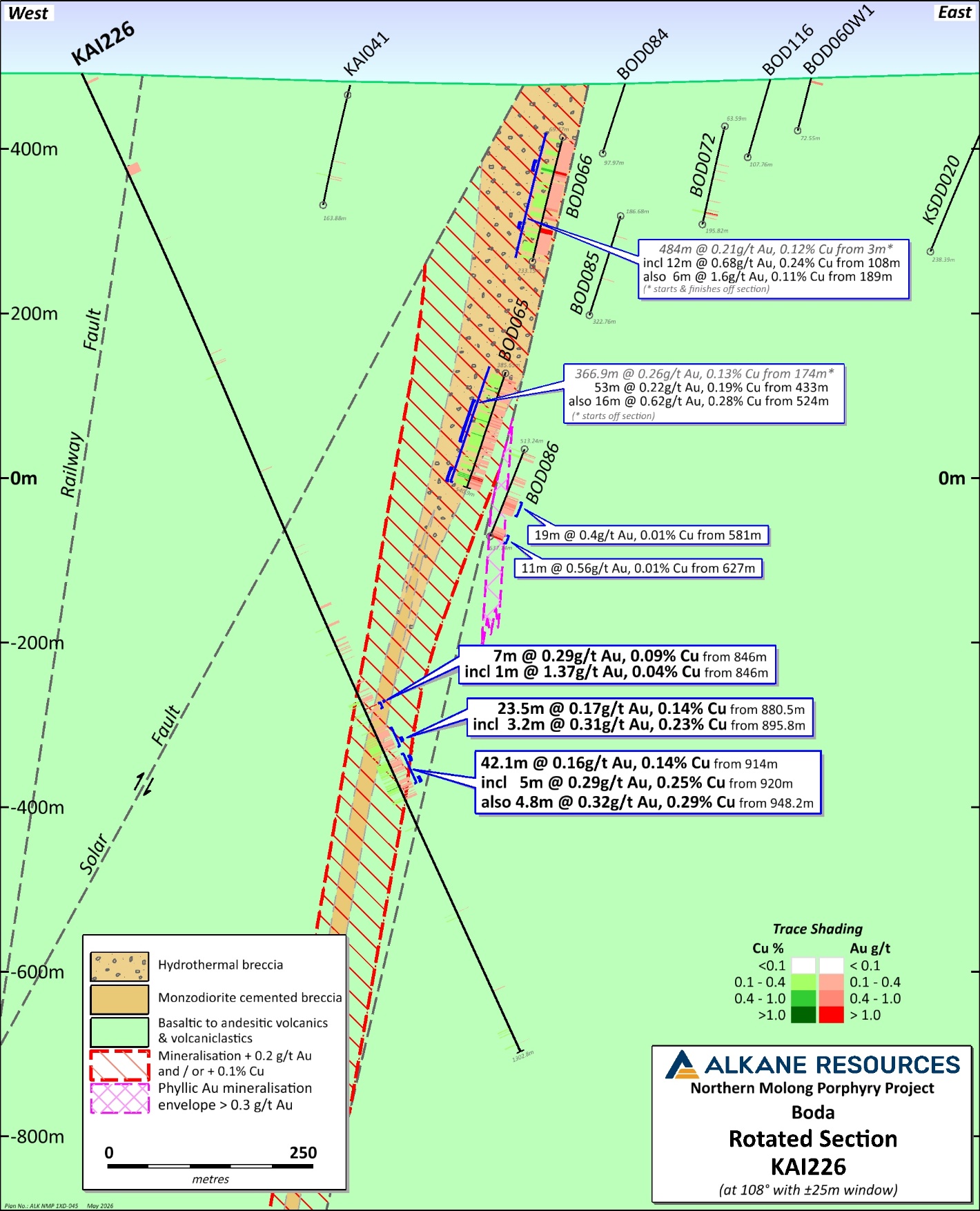
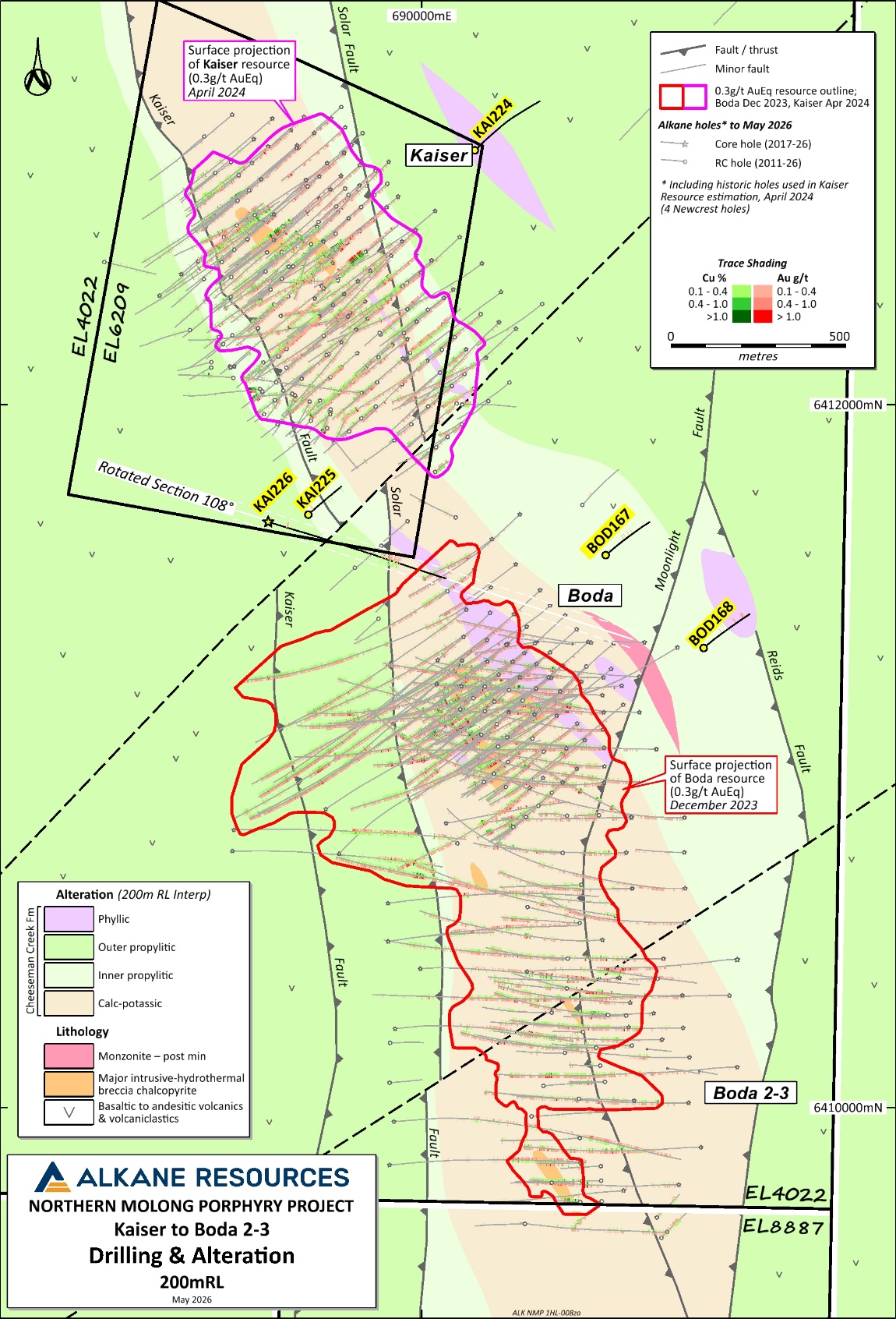
There is an approximate 500m strike length between the Boda deposit (8.4Moz Au, 1.5Mt Cu – ASX announcement 14 December 2023 titled ‘Boda Resource Update Increases Gold and Copper Grades’) and Kaiser deposit (1.9Moz Au, 0.4Mt Cu – ASX announcement 29 April 2024 titled ‘Revised Kaiser Resource Est Improves Confidence and Grades’) that is poorly drill tested (*see table page 11 – Boda-Kaiser resources summary). Structural modelling and lithogeochemistry studies highlighted this area as highly prospective for hosting a new hydrothermal breccia centre. Previous drilling has supported this target with distal breccia style gold-copper mineralisation intersected from near surface in RC holes BOD066 – 226m grading 0.25g/t Au, 0.10% Cu from 12m to end of hole, and deeper in BOD065 – 64m grading 0.43g/t Au, 0.12% Cu from 174m to end of hole (ASX Announcement 17 December 2021 titled ‘High Grade Continuity North West of Boda’). One deep RC precollared diamond core drill hole (KAI226) was completed from south of Kaiser to transect the footwall of the Solar Fault (a significant north striking, 65o west dipping reverse structure over which significant post-mineral displacement at Boda has occurred) that is host to the intrusive-hydrothermal breccia complex at Boda. Significant results from the 1,303m deep drill hole included an intercept of monzodiorite cemented breccia of:
| KAI226 | 23.5m grading 0.31g/t AuEq1(0.17g/t Au, 0.14% Cu) from 880.5m | |
| incl | 3.2m grading 0.53g/t AuEq1(0.31g/t Au, 0.23% Cu) from 895.8m | |
| and | 42.1m grading 0.30g/t AuEq1(0.16g/t Au, 0.14% Cu) from 914m | |
| incl | 5m grading 0.53g/t AuEq1(0.29g/t Au, 0.25% Cu) from 920m | |
| also | 4.8m grading 0.59g/t AuEq1(0.32g/t Au, 0.29% Cu) from 948.2m | |
KAI226 intersected a mineralised monzodiorite cemented breccia that is the likely magmatic root to the overlying hydrothermal breccia mineralisation intersected by previous shallow drilling. As observed at Boda-Kaiser, the highest grades to these intrusive-hydrothermal breccias occurs above the transition from magmatic cement to a hydrothermal cement, with the highest grades occurring in a sulphide-only cement. Drill targeting along strike and up-dip is planned for next year to further test this sparsely drilled area.
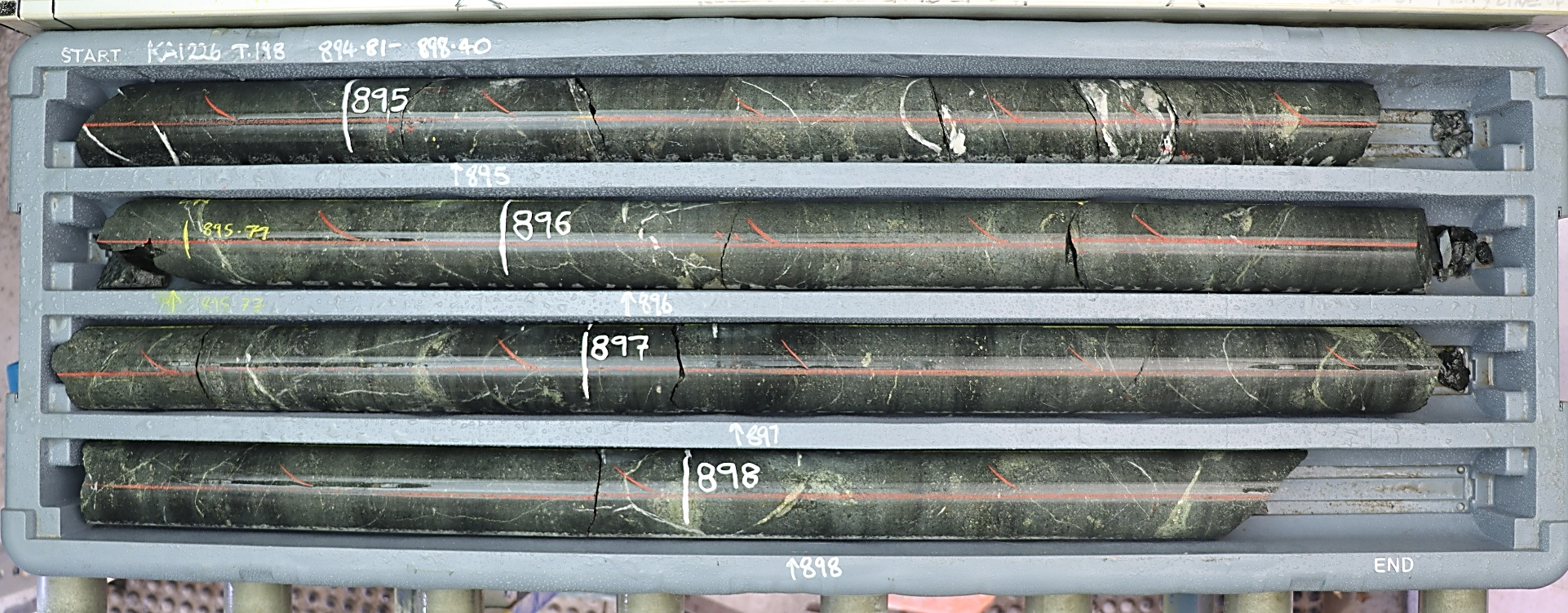

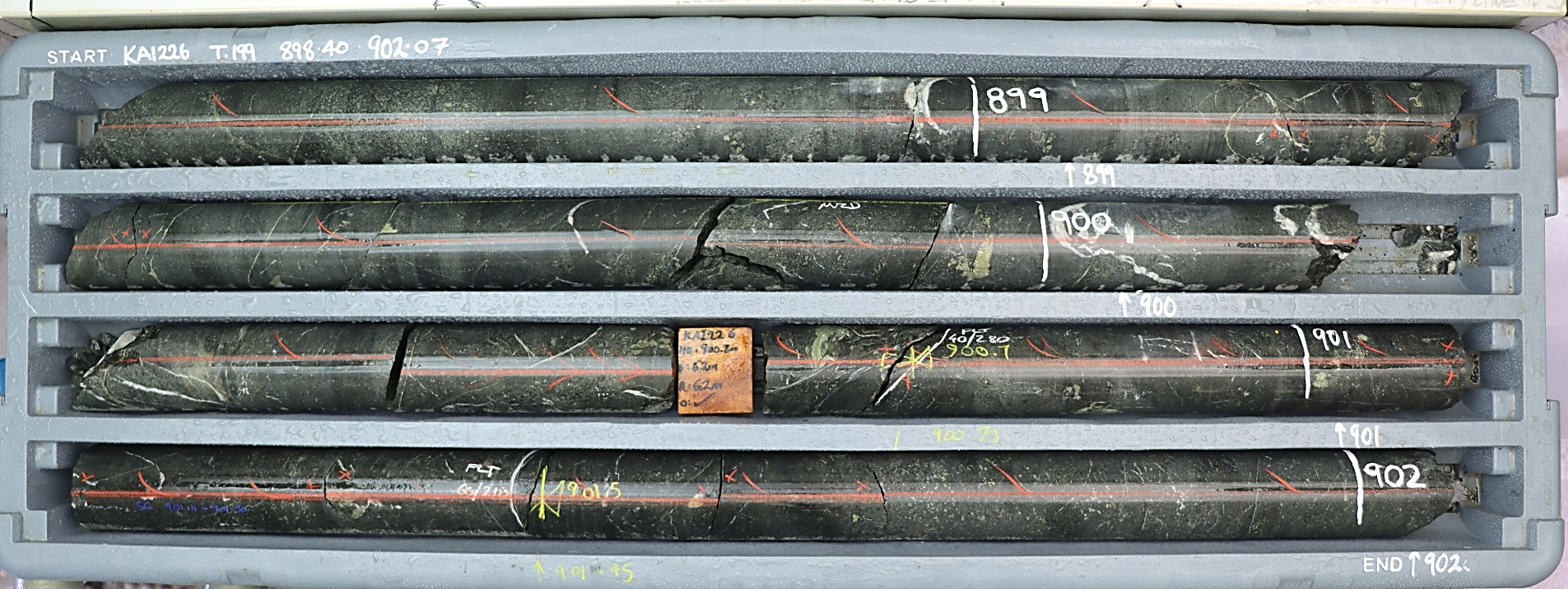

KAI226: Calc-potassic altered monzodiorite cemented breccia with lesser hydrothermal calcite-actinolite-chalcopyrite-pyrite cement from 3.2m interval grading 0.31g/t Au and 0.23% Cu.
Additionally, one 238m deep RC drill hole (KAI225) was completed testing for a southeast continuation of the Kaiser resource. The hole tested the margin of the Kaiser magnetic complex where no drilling had been previously conducted. KAI225 intersected inner propylitic alteration of basaltic-andesite lavas with pyrite mineralisation. No significant Au-Cu assay results were received.
Other near Boda-Kaiser exploration focussed on the northeast flank of the system, testing three geochemical targets with co-incident elevated potassium and/or chargeability anomalies identified by the reprocessing of the 2020 IP survey. Three RC drill holes (KAI224, BOD167-8) were completed for a total of 1,014m. KAI224 intersected weak phyllic (sericite-chlorite) alteration transitioning into distal propylitic alteration with pyrite mineralisation throughout. BOD168 intersected pyrite-sericite phyllic alteration including Au-Cu assay results of:
| BOD168 | 9m grading 0.31g/t AuEq* (0.30g/t Au, 0.01% Cu) from 264m | |
The gold enriched phyllic alteration intersected by BOD168 in the hanging wall to the Reids Fault appears similar to the observed phyllic alteration that occurs within the northeastern flank of the Boda deposit. Further drilling is planned to test for a deeper potassic/calc-potassic core in the footwall of the fault. The area northeast of Boda-Kaiser has only seen minimal drilling to date and exploration drilling will continue to help inform the Boda-Kaiser mine design.


NMPP District Exploration
A seven-line induced polarisation (IP) survey was completed over the Haddington prospect in 2025 (ASX announcement dated 8 July 2025 titled ‘Boda-Kaiser Regional Exploration Update’). The IP survey measured the chargeability and resistivity of the subsurface to a depth of approximately 400m and has highlighted both chargeability and resistivity anomalies that may be an indication of mineralised porphyry systems. Four significant chargeability anomalies supported by previous and/or historical geochemistry were tested by RC drilling at the Haddington and Glen Hollow prospects within the Comobella Intrusive Complex (CIC). The CIC geology comprises a package andesites and latites, intruded by significant monzonite with shoshonitic magmatic affinities. Localised hydrothermal breccia/skarn gold-copper mineralisation is associated with the monzonites.
At Haddington, two RC drill holes for a total of 800m were completed. HAD001 intersected monzonite and monzodiorite intrusives with basaltic andesite lavas at depth. Gold-copper mineralisation was intersected proximal to the contact between the intrusions and volcanic host rocks. Au-Cu grades considered significant at this early reconnaissance exploration stage (+0.10g/t Au and/or +0.05% Cu) includes:
| HAD001 | 12m grading 0.12% Cu, 0.02g/t Au from 288m | |
| and | 3m grading 1.74g/t Au, 0.07% Cu from 354m | |
| and | 9m grading 0.13g/t Au, 0.08% Cu from 372m | |
| incl | 3m grading 0.36g/t Au, 0.11% Cu from 378m. | |
At Glen Hollow, previous drill testing by Alkane has returned the significant result of 45m grading 0.87g/t Au, 0.24% Cu from 60m including 21m grading 1.51g/t Au, 0.41% Cu from 84m (COM009 – ASX Announcement 19 April 2011 titled ‘Porphyry style gold-copper mineralisation at Bodangora’). This intersection, which is associated with a chargeability feature, occurs within a monzonite porphyry on the margin of the CIC. One RC drill hole (COM046) was completed targeting down of the inferred plunge of COM009 intersecting two lesser zones of mineralisation in the volcanic host rocks of:
| COM046 | 16m grading 0.10% Cu, 0.08g/t Au from 72m | |
| and | 24m grading 0.07g/t Au, 0.05% Cu from 144m. | |
Drilling to date at Haddington and Glen Hollow has highlighted that the margin of the intrusive complex can be host to discrete zones of Au-Cu mineralisation; however, it is currently believed that these zones are either too small or of insufficient grade to be of economic significance and there is currently no plans to conduct follow-up activities at these prospects.

Mobile Magnetotelluric Survey (MMT)
A helicopter borne Magnetotelluric survey (MobileMT) was flown over the entire NMPP area north of the Boda-Kaiser deposits in late 2025. The survey was flown using 200m spaced east-west traverses at a sensor height of 73m on average, imaging to depths of up to 1.2km. The survey was not completed over the Boda-Kaiser deposits due to interfering effects of the Bodangora Windfarm.
The survey uses naturally occurring electric and magnetic fields to measure the electrical conductivity of the subsurface. The conductivity/resistivity MMT data was then compared to Alkane’s existing gravity and magnetic survey datasets to infer new exploration targets representing potential porphyry intrusions (relatively resistive anomalies) and/or the hydrothermal alteration systems associated with porphyry centres (relatively conductive or resistive anomalies). The work has highlighted the following targets:
Driell Creek
The Driell Creek Intrusive Complex (DIC) covers a 6km2 area centred approximately 3km to the northwest of Kaiser. The complex is characterised by a significant resistor, with numerous magnetic features aligned in a northwest to west-northwest orientation and with a moderate gravity response.
The Driell Creek Prospect includes a coincident magnetic low and an IP chargeability high with shallow level anomalous multi-element geochemistry (As-Bi-Zn) characterising a significant sized phyllic alteration zone interpreted to be a lithocap zone. Lithocaps occur above or adjacent to the upper parts of porphyry systems. Previous drilling targeting 500m south of this feature intersected 130m at 0.25g/t Au, 0.11% Cu from 174m to end of hole (DRC004 – ASX announcement dated 21 June 2024 titled ‘NMPP Regional Exploration Update’).
Exploration access to the area has been resolved for work going forward. One deep drill hole is planned for Q3 2026 to test the chargeability feature and the resistive feature below and southeast of the inferred lithocap.
Ballimore Prospect
Ballimore is a discrete NNW striking linear magnetic anomaly approximately 1.3 km in length. A historical IP survey (Newmont, 2010) mapped a chargeability high to the east, interpreted to be a peripheral pyrite halo to the magnetic complex (see Alkane ASX announcement dated 21 June 2024 titled ‘NMPP Regional Exploration Update’). The MMT survey identified Ballimore as a possible porphyry hydrothermal system characterised as a central moderate resistor with a conductive halo. The Ballimore prospect has not been previously drill tested and ground truthing of the prospect is underway.
Gollan North Prospect
Gollan North prospect is associated with an approximate 0.5 km by 2 km elongate magnetic feature, a similar size, shape and strength of the Boda 2-3 magnetic complex. The MMT survey identified a discrete weak resistor with a flanking conductive response that could represent an intrusive centre and its associated hydrothermal alteration. No drilling has been conducted at Gollan North, however Newcrest Mining Ltd (1997) sampled andesite outcrop that assayed 4.01% Cu (see Alkane ASX announcement dated 21 June 2024 titled ‘NMPP Regional Exploration Update’).
Murga Prospect
The MMT survey identified the Murga prospect as a high priority target characterised by a discrete resistive high and coincident gravity high. The prospect area coincides with outcropping diorite intrusions and a 3 km long linear magnetic high. Previous drilling by Alkane (see Alkane ASX announcement dated 21 June 2024 titled ‘NMPP Regional Exploration Update’) confirmed skarn alteration and Au-Cu mineralisation with RC hole FCRC006 intersecting 4m grading 0.15g/t Au and 0.09% Cu.
The outcropping diorite intrusions have been affected by deep magmatic-hydrothermal quartz veining suggesting sections of the prospect area is deeply eroded. However, as illustrated by imbricated thrust faulting at Boda, upper levels to a porphyry system can be preserved structurally, and mapping and desktop studies are ongoing.
One Tree and Old Station Prospects
One Tree and Old Station are two new prospects identified from the interpretation of the MMT data. Both prospects are moderately conductive prospects that flank strongly resistive features that could represent fertile intrusions. Both prospects have seen little to no exploration and ground truthing is planned.
Planned Exploration Programs
Baseline environmental studies are underway for the Boda-Kaiser Project in parallel with scoping studies to progress development. Planned exploration over the next 12 months includes further drill testing of Boda-Kaiser corridor area, targeting along strike and up dip of KAI226. Drill testing to better resolve high-grading mineralisation in the southern section of Boda 2-3 is also planned. Regionally, work will recommence at Driell Creek, as well as to test the new targets generated by MMT once validated by geochemistry or ground electrical geophysics.
Boda – Kaiser Mineral Resources
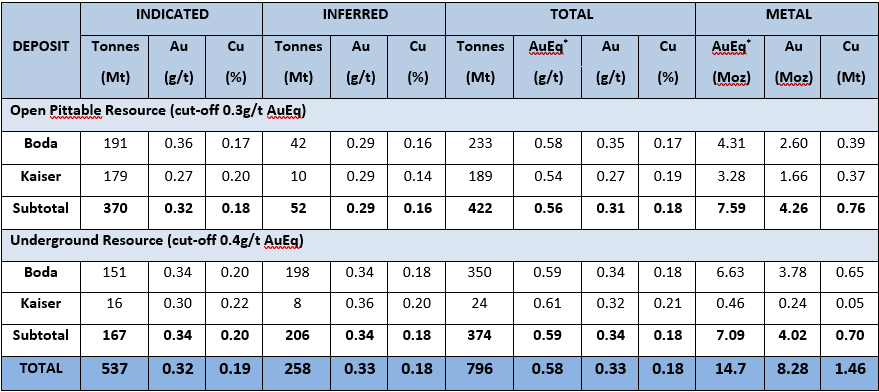

*ASX Release 14 December 2023 & 29 April 2024. The equivalent calculation formula is AuEq(g/t) = Au(g/t) + Cu%/100*31.1035*copper price ($/t)/gold price($/oz). 12-month average metal prices were used of US$1,950/oz gold and US$8,600/t copper, and an exchange rate of A$:US$0.67. Recoveries are estimated at 87% for Cu and 81% for Au for Boda, and at 81% Cu and 71% Au for Kaiser from substantial metallurgical testwork. Alkane confirms that all elements included in the metal equivalents calculation have reasonable prospects for eventual economic extraction and that the metal prices adopted are assumptions only and do not represent forecast prices.
| Table 1 – Boda-Kaiser Drilling Significant Results – May 2026 (>0.3g/t AuEq*) | ||||||||||||
| Hole ID | Easting (MGA) | Northing (MGA) | RL | Dip | Azi (Grid) | Total Depth | Interval From (m) | Interval To (m) | Intercept (m) | AuEq* (g/t) |
Au (g/t) |
Cu (%) |
| KAI224 | 690151 | 6412724 | 504 | -61 | 51 | 400 | No significant results | |||||
| KAI225 | 689677 | 6411687 | 488 | -59 | 47 | 238 | No significant results | |||||
| KAI226 | 689563 | 6411666 | 492 | -65 | 106 | 1302.8 | 736 | 737 | 1 | 0.31 | 0.19 | 0.12 |
| and | 767 | 768 | 1 | 0.44 | 0.35 | 0.10 | ||||||
| and | 834 | 838 | 4 | 0.30 | 0.19 | 0.12 | ||||||
| and | 846 | 853 | 7 | 0.37 | 0.29 | 0.09 | ||||||
| incl | 846 | 847 | 1 | 1.41 | 1.37 | 0.04 | ||||||
| and | 873 | 874 | 1 | 0.37 | 0.23 | 0.15 | ||||||
| and | 880.5 | 904 | 23.5 | 0.31 | 0.17 | 0.14 | ||||||
| incl | 895.8 | 899 | 3.2 | 0.53 | 0.31 | 0.23 | ||||||
| and | 914 | 956.1 | 42.1 | 0.30 | 0.16 | 0.14 | ||||||
| incl | 920 | 925 | 5 | 0.53 | 0.29 | 0.25 | ||||||
| also | 948.2 | 953 | 4.8 | 0.59 | 0.32 | 0.29 | ||||||
| and | 962 | 966 | 4 | 0.30 | 0.13 | 0.16 | ||||||
| BOD167 | 690524 | 6411572 | 491 | -60 | 51 | 304 | No significant results | |||||
| BOD168 | 690803 | 6411308 | 495 | -60 | 48 | 310 | 264 | 273 | 9 | 0.31 | 0.30 | 0.01 |
Gold and copper intercepts are calculated using a lower cut of 0.2g/t AuEq. Internal dilution (< cut off) is less than 15% of reported intercepts. Only significant intercepts of >0.3g/t AuEq are reported. True widths are estimated to be approximately 50% of intersected width.
* The gold equivalent calculation formula is AuEq(g/t) = Au(g/t) + Cu%/100*31.1035*copper price($/t)/gold price($/oz). The prices used were US$4,000/oz gold and US$12,000/t copper, and an exchange rate of A$:US$0.70. Recoveries are estimated at 87% Cu and 81% gold at Boda and at 81% Cu and 71% Au at Kaiser from substantial metallurgical testwork. Alkane confirms that all elements included in the metal equivalents calculation have reasonable prospects for eventual economic extraction and that the metal prices adopted are assumptions only and do not represent forecast prices.
| Table 2 – Regional Drilling Significant Results – May 2026 (>0.15g/t Au and/or >0.1% Cu) | |||||||||||
| Hole ID | Easting (MGA) | Northing (MGA) | RL | Dip | Azimuth (Grid) | Total Depth | Interval From (m) | Interval To (m) | Intercept (m) | Au (g/t) |
Cu (%) |
| COM046 | 687556 | 6417433 | 421 | -60 | 298 | 184 | 72 | 88 | 16 | 0.08 | 0.10 |
| and | 144 | 168 | 24 | 0.07 | 0.05 | ||||||
| COM047 | 686306 | 6418040 | 396 | -65 | 239 | 274 | 21 | 24 | 3 | – | 0.05 |
| and | 192 | 198 | 6 | 0.01 | 0.05 | ||||||
| HAD001 | 686664 | 6419747 | 394 | -65 | 242 | 400 | 105 | 120 | 15 | 0.01 | 0.05 |
| and | 288 | 300 | 12 | 0.02 | 0.12 | ||||||
| incl | 294 | 297 | 3 | 0.03 | 0.28 | ||||||
| and | 327 | 330 | 3 | 0.02 | 0.05 | ||||||
| and | 354 | 357 | 3 | 1.74 | 0.07 | ||||||
| and | 372 | 381 | 9 | 0.13 | 0.08 | ||||||
| incl | 378 | 381 | 3 | 0.36 | 0.11 | ||||||
| HAD002 | 688066 | 6419602 | 433 | -65 | 247 | 400 | No significant results. Anomalous Zn ± Pb | ||||
Gold and copper intercepts are calculated using a lower cut of 0.1g/t Au and 0.05% Cu respectively. Internal dilution (< cut off) is less than 15% of reported intercepts. True widths are unknown at this early exploration stage.
Competent Person
Unless otherwise advised above or in the Announcements referenced, the information in this report that relates to exploration results, mineral resources and ore reserves is based on information compiled by Mr David Meates, MAIG, (Exploration Manager NSW) who has sufficient experience which is relevant to the style of mineralisation and type of deposit under consideration and to the activity which he is undertaking to qualify as a Competent Person as defined in the 2012 Edition of the Australasian Code for Reporting of Exploration Results, Mineral Resources and Ore Reserves. Mr Meates consents to the inclusion in this report of the matters based on his information in the form and context in which it appears.
Cautionary Note Regarding Forward-Looking Information and Statements
This announcement contains certain forward-looking information and forward-looking statements within the meaning of applicable securities legislation and may include future-oriented financial information or financial outlook information (collectively Forward-Looking Information). Actual results and outcomes may vary materially from the amounts set out in any Forward-Looking Information. As well, Forward-Looking Information may relate to: future outlook and anticipated events; expectations regarding exploration potential; production capabilities and future financial or operating performance, including AISC, investment returns, margins and share price performance; production and cost guidance and the timing thereof; issuing updated resources and reserves estimate and the timing thereof; the potential of Alkane to meet industry targets, public profile and expectations; and future plans, projections, objectives, estimates and forecasts and the timing related thereto.
Forward-Looking Information is generally identified by the use of words like “will”, “create”, “enhance”, “improve”, “potential”, “expect”, “upside”, “growth” and similar expressions and phrases or statements that certain actions, events or results “may”, “could”, or “should”, or the negative connotation of such terms, are intended to identify Forward-Looking Information.
Although Alkane believes that the expectations reflected in the Forward-Looking Information are reasonable, undue reliance should not be placed on Forward-Looking Information since no assurance can be provided that such expectations will prove to be correct. Forward-Looking Information is based on information available at the time those statements are made and/or good faith belief of the officers and directors of Alkane as of that time with respect to future events and are subject to risks and uncertainties that could cause actual results to differ materially from those expressed in or suggested by the Forward-Looking Information. Forward-Looking Information involves numerous risks and uncertainties. Such factors include, without limitation: risks relating to changes in the gold and antimony price.
Forward-Looking Information is designed to help readers understand Alkane’s views as of that time with respect to future events and speak only as of the date they are made. Except as required by applicable law, Alkane assumes no obligation to update or to publicly announce the results of any change to any forward-looking statement contained or incorporated by reference herein to reflect actual results, future events or developments, changes in assumptions or changes in other factors affecting the Forward-looking Information. If Alkane updates any one or more forward-looking statements, no inference should be drawn that the company will make additional updates with respect to those or other Forward-looking Information. All Forward-Looking Information contained in this announcement is expressly qualified in its entirety by this cautionary statement.
Disclaimer
Alkane has prepared this announcement based on information available to it. No representation or warranty, express or implied, is made as to the fairness, accuracy, completeness or correctness of the information, opinions or conclusions contained in this announcement. To the maximum extent permitted by law, none of Alkane, its directors, officers, employees, associates, advisers and agents, nor any other person accepts any liability, including, without limitation, any liability arising from fault or negligence on the part of any of them or any other person, for any loss arising from the use of this announcement or its contents or otherwise arising in connection with it.
This announcement is not an offer, invitation, solicitation, or other recommendation with respect to the subscription for, purchase or sale of any security, and neither this announcement nor anything in it shall form the basis of any contract or commitment whatsoever.
This document has been authorised for release to the market by Nic Earner, Managing Director and CEO.
ABOUT ALKANE ‐ www.alkres.com ‐ ASX:ALK | TSX: ALK | OTCQX: ALKRY
Alkane (ASX:ALK; TSX:ALK; OTCQX:ALKRY) is an Australia-based gold and antimony producer with a portfolio of three operating mines across Australia and Sweden. The Company has a strong balance sheet and is positioned for further growth.
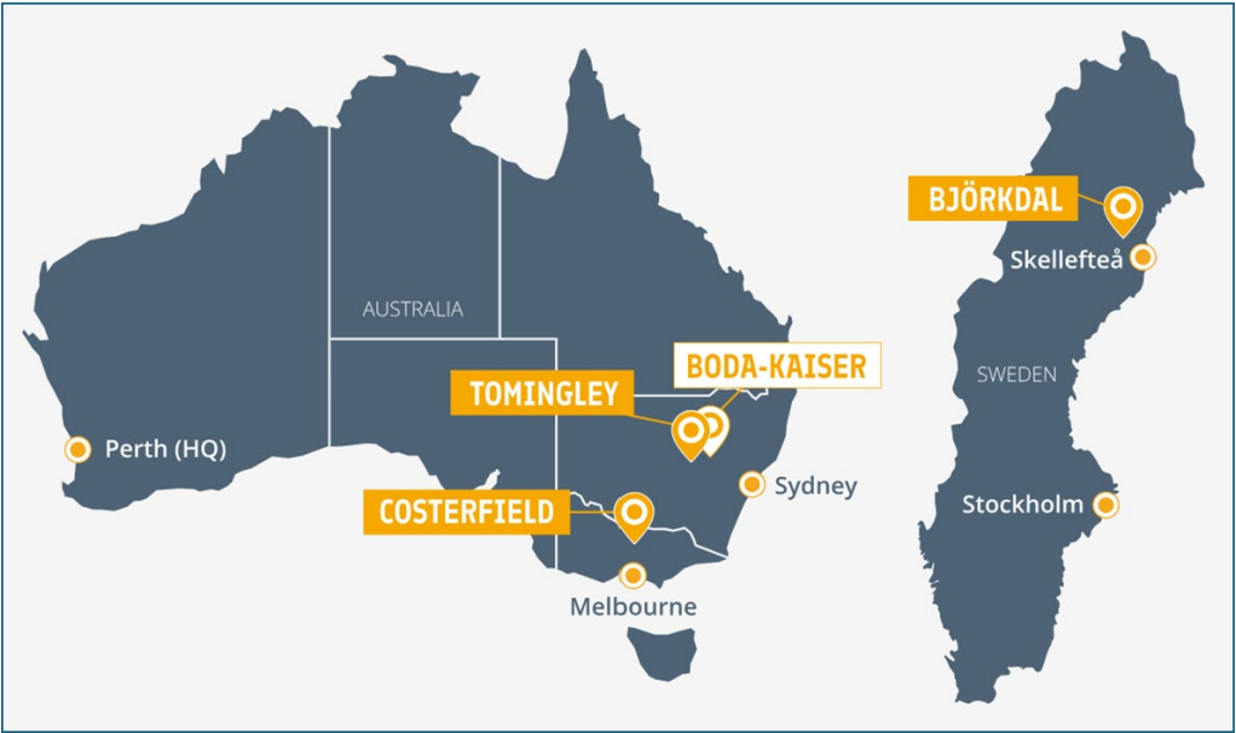
Alkane’s wholly owned producing assets are the Tomingley open pit and underground gold mine southwest of Dubbo in Central West New South Wales, the Costerfield gold and antimony underground mining operation northeast of Heathcote in Central Victoria, and the Björkdal underground gold mine northwest of Skellefteå in Sweden (approximately 750 km north of Stockholm). Ongoing near-mine regional exploration continues to grow resources at all three operations.
Alkane also owns the very large gold-copper porphyry Boda-Kaiser Project in Central West New South Wales and has outlined an economic development pathway in a Scoping Study. The Company has ongoing exploration within the surrounding Northern Molong Porphyry Project and is confident of further enhancing eastern Australia’s reputation as a significant gold, copper and antimony production region.

The following tables are provided to ensure compliance with the JORC Code (2012) edition requirements for the reporting of exploration results.
JORC Code, 2012 Edition – Table 1 NORTHERN MOLONG PORPHYRY PROJECT – May 2026
Section 1 Sampling Techniques and Data
(Criteria in this section apply to all succeeding sections.)
| Criteria | JORC Code explanation | Commentary |
| Sampling techniques |
|
|
|
|
|
|
|
|
| Drilling techniques |
|
|
| Drill sample recovery |
|
|
|
|
|
|
|
|
| Logging |
|
|
|
|
|
|
|
|
| Sub-sampling techniques and sample preparation |
|
|
|
|
|
|
|
|
|
|
|
|
|
|
|
|
|
| Quality of assay data and laboratory tests |
|
|
|
|
|
|
|
|
| Verification of sampling and assaying |
|
|
|
|
|
|
|
|
|
||
| Location of data points |
|
|
|
||
|
|
|
| Data spacing and distribution |
|
|
|
|
|
|
|
|
| Orientation of data in relation to geological structure |
|
|
|
|
|
| Sample security |
|
|
| Audits or reviews |
|
|
Section 2 Reporting of Exploration Results
(Criteria listed in the preceding section also apply to this section.)
| Criteria | JORC Code explanation | Commentary |
| Mineral tenement and land tenure status |
|
|
|
|
|
| Exploration done by other parties |
|
|
| Geology |
|
|
| Drill hole Information |
|
|
|
|
|
| Data aggregation methods |
|
|
|
|
|
| Relationship between mineralisation widths and intercept lengths |
|
|
| Diagrams |
|
|
| Balanced reporting |
|
|
| Other substantive exploration data |
|
|
| Further work |
|
|
|
|
CONTACT: NIC EARNER, MANAGING DIRECTOR & CEO, ALKANE RESOURCES LTD, TEL +61 8 9227 5677
INVESTORS & MEDIA: NATALIE CHAPMAN, CORPORATE COMMUNICATIONS MANAGER, TEL +61 418 642 556
1 The gold equivalent calculation formula is AuEq(g/t) = Au(g/t) + Cu%/100*31.1035*copper price($/t)/gold price($/oz). The prices used were US$4,000/oz gold and US$12,000/t copper. Recoveries are estimated at 87% Cu and 81% gold at Boda and at 81% Cu and 71% Au at Kaiser from substantial metallurgical testwork. Alkane confirms that all elements included in the metal equivalents calculation have reasonable prospects for eventual economic extraction and that the metal prices adopted are assumptions only and do not represent forecast prices.
Photos accompanying this announcement are available at:
https://www.globenewswire.com/NewsRoom/AttachmentNg/08c096c2-6d3b-414f-87e6-a6c52c6e515e
https://www.globenewswire.com/NewsRoom/AttachmentNg/2f0bfbe9-9558-412c-b093-1112c3a734ec
https://www.globenewswire.com/NewsRoom/AttachmentNg/edba9809-b09d-405f-81b0-63f18d2d97af
https://www.globenewswire.com/NewsRoom/AttachmentNg/e3239cf9-f919-4cd0-abe2-d16dc2fd454a
https://www.globenewswire.com/NewsRoom/AttachmentNg/b93c24fa-a37d-4e16-9f1b-8e22c94876e6
https://www.globenewswire.com/NewsRoom/AttachmentNg/15a77c7d-770e-4a9c-8866-624040f3f33e
https://www.globenewswire.com/NewsRoom/AttachmentNg/0d7afe7a-ac78-4387-b031-d196e0c4a6a0
https://www.globenewswire.com/NewsRoom/AttachmentNg/15c8a9a8-7312-4373-8b15-0e7b764345e8
https://www.globenewswire.com/NewsRoom/AttachmentNg/59c2ab2a-c2cc-4470-952c-fb7c08129361


