
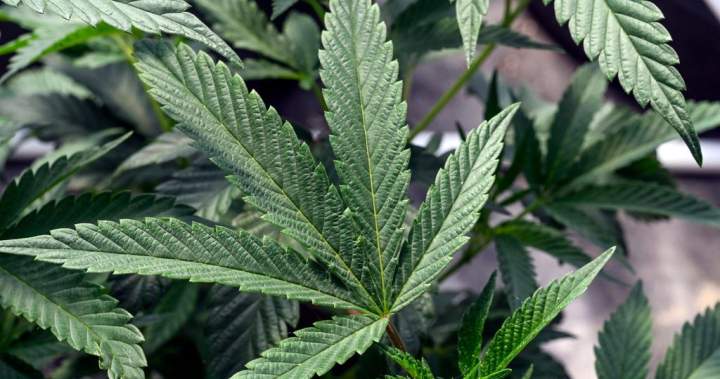
U.S. President Donald Trump is expected to sign an executive order that would reclassify marijuana and ease federal restrictions on research that could lead to new medical marijuana products.
“We are considering that, yeah,” Trump told reporters Monday when asked about reports about the impending order.
“A lot of people want to see it, the reclassification, because it leads to tremendous amounts of research that can’t be done unless you reclassify. So we are looking at that very strongly.”
Here is what you need to know:
Presently, under the U.S. Controlled Substances Act, marijuana is listed as a Schedule I substance like heroin, implying it has high potential for abuse and no medical value.
The new executive order would move it to the Schedule III classification that includes controlled substances such as codeine, morphine, certain stimulants, and some forms of steroids.
The reclassification would make it easier for researchers to obtain funding for clinical trials and for pharmaceutical companies to apply for FDA approval. As a result of its Schedule I status, bureaucratic and financial hurdles have largely kept drug companies from conducting the clinical trials necessary for regulatory approval of new marijuana-derived drugs.
Marijuana in any form has been illegal in the United States according to federal law. Forty U.S. states have enacted laws permitting the sale of marijuana products for medical purposes through dispensaries and 24 also allow recreational use among adults. These state-approved products will remain federally illegal under the Controlled Substances Act unless manufacturers apply for and obtain approval from the U.S. Food and Drug Administration.
Manufacture, distribution, and possession of marijuana without legal authorization would continue to be unlawful, but penalties would likely be less severe than those tied to its current Schedule I status.
Marijuana, derived from flowering plants of the genus Cannabis, contains chemical compounds known as cannabinoids that interact with chemical systems in the body. Two of the best-known cannabinoids are tetrahydrocannabinol (THC), which causes a euphoric high, and cannabidiol (CBD), which produces physiological effects, such as potential pain or inflammation relief, without the high. In 2018, the U.S. Congress ruled that cannabis plants containing no more than 0.3% THC – such as hemp – would no longer be considered marijuana.
The 10 states that haven’t legalized cannabis have laws that limit the psychoactive compound THC while allowing access to products rich in CBD, which is non-intoxicating.
Only three cannabinoid drugs have shown evidence from clinical trials necessary for FDA approval. Epidiolex from Jazz Pharmaceuticals JAZZ.O, containing purified CBD derived from hemp, is approved for certain seizure disorders. Dronabinol, a synthetic form of THC sold as Marinol by Alkem Laboratories ALKE.NX and Syndros by Benuvia, is approved for loss of appetite in people with HIV/AIDS and for nausea and vomiting due to chemotherapy.

Get weekly health news
Receive the latest medical news and health information delivered to you every Sunday.
All are considered generally safe, and like most drugs carry some potential side effects.
Even after reclassification, any drugs that are eventually approved by the FDA would be legally available in commercial pharmacies by prescription. Healthcare providers who wish to prescribe Schedule III medications – including any marijuana-derived drugs – must have a valid Drug Enforcement Administration registration.
Dronabinol has also demonstrated benefit for sleep apnea in mid-stage trials.
An experimental cannabis-derived medication from Vertanical was safer and more effective than placebo and opioids for treating chronic lower back pain in two late-stage trials in Europe. A U.S. trial is planned for 2026.
An oral spray formulation, Sativex from CNX Therapeutics, has shown efficacy in late-stage trials for managing muscle spasticity in people with multiple sclerosis and is approved in over 30 countries outside the United States.
Cannabinoid drugs are also being tested for treatment of autism spectrum disorder, anxiety and depression in bipolar disorder, endometriosis, eczema and alcohol use disorder.
Federal rescheduling of cannabis would accelerate research and standardized drug development for these and other conditions.
Even when used for medical reasons, cannabinoid products like gummies, vape oils, tinctures and high-potency concentrates can cause dizziness and gastrointestinal symptoms and can impact cognitive status, mental health, the cardiovascular system, and the lungs, studies have shown. Recent data has also linked marijuana use with a higher risk for developing type 2 diabetes.
Marijuana interacts with many prescription and over-the-counter medications, including blood thinners, sleep medications, anxiety medications, antidepressants, and seizure medications. Risks are therefore higher in people with heart disease, anxiety, depression, or psychosis, and in older adults due to their higher risk of falls and drug interactions.
Risks of marijuana use are also higher during pregnancy and breastfeeding and in children and adolescents.
But states that allow medical marijuana do so for a wide list of ailments and many people swear by it despite limited available clinical research. Approved uses include for cancer, glaucoma, chronic pain, ulcerative colitis and Crohn’s disease, sickle cell disease, multiple sclerosis, Parkinson’s disease and many other conditions. A few states have no medical conditions listed, giving doctors broad discretion.