
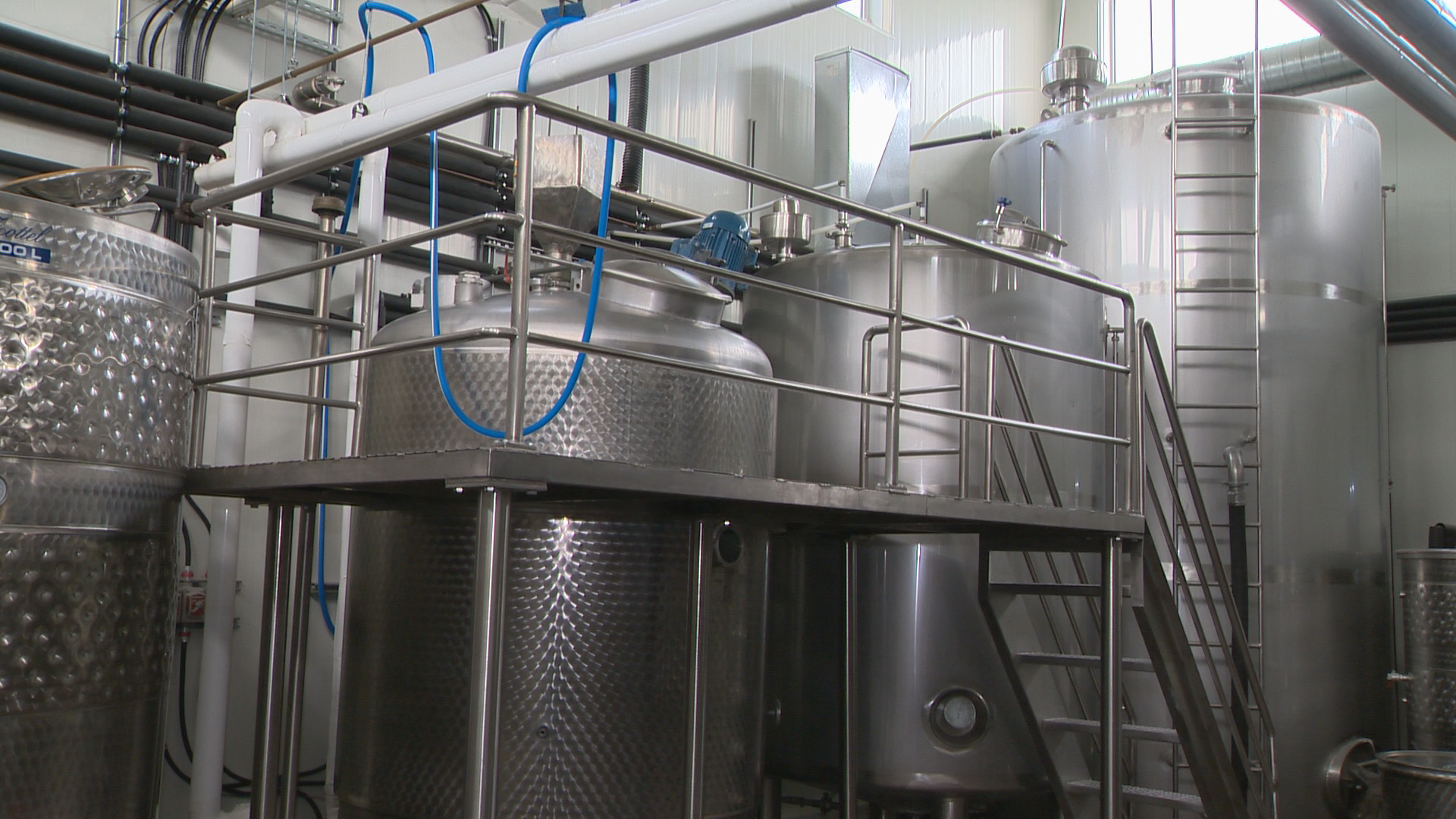
As Saskatchewan joins eight other provinces in their bid to reduce barriers to buying alcohol from one another, distillers and advocates in the province are welcoming the move.
“We’ve had limited success with online selling because it is so restrictive. There are a lot of places you can’t ship to or that you shouldn’t ship to, and so we’ve been very low key on that,” said John Cote, CEO and co-owner of Black Fox Farming and Distillery in Saskatoon.
“But now with the rules changing, we’re hoping that that changes.”
Cote is currently selling his gin and whisky products all across the world, from the United Kingdom and China to Germany and Dubai, a move he says is in part due to Canadian regulations, which made him concentrate more on foreign markets instead.
“We started realizing that actually exporting was easier than selling in Canada because once you get into a foreign country, typically their laws are very well spelled out and you can just follow all those rules. Meanwhile, in Canada, every province is like its own little country, and it was so frustrating dealing with all that.”
The premiers of nine provinces announced Tuesday that they are allowing brewers and distillers to sell alcohol directly to consumers, no matter their jurisdiction.
Before this agreement, direct-to-consumer sales of alcohol made in one province and shipped to customers in another were governed by item-specific agreements or were not allowed.

Get daily National news
Get daily Canada news delivered to your inbox so you’ll never miss the day’s top stories.
Saskatchewan’s Chamber of Commerce is welcoming the move, saying it opens up doors for local producers who can now be discovered by buyers across the country, allowing them to scale their businesses.
“This is a very significant step in the right direction. One of the things we’ve been calling for is the creation of one Canadian economy by removing trade barriers. Advancing labour mobility and regulatory alignment,” said Prabha Ramaswamy, the chamber’s CEO.
But Ramaswamy says the agreement is only the first step, with the next step focusing on how it will be implemented.
“Implementation has to take into account any variations across jurisdictions and across provinces, and tackle those variations to ensure that there’s consistency across Canada,” said Ramaswamy.
Meanwhile, some policy advocates say that while the agreement is a positive first step, it does not go far enough to address other interprovincial barriers pertaining to alcohol sales, such as getting products from local brewers and distillers onto liquor store shelves and in restaurants across the country.
These barriers include markups, duplicative regulatory processes requiring substantial paperwork and the need to meet certain labelling standards, said SeoRhin Yoo, an interprovincial affairs senior policy analyst with The Canadian Federation of Independent Business.
“Provinces like Ontario, they do add markups when it comes to products from other provinces moving into their retail shelves, and this is a pain point for a lot of small producers all across Canada who are just trying to get into the market because it makes their product go up in price and just not competitive and not appealing to consumers,” said Yoo.
Yoo says that Saskatchewan, Manitoba and New Brunswick have all adopted a “low-barrier” approach, allowing sellers to ship products into their jurisdictions without any additional requirements or markups, something that benefits consumers more than producers.
“For Saskatchewan producers to reap the benefits, they would need all the other provinces across the country to do the same thing,” said Yoo.
This rings true for Cote, who says it is not currently “worthwhile” to do all the paperwork required to get his product into Ontario if selling a limited number of bottles.
“We have a legal framework that now we can do it, but being legal doesn’t mean it’s going to be achievable for us because it’s going to be very complex because we’re still dealing with multiple different provinces with different rules,” said Cote.
Meanwhile, some policy experts are less optimistic about any of the economic benefits, saying direct-to-consumer alcohol sales tend to target a niche market.
“There’s a penchant for political leaders to play this up to sort of show that they are actually taking action. But at the end of the day, this isn’t going to, in any real way, reverse the effect that Trump’s tariffs are going to have on us in the immediate future,” said Simon Enoch, senior researcher with the Canadian Centre for Policy Alternatives.
The premiers of Quebec and the three territories did not sign on to the deal, though signatories indicated that Quebec and the Yukon are looking to join in the future.
Producers say they will keep a close eye on how the agreement plays out in the weeks ahead.
“Whether or not it’ll actually work in the long run for a small producer like us is yet to be seen, but we’ll have to figure that out,” said Cote.
© 2026 Global News, a division of Corus Entertainment Inc.