
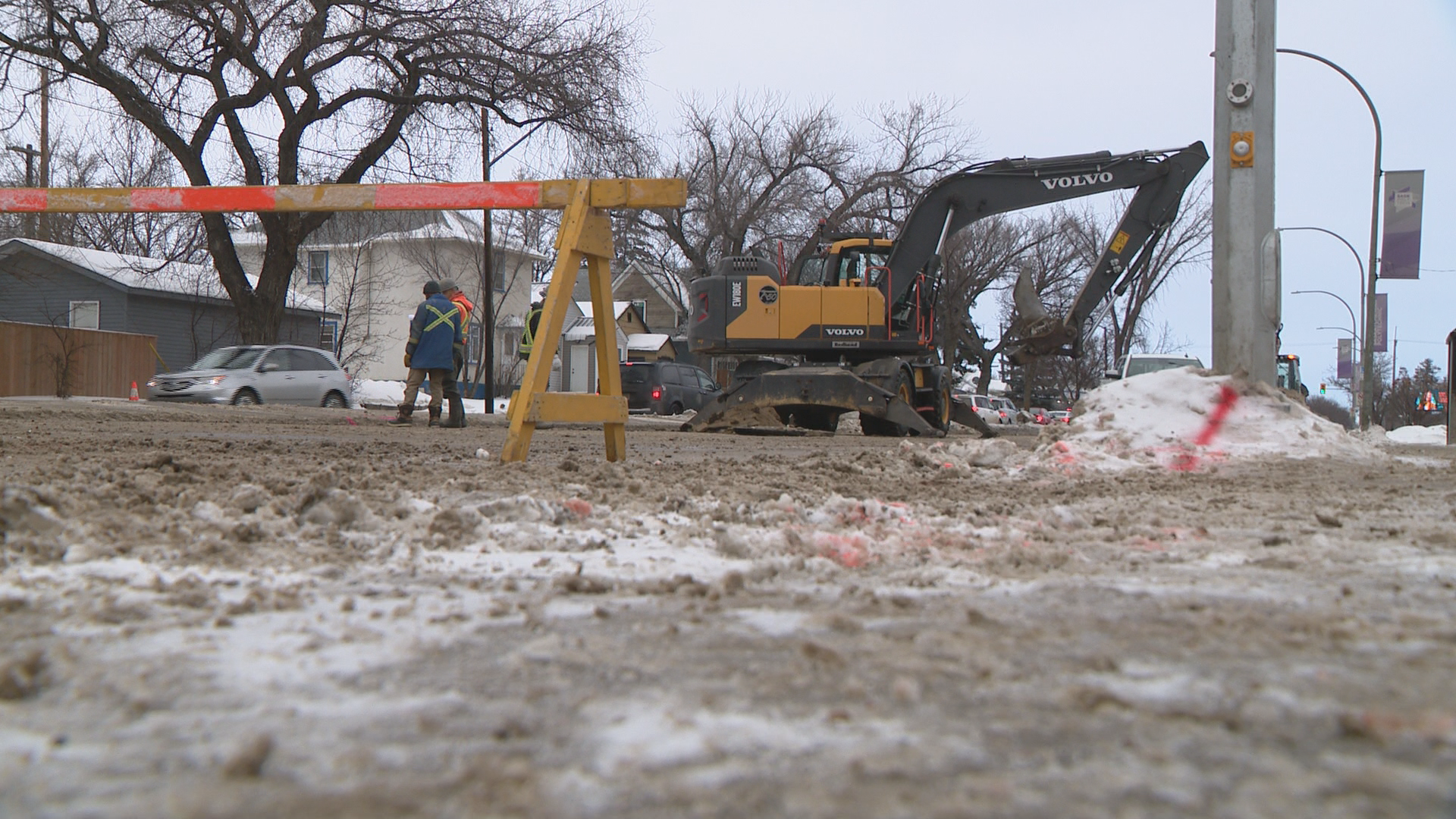
Saskatchewan’s two major cities are reporting fewer water main breaks in January than in previous years, as a mid-winter warmup is underway.
In Saskatoon, there were 13 water main breaks across the city in January — 10 fewer than during the same month in 2025.
City officials report that this is also less than half the 25-year average for water main breaks, which currently stands at 28 incidents. It is also significantly lower than the five-year average, also at 28, and the three-year average at 27 incidents.
Regina is reporting similar numbers, with there being only 11 water main breaks last month compared to 24 a year ago.
Both cities owe this decrease in water main breaks to preventative measures and maintenance by the city.
“We’re doing leak detection on pipes, we are doing condition assessment of water mains, we’re looking at historical break patterns, and we’re going in and doing maintenance like lining the pipes,” said Russ Munro, director of water at the City of Saskatoon.
Munro adds that the city is also replacing pipes that are either in poor condition or have experienced breaks.

Get daily National news
Get the day’s top news, political, economic, and current affairs headlines, delivered to your inbox once a day.
In Regina, this downward trend has been noticed since 2018.
“We’ve definitely seen a bit of a decrease in water main breaks in the city, and it’s due to our major investment in our underground infrastructure since then,” said Jay Overend, water operations manager at the City of Regina.
Temperature fluctuations typically cause water main breaks, as previously frozen and expanded ground contracts when temperatures warm, leading to movement and shifts in the ground, said Munro.
“When the Earth moves, it wins, and the mains don’t,” said Munro, adding that an influx of water main breakages around the end of January and beginning of February is typical because of the change in temperatures.
“When we have no snow on the ground, and then we get that sudden deep cold freeze, that’s where we get a lot of frost penetration into the ground. We’re more likely to see water main breaks,” he said.
An added factor contributing to water main breaks in Regina is the soil on which the city is built, according to Overend.
“Just due to the clay soils that we have here in Regina, the extreme fluctuations in temperature, typically, we do see a little bit of an increase in breaks from the ground shifting,” he said.
The warmer temperatures are also wreaking havoc on homes, as broken pipes thaw and become apparent.
“The leaks show up pretty quickly. It’s usually a wet spot in the ceiling or water spraying on the floor somewhere or a lack of water pressure in the house,” said Michael Bacon, owner of Action Plumbing and Heating Ltd., a local plumbing business in Saskatoon.
As for any damages sustained by homes due to thawing, such as leaks or water main breaks, Saskatchewan Government Insurance (SGI) says most insurance policies will provide some coverage.
“They will be looking at the damage that was caused as a result of the water main break. Most policies will not respond to fixing the pipe,” said Bruce Chupa, SGI director of property claims.
Both Saskatoon and Regina advise residents to report any water main breaks to the city so crews can be sent to the scene.
© 2026 Global News, a division of Corus Entertainment Inc.