
Media Assets
VANCOUVER, British Columbia, Aug. 12, 2026 (GLOBE NEWSWIRE) — Blue, fin, and sei whales are among the largest animals ever to have lived, and some of the hardest to find. They range across thousands of kilometres of open ocean, spend most of their lives underwater, and are rarely found in large numbers, even in places they’re known to frequent. Until now, no genetic test existed that could tell scientists which of these three species had passed through a stretch of water.
A new study by Ocean Wise and Whale Research Collective closes that gap, and the results include a detection visual observers missed entirely.
Published in the journal Environmental DNA, the study introduces the first species-specific genetic markers for blue, fin, and sei whales, then puts them to the test in one of the roughest environments for whale research anywhere: the Scotian Shelf and Labrador Sea, where fog and high winds routinely shut down visual surveys. Similar markers already existed for humpback, bowhead, and Rice’s whales. For these three species, researchers had nothing comparable until this study.
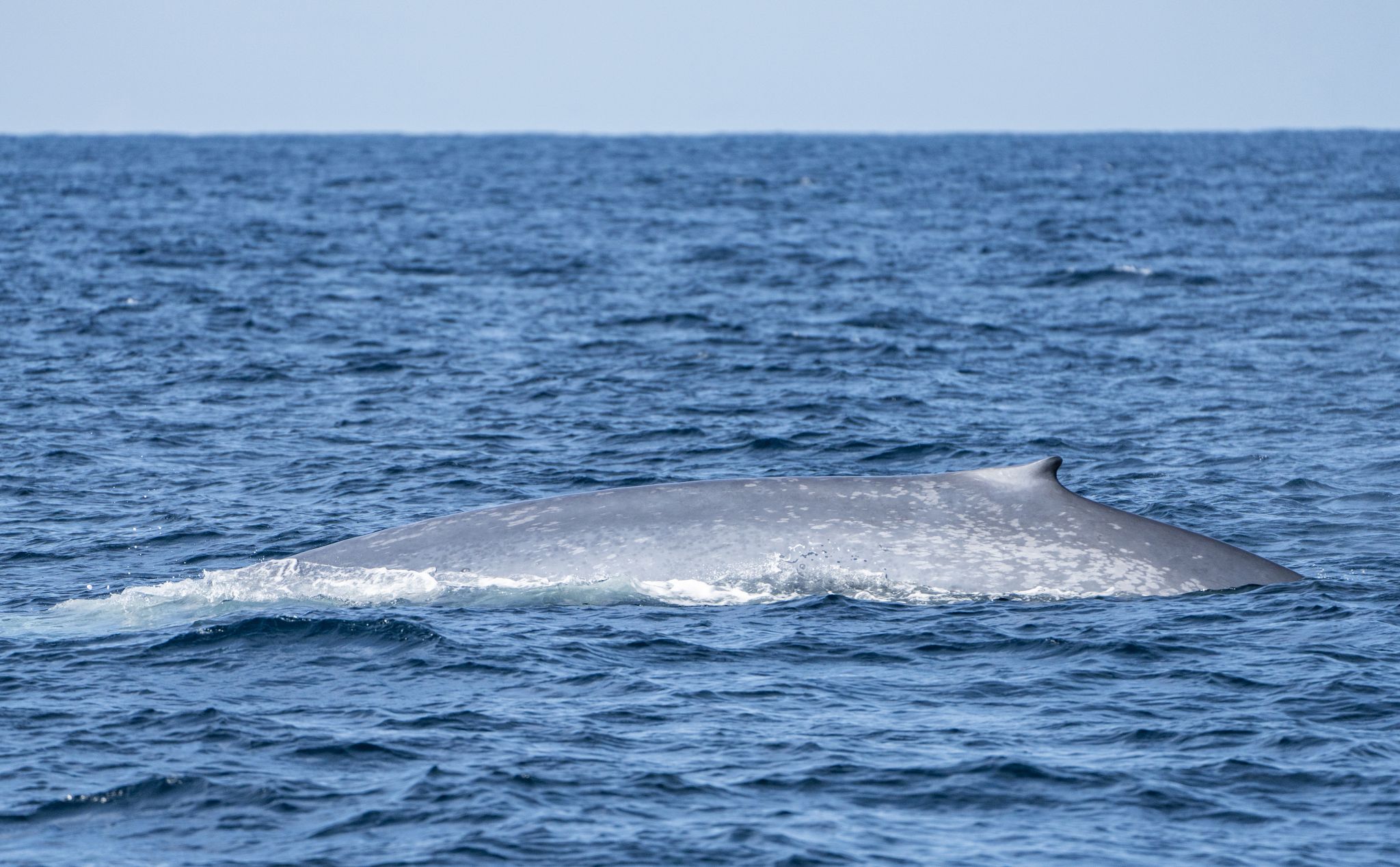
[Picture 1: Blue whale. Credit: Whale Research Collective]
The method relies on environmental DNA, or eDNA, the skin cells, waste, and mucus that whales shed continuously into the water around them. Filter a sample of seawater and, in principle, that genetic trace can reveal which species passed through, without a whale ever needing to surface in sight of a boat.
During a four-week expedition in 2024, researchers from the Whale Research Collective collected seawater samples from 23 offshore stations, along with flukeprint samples (the DNA-rich slicks of water left behind after a whale dives) from blue and fin whales. Back in the lab, Ocean Wise scientists designed and validated qPCR assays, a genetic test that can detect and measure tiny amounts of a species’ DNA in a sample, for all three species. They then determined the minimum amount of whale DNA each test needed to return a reliable result.
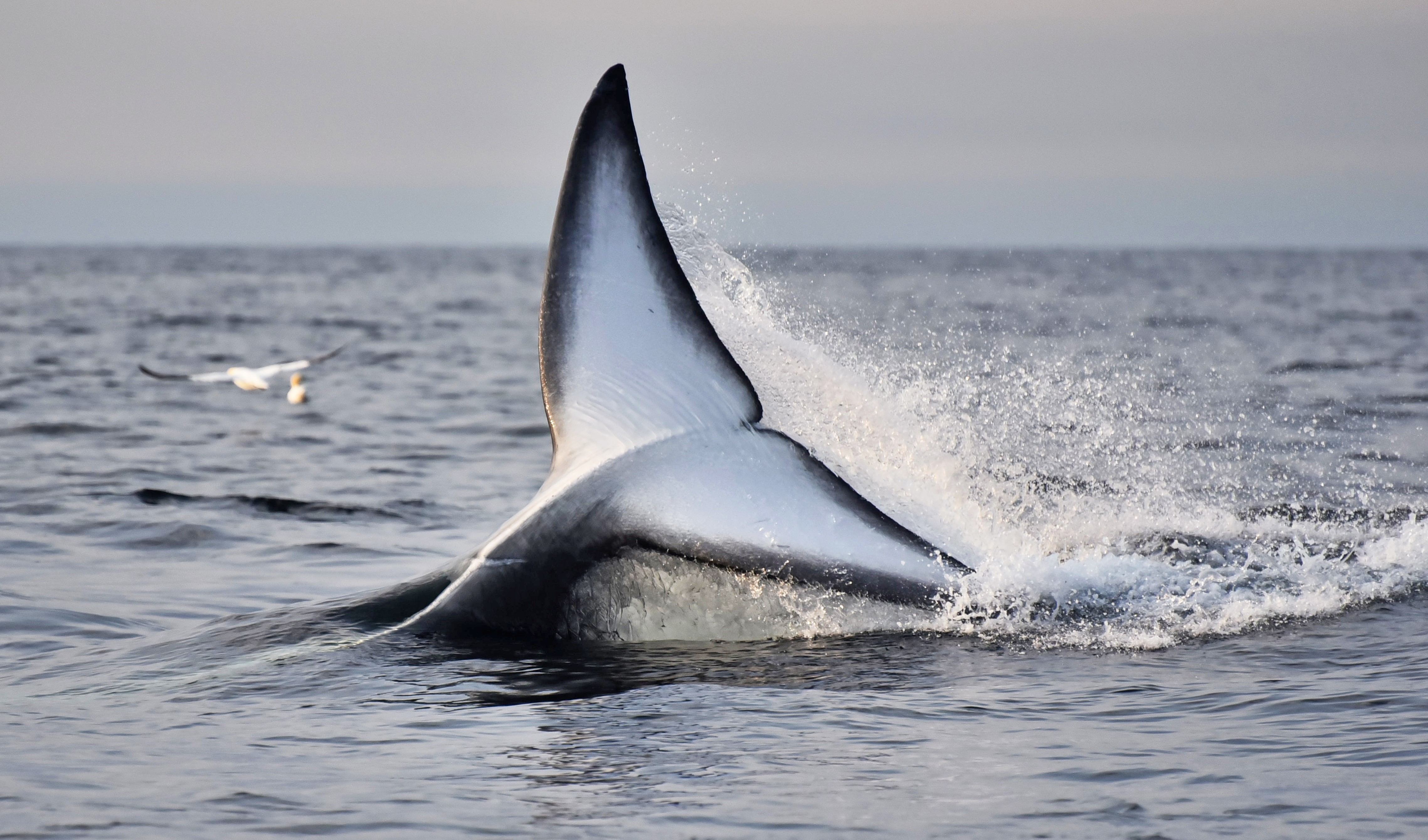
[Picture 2: Fin whale fluke. Credit: Whale Research Collective]
In the field, the fin whale assay delivered the study’s clearest finding: it detected fin whale DNA at open-water stations where no whale had been sighted by observers on deck. That is the result that matters most for future monitoring, a case of eDNA registering an animal that a visual survey would have missed.
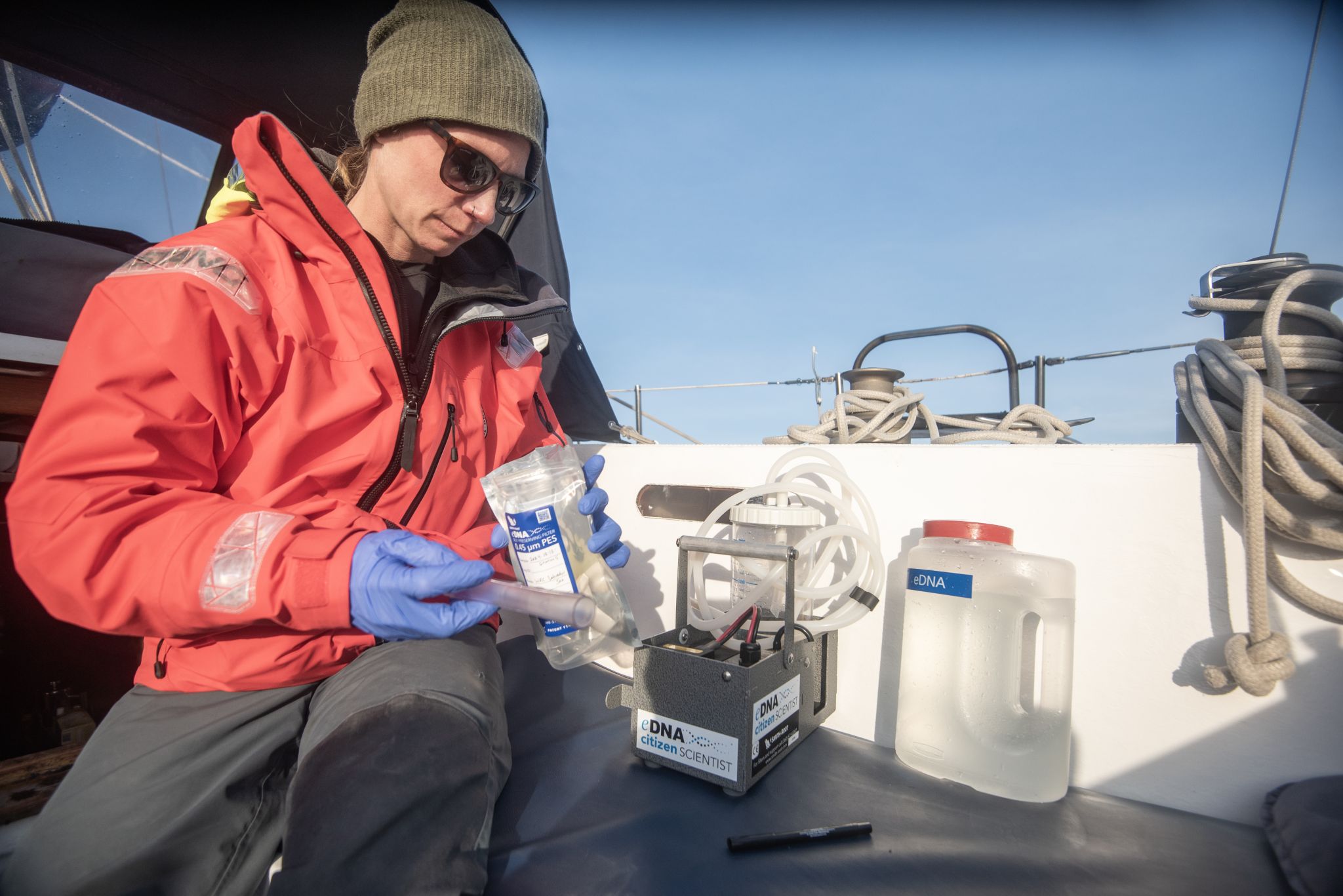
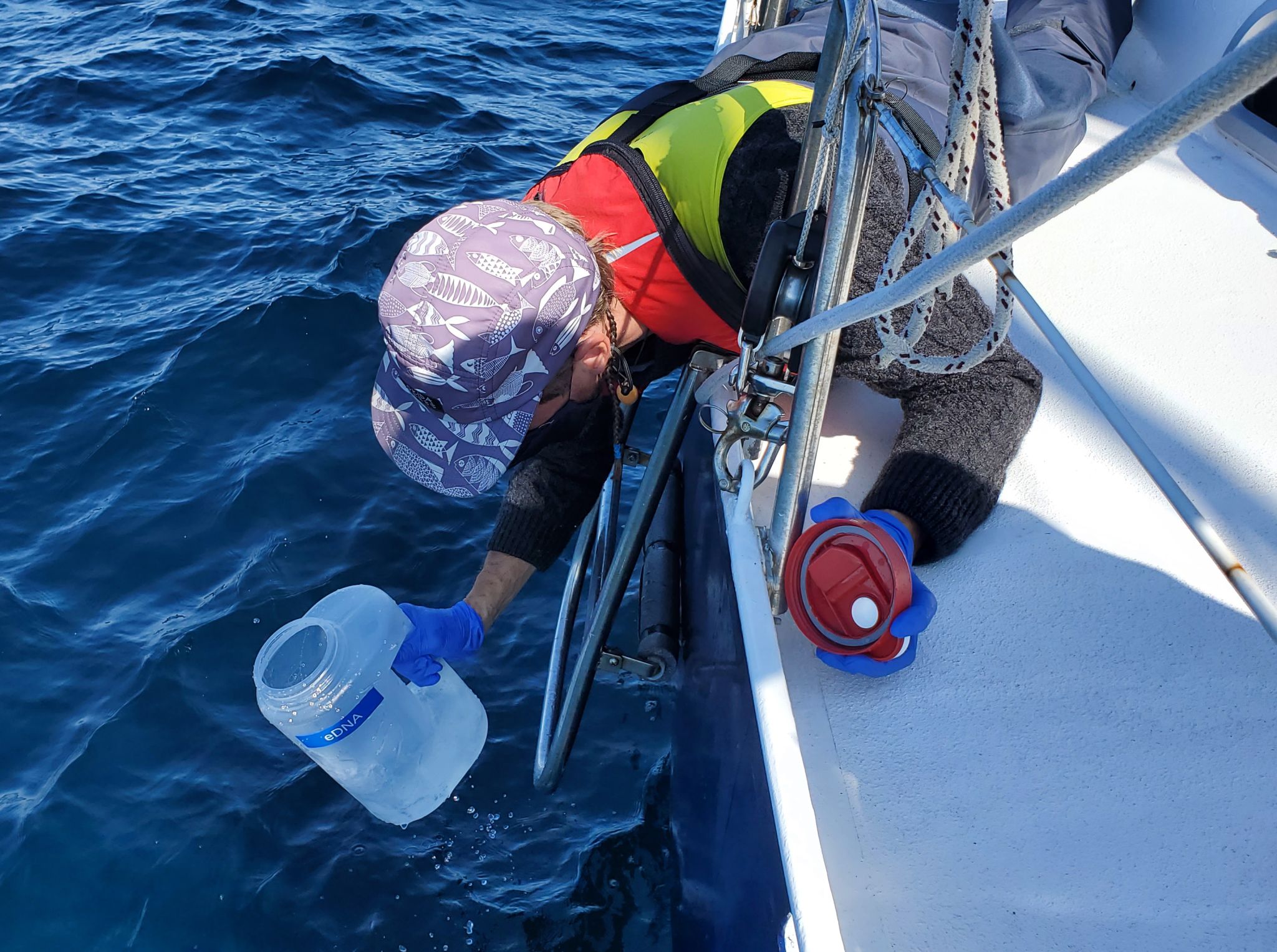
[Pictures 3 & 4: Co-author, David Gaspard (left) and Katy Gavrilchuk (right) collecting and filtering eDNA on board Whale Research Collective’s research vessel, Andromède. Credit: Whale Research Collective]
‘The Scotian Shelf and Labrador Sea are known for their difficult conditions with strong winds and thick fog limiting our efforts to visually detect whales. eDNA gives us an additional tool and easy way to sample these waters even when visual surveys just aren’t possible.’ Bertrand Charry, Biologist, Whale Research Collective.
The study is equally direct about where the method falls short. Blue whales were sighted during the expedition but did not appear in any station sample, suggesting a detection limit tied to distance or density. Sei whales were not detected by either method, a result consistent with the species being scarce or absent in the area at the time, though it doesn’t confirm it. Researchers note that eDNA, like visual survey, cannot establish that a species is truly absent, only that it wasn’t detected.
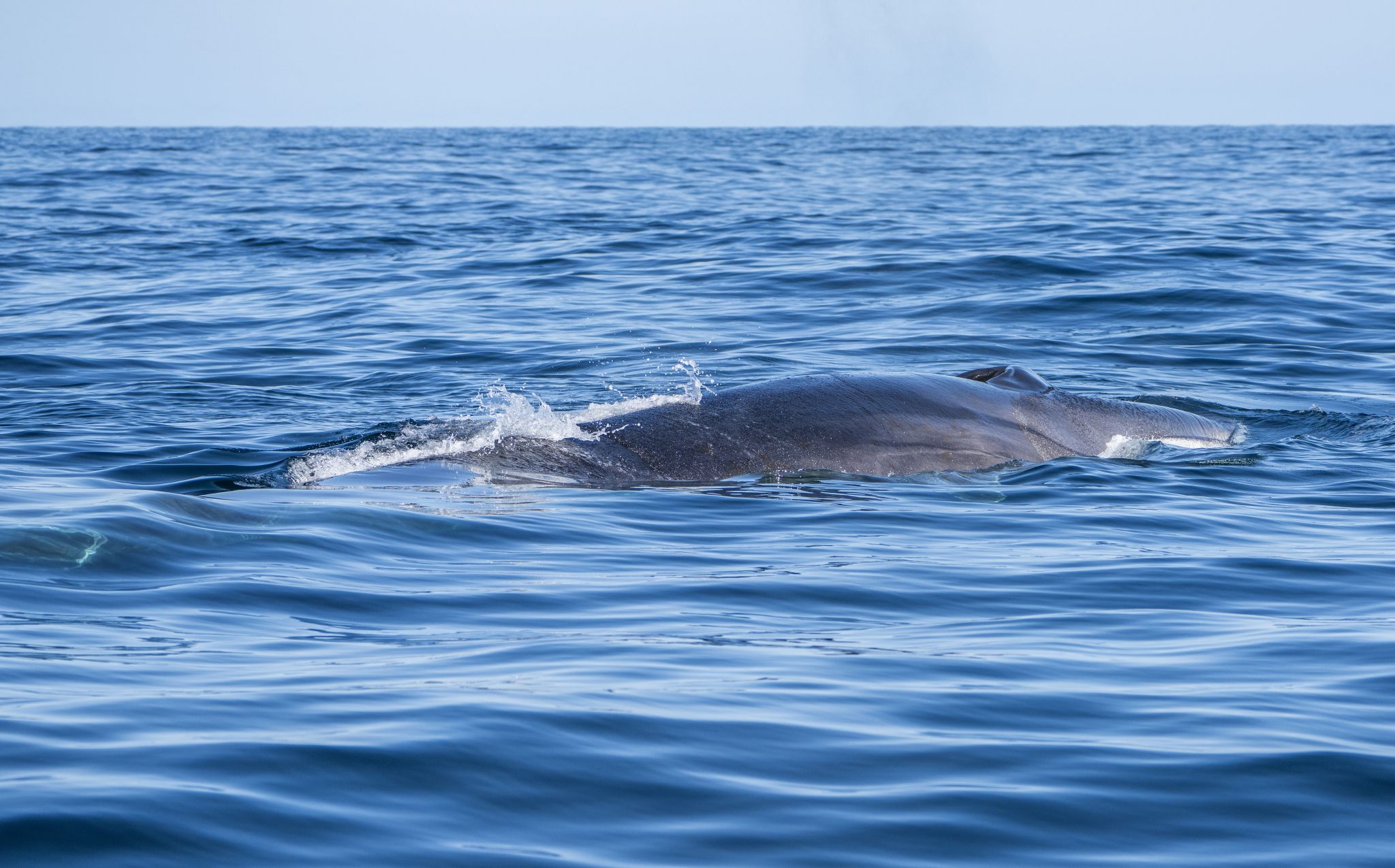
[Picture 5: Fin whale. Credit: Whale Research Collective]
“When using eDNA for whale monitoring, it’s essential to know with confidence which species you’re detecting, so that we don’t falsely report or miss them,” said Dr. Chloe Robinson, Director of the Ocean Wise Whales Initiative. “Through extensive laboratory and field testing, we’ve developed three robust, species-specific eDNA assays that we hope will help researchers and conservation practitioners monitor these elusive and endangered whales, not only in Canadian waters, but around the world.”
Researchers see eDNA as one piece of a broader shift in whale conservation, one that increasingly draws on drone imagery, acoustic monitoring, and artificial intelligence alongside genetic sampling. Used together, these tools aim to help scientists spot risks to whale populations, from shifting habitat to vessel traffic, before those risks become crises rather than after.
“eDNA gives us a new monitoring tool that requires very little effort in the field while enabling us to sample waters in all conditions” finished Charry. “While more research and efforts are needed before this method can directly inform management decisions, it offers a novel perspective on how we detect and monitor these species.”
This research was supported by Fisheries and Oceans Canada (Habitat Stewardship Program, 23-HSP-NFL-003), the Animal Welfare Foundation of Canada, and the Ocean Wise Killer Whale Adoption Program.
About Ocean Wise
Ocean Wise is a global conservation organization on a mission to build communities that take meaningful action to protect and restore our ocean. Through research, education, innovation, and collaboration, we are turning the tide on three major ocean challenges: plastic pollution, overfishing and climate change. By creating communities of concern that include industries, governments, and everyday citizens, we create a future where our ocean and the people who depend on it can thrive. Ocean Wise is headquartered in Vancouver, British Columbia with work reaching over two dozen countries around the globe.
Media Contact
Nic Schulz
(604) 318-5830
[email protected]
Photos accompanying this announcement are available at:
https://www.globenewswire.com/NewsRoom/AttachmentNg/6470e852-8b45-49e8-a877-2840647431a1
https://www.globenewswire.com/NewsRoom/AttachmentNg/9e6bca84-4a08-4039-b2e4-277820b27311
https://www.globenewswire.com/NewsRoom/AttachmentNg/88192fdf-8636-499c-a60e-1f2c82c35906
https://www.globenewswire.com/NewsRoom/AttachmentNg/e1953338-84dd-456a-a461-e4a48e0c2307
https://www.globenewswire.com/NewsRoom/AttachmentNg/a80972e1-4b76-42c2-be15-1ebd13033c4a
