

Dublin, Feb. 03, 2026 (GLOBE NEWSWIRE) — The “MMORPG Gaming – Market Share Analysis, Industry Trends & Statistics, Growth Forecasts (2026-2031)” report has been added to ResearchAndMarkets.com’s offering.
The MMORPG gaming market is expected to grow from USD 28.06 billion in 2025 to USD 31.02 billion in 2026 and is forecast to reach USD 51.3 billion by 2031 at 10.58% CAGR over 2026-2031.
Intensifying cross-platform integration, rapidly maturing mobile hardware, and the shift toward hybrid monetization have moved persistent virtual worlds into the entertainment mainstream. Mobile titles capitalize on ubiquitous 5G connectivity, while AI-enabled dynamic content and player-owned economies powered by blockchain improve lifetime engagement. Publishers increasingly depend on in-game cosmetic sales, season passes, and live-ops events to convert large free player bases into predictable cash flows.
Competitive differentiation now hinges on cloud-native architectures that reduce client hardware barriers, real-time analytics that personalize experiences, and government-backed esports programs that legitimize professional play. Together, these forces keep the MMORPG gaming market on a double-digit growth path and widen the addressable audience far beyond the traditional PC enthusiast segment.
Global MMORPG Gaming Market Trends and Insights
Rapid smartphone and internet penetration in emerging markets
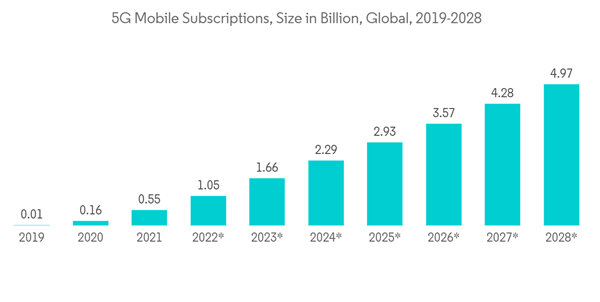
Extensive 5G roll-outs and lower-cost Android devices now put persistent online worlds in the hands of first-time gamers across India, Brazil, and Indonesia. Publishers prioritize lightweight clients, edge-served assets, and scalable back-end microservices to accommodate variable bandwidth. Local telecom subsidies further reduce data costs, driving daily log-ins among mobile-first teens.
The MMORPG gaming market leverages this demographic shift with simplified onboarding flows and regional payment rails such as PIX in Brazil and UPI in India. As handset replacement cycles shorten, GPU-equipped mid-tier phones begin supporting console-grade visuals, encouraging cross-play between handheld and PC cohorts while expanding total addressable players.
Technological advancements in cloud gaming and 5G
Server-side rendering paired with 5G latency below 30 ms enables large-scale real-time combat once restricted to desktop rigs. NVIDIA’s cloud infrastructure, adopted by WEMADE for its MIR series, streams ray-traced scenes and AI-driven boss logic to mobile screens without perceptible lag. Edge nodes distribute shard traffic, so thousands of concurrent users occupy a single seamless map. Publishers now release experimental vertical slices to gauge demand before committing capex, reducing sunk risk. Cloud’s elastic scaling also tempers peak-hour server costs, improving gross margins even as daily active users rise.
High development and maintenance costs
Triple-A MMORPGs now demand photo-real assets, cinematic orchestration, and multi-device UX, pushing budgets well above USD 120 million. Continuous content drops, customer support, and live-ops tooling inflate opex. Smaller studios offset fixed costs with cloud credits or white-label backend platforms, trading margin for scalability. Publishers in low-cost labor hubs, notably Vietnam and the Philippines, undercut Western rivals, but localization and brand building remain expensive. Strategic partnerships with engine vendors such as Epic and Unity provide technical uplift yet introduce revenue-share clauses that narrow profit windows.
Segment Analysis
Mobile platforms accounted for 43.28% of the MMORPG gaming market share in 2025 and are set to expand at an 11.12% CAGR to 2031, reinforcing their position as the growth engine of the overall MMORPG gaming market. The high-end silicon now standard in mid-tier smartphones renders 60 fps play at 1080p, narrowing the experiential gap with consoles. Publishers deploy adaptive bitrate streaming to sustain performance on variable networks, while haptic feedback APIs bring tactile combat cues once limited to controllers. Cloud renders heavy post-processing, slashing thermal load and widening battery runtime.
PC and console ecosystems continue serving graphics purists and peripheral-heavy raid communities; however, cross-progression keeps these cohorts connected to their mobile guildmates. Gamepad overlays and detachable controllers bridge input divides, letting phone users tank or heal in parity with desktop teammates. As regulators tighten app-store billing rules, web-based launchers and progressive web apps emerge, ensuring uninterrupted monetization pipelines for the MMORPG gaming market.
Free-to-play titles captured 57.10% of MMORPG gaming market size in 2025, validating accessibility as the dominant acquisition lever. Yet hybrid constructs, permanent free base game plus optional season pass, are climbing at 11.2% CAGR, illustrating player readiness to pay for tiered value as long as competitive balance remains intact. Publishers stagger cosmetic tiers, battle pass missions, and premium story arcs so non-spenders still feel progression momentum, protecting community health.
Subscription models endure in lore-rich franchises where committed fans equate monthly fees with stable server quality and rich support. Buy-to-play persists mainly in Europe, where consumer law limits micro-transaction randomness, but such games often layer DLC passes post-launch. Payment analytics flag churn risk when cumulative cosmetic costs surpass perceived ownership value, informing discount cadence and bundle design across the MMORPG gaming industry.
Geography Analysis
North America generated 39.10% of global revenue in 2025, buoyed by high disposable income and a robust PC-console installed base. Publishers monetize here through deluxe collectors’ tiers and cosmetic ancillaries priced above global averages. Regulatory oversight centers on youth data privacy and loot-box transparency, pushing studios toward plain-text probability disclosures and ESRB-aligned rating labels. Cloud availability from coast-to-coast reduces latency friction, sustaining the region’s premium ARPU leadership.
Asia Pacific is forecast to register a 10.71% CAGR, the steepest among major regions, propelled by smartphone ubiquity and state-sponsored esports arenas. China’s approval-queue volatility drives publishers to stagger launches under local partners. South Korea leverages 1 Gbps fiber penetration to pioneer 1000-player raids, while Japan’s console loyalists still prefer hybrid monetization over gacha extremes.
Europe maintains moderate uptake despite strict loot-box edicts that reduce monetization elasticity. Multi-language localization lifts time-to-market costs, but EU cross-border payment APIs simplify revenue repatriation. Currency instability and lower ARPU restrain Latin America and MEA today, yet rising 5G coverage and fintech wallets unlock new conversion funnels. Publishers progressively price in local fiat and reward watch-to-earn promos to sidestep macro volatility.
Market Overview
Market Drivers
- Rapid smartphone and internet penetration in emerging markets
- Technological advancements in cloud gaming and 5G
- In-game monetization and micro-transaction success
- Cross-platform play and social connectivity
- Blockchain-based player-owned virtual economies
- Government-led esports development programs
Market Restraints
- High development and maintenance costs
- Online fraud, account hacking and botting
- Regulatory scrutiny on loot boxes and monetization
- Energy-consumption backlash for always-on servers
Market Opportunities
White-space and Unmet-Need Assessment
Regulatory Landscape
Technological Outlook
Porter’s Five Forces Analysis
Competitive Landscape
- Activision Blizzard Inc.
- Electronic Arts Inc.
- Ubisoft Entertainment SA
- NCSOFT Corporation
- Tencent Holdings Ltd.
- NetEase Inc.
- Amazon Games LLC
- Nexon Co., Ltd.
- Jagex Ltd.
- Daybreak Game Company LLC
- CCP Games UK Ltd.
- Giant Network Group Co., Ltd.
- Gravity Co., Ltd.
- Square Enix Holdings Co., Ltd.
- Pearl Abyss Corp.
- Kakao Games Corp.
- ZeniMax Online Studios LLC
- Smilegate Megaport
- Gamigo AG
- Perfect World Co., Ltd.
For more information about this report visit https://www.researchandmarkets.com/r/j5n4vh
About ResearchAndMarkets.com
ResearchAndMarkets.com is the world’s leading source for international market research reports and market data. We provide you with the latest data on international and regional markets, key industries, the top companies, new products and the latest trends.
- Mmorpg Gaming Market 5 G Mobile Subscriptions Size In Billion Global
- Mmorpg Gaming Market M M O R P G Gaming Market Growth Rate By Region
