
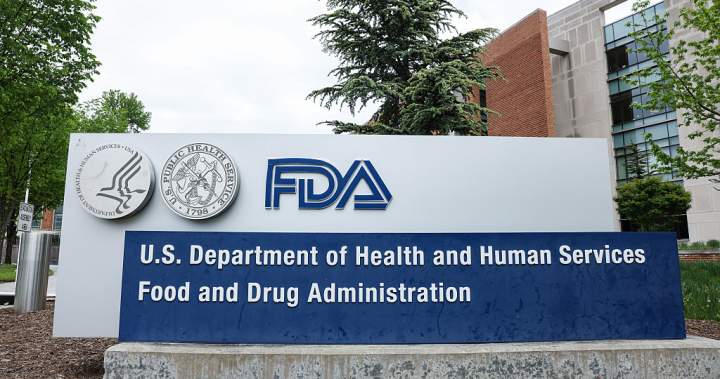
GLP-1 drugs such as Ozempic and Wegovy prescribed in the U.S. will contain a new warning about a possible but rare side effect that can lead to permanent vision loss, the Food and Drug Administration (FDA) announced Monday.
The FDA will require the risk to be printed on the labelling of all GLP-1 drugs which are used to treat obesity, diabetes and a range of medical conditions, and can be injected or taken in pill form, including medications such as Zepbound and Mounjaro.
The “painless” eye condition, known as non-arteritic anterior ischemic optic neuropathy (NAION), can cause significant vision loss as a result of decreased blood flow to the optic nerve; the FDA said the underlying cause is unknown.
The labelling requirement stems from the findings of a 2024 study and subsequent FDA trials that tested the results of that study.

Get weekly health news
Receive the latest medical news and health information delivered to you every Sunday.
An analysis of more than 125 clinical trials found that the problem occurred in roughly six of every 100,000 patients who took a GLP-1 for at least one year.
The agency also found reports of the problem in its electronic reporting system for drug injuries and side effects.
The FDA concluded that there is a “potential increased risk of rare NAION events in patients taking GLP-1 RAs.”
“Based on these findings, FDA is requiring that application holders add information about the risk for NAION to the Warnings and Precautions section of labelling of all GLP-1 RAs,” it stated.
Symptoms of NAION include blurred vision, blind spots, distorted colours, and other visual irregularities, according to the U.S. regulator.
Last month, Health Canada announced that it had identified a potential safety risk related to Ozempic, Rybelsus and Wegovy, citing NAION as the health issue under review. The findings of the review are yet to be published.
Canada operates under its own regulatory framework and sets labelling standards overseen by Health Canada and the Canadian Food Inspection Agency.
Other studies published this year have linked the use of GLP-1s to outcomes such as reducing the risk of developing cancer.
Research presented alongside more than two dozen other studies at the American Society of Clinical Oncology in June found that patients taking GLP-1 drugs showed lower risks of developing cancer and disease progression, with better survival and improved responses to some treatments compared to people who were not taking the GLP-1s.
Another observational study found that GLP’s can lead to an increased risk of hair loss in some patients.
The British Medical Association study examined just over 50,000 people with Type 2 diabetes taking GLP-1 receptor stimulants and compared them with patients using other diabetes drugs such as SGLT-2 and DPP-4 inhibitors.
The study says that GLP-1 usage was associated with a 37 per cent “higher risk of alopecia” compared with SGLT-2 inhibitors and a 68 per cent higher risk than those who use DPP-4 inhibitors. A link to “non-scarring alopecia” with those who use GLP-1 drugs was also noted.
Actual rates of alopecia were low, ranging from roughly three to nine per 1,000 people per year, with between 11,000 and 15,000 people in each drug-class group.
“Although the absolute risk was small, awareness of this potential effect may support informed, patient-centred treatment decisions,” the study reads, though Dr. Elena Netchiporouk, Quebec’s regional director with the Canadian Dermatology Association, noted that hair loss might not be a result of the drug itself but rather the body losing weight too quickly.
— with files from the Associated Press and Global News staff.
© 2026 Global News, a division of Corus Entertainment Inc.