
When Risk Becomes Routine: Normalization of Deviation in Your Operation. Global Aerospace’s SM4 Aviation Safety Program has Insights.
Global Aerospace SM4 Aviation Safety Program
Morris Plains, NJ, Sept. 09, 2026 (GLOBE NEWSWIRE) — 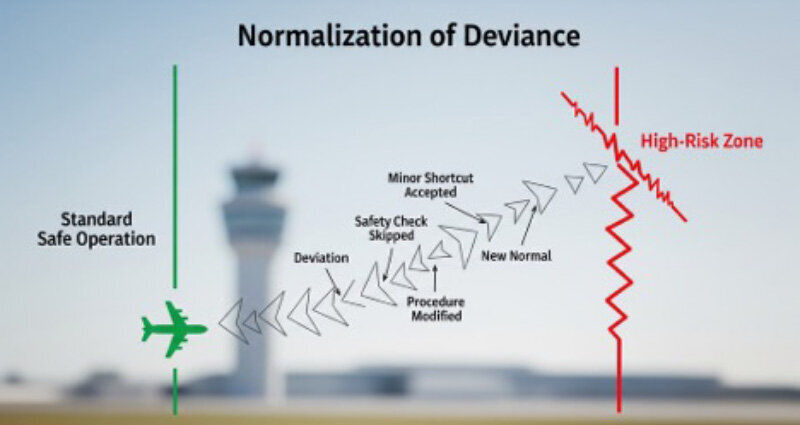
Let’s start with a simple question from Global Aerospace’s SM4 Aviation Safety Program: What’s something in your operation that technically “works,” but doesn’t fully align with your standard operating procedures?
Not a serious violation. Not something that would ground an aircraft. Just a small adjustment—something that’s been tweaked over time.
If you’ve been around flight operations for any length of time, something probably comes to mind right away.
That’s where normalization of deviance begins. It doesn’t show up all at once. It develops quietly, as small workarounds get repeated often enough that they stop feeling like workarounds. They just become part of how things are done. The risk doesn’t arrive suddenly, it builds, layer by layer.
The tricky part is that you don’t notice it while it’s happening.
No one sets out to cut corners. Most of the time, it starts with pressure. A schedule needs to stay intact. The aircraft needs to be ready. People are waiting. The operation has to keep moving.
So, a step gets compressed. A checklist is completed from memory instead of line by line. A decision is made based on experience rather than procedure.
And then nothing goes wrong.
That’s what reinforces it. The outcome is good, so the adjustment feels reasonable, maybe even efficient. The next time a similar situation comes up, it’s easier to make the same call. After a few repetitions, it stops feeling like a deviation at all. It becomes normal.
Over time, these small shifts start to blend into the background. A discrepancy gets deferred because it hasn’t caused an issue before. A process is adjusted to keep things moving. Informal communication replaces something more structured. Each change, on its own, seems minor. But taken together, they begin to reshape daily operations.
At some point, there’s a gap between how things are written and how they’re really done. And that gap can grow without anyone deliberately choosing it.
There’s rarely a clear moment when someone decides, “This is the new standard.” It happens gradually. One adjustment leads to repetition. Repetition leads to acceptance. Eventually, it’s just the way things are.
That’s what makes normalization of deviance so difficult to spot. It doesn’t feel like risk—it feels like experience. It feels like efficiency. It feels like getting the job done.
The Reality Check
A useful way to look at it is from the outside in. If someone unfamiliar with your day-to-day operation observed how things are done—how checklists are run, how discrepancies are handled, how communication really flows—what would stand out to them? What would they question that your team doesn’t even notice anymore?
That perspective can be uncomfortable, but it’s often where the most valuable insights come from.
It’s also important to be clear about intent. These decisions aren’t usually careless or reckless. They’re made by capable, experienced people trying to manage real-world demands. The goal is almost always the same: Keep things moving, solve the problem, make it work.
And in the moment, those decisions often make sense.
The issue is what happens over time. “Making it work” can slowly turn into accepting more risk than anyone intended, simply because the outcome has been consistently uneventful.
Where SMS Should Shine
This is where a Safety Management System should make a real difference. Not just in documentation or audits, but in its ability to catch this kind of gradual drift.
Are repeat issues being tracked and questioned, or just logged and closed? Are small deviations getting attention before they become habits? Do people feel comfortable pointing out something that doesn’t seem quite right, even if it hasn’t caused a problem?
If the answer to those questions is unclear, the system may not be doing enough to address the underlying risk. It may just be documenting it after the fact.
What You Should Be Looking For
The reality is that the most significant risks aren’t always tied to obvious failures. More often, they’re found in the things everyone has come to accept—the shortcuts that no longer get discussed, the workarounds that have become routine, the issues that are always considered “good enough for now.”
Those are harder to challenge, because they don’t stand out. They blend in.
But that’s exactly why they matter.
You don’t have to go far to find an example. It’s probably something you already thought of when you started reading. Something small. Something familiar. Something that hasn’t caused a problem. Something that works.
That’s the one worth paying attention to.
Because in aviation, the biggest risks are rarely the obvious ones. They’re the ones that develop slowly, quietly and without resistance, until they’ve been accepted as normal.
About Global Aerospace SM4 Aviation Safety Program
The Global Aerospace SM4 Safety Program has revolutionized the way insurance specialists help their clients achieve higher levels of operational safety. SM4 was built on the concept of integrating four critical safety components: planning, prevention, response and recovery. Its mission is to help organizations manage risk, enrich training efforts, strengthen safety culture and improve safety management systems. https://sm4.global-aero.com/
Global Aerospace SM4 Aviation Safety Program Media Contact
Suzanne Keneally
Vice President, Group Head of Communications
+1 973-490-8588
Attachment
- Global Aerospace SM4 Aviation Safety Program
